By Esther C. Kane, CAPS, C.D.S. | Retired Occupational Therapist, Certified Aging In Place Specialist, Certified Dementia Specialist
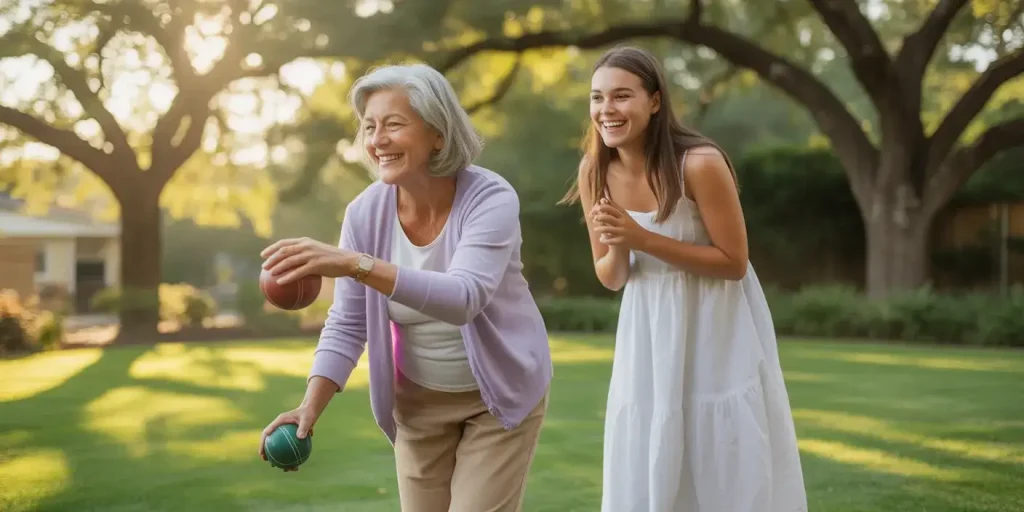
Summer used to feel like a gift. Long days, fresh air, the chance to be outside and do the things you love. But somewhere along the way, for a lot of older adults, summer started to feel more like a warning.
Watch the heat. Don’t overdo it. Stay inside when it gets hot.
And while there is real wisdom in those cautions, I worry that the message has become too loud. Too many people I talk with have started treating summer as something to survive rather than something to enjoy.
I have worked with older adults for years as an Occupational Therapist and Certified Aging In Place Specialist. I have seen what happens when people pull back from activity out of fear.
Strength fades. Mood drops. Social connection quietly disappears. And I have also seen what happens when people find safe, satisfying ways to stay engaged. They feel more like themselves. They stay stronger. They are happier.
This article is for you if you want to stay active this summer but are not quite sure what is safe. It is also for the adult children and caregivers who want to help a parent enjoy the season without putting their health at risk.
I am going to give you the standard ideas you expect, and then I am going to give you some genuinely surprising ones that most people have never considered. Summer is still yours. Let me help you make the most of it.
Safe summer activities for seniors include early morning walks, swimming or water aerobics, gardening in the cool hours, lawn bowling, bocce ball, outdoor concerts, farmers market visits, botanical garden trips, watercolor painting in the shade, drive-in movies, scenic drives, sun print art, mahjong groups, library summer reading programs, and stargazing on warm evenings.
The key to making any summer activity safe is timing your outdoor time before 10 a.m. or after 5 p.m., drinking water consistently even when you do not feel thirsty, protecting your skin from the sun, and knowing your own body’s limits. Both indoor and outdoor options are available at every mobility level, which means no one needs to sit the season out.
Why Summer Feels Riskier as You Age (And Why That Does Not Mean Staying Inside)
Before we get into what to do, I want to take a moment to explain what is actually happening in the body during summer heat. Understanding the reason behind the risk helps you make smarter decisions, rather than just following a list of rules that feel arbitrary.
As we age, the body becomes less efficient at regulating its own temperature. Younger bodies respond to heat by sweating quickly and increasing blood flow to the skin, which carries heat away from the core.
Older bodies do this more slowly and less effectively. Some people sweat significantly less than they used to. Blood vessels do not dilate as readily. The body’s internal thermostat, so to speak, responds with a lag.
Medications add another layer of complexity. A number of commonly prescribed drugs, including diuretics, beta-blockers, antihistamines, and certain antidepressants, can interfere with how the body handles heat.
Some reduce sweating. Some affect circulation. If you or a loved one takes daily medications, that is worth a conversation with your physician before the hottest months arrive.
The result of all of this is that an older adult can become dangerously overheated in conditions that a younger person would handle without any trouble at all.
You can read a thorough breakdown of the specific dangers in my article on summer heat and the elderly, which covers heat exhaustion, heat stroke, and what to watch for.
And for a deep dive into one of the most underestimated summer risks, read my piece on summer dehydration in seniors. Thirst, it turns out, is a lagging indicator as you age. By the time you feel thirsty, your body is already working hard to catch up.
But here is what I want you to hold onto: understanding these changes is what makes safe participation possible. It is not a reason to stay inside. It is a reason to be smart about when, how long, and under what conditions you go out.
The Golden Rule of Summer Activity: Timing Changes Everything
If I could give you only one piece of advice for summer activity, it would be this: the time of day matters more than the activity itself. A morning walk at 7 a.m. and an afternoon walk at 2 p.m. are not the same activity in summer. The first is usually manageable. The second can be genuinely dangerous.
Plan all outdoor activity before 10 a.m. or after 5 p.m. This single habit eliminates the majority of summer heat risk for older adults.
The other thing I encourage everyone to check is the heat index, not just the temperature. The heat index accounts for humidity, which is the factor that really determines how well your body can cool itself.
High humidity prevents sweat from evaporating off the skin, which stalls the body’s entire cooling system. A day that reads 85 degrees Fahrenheit on the thermometer can feel, and function, like 95 degrees when humidity is high.
Most weather apps display the heat index or a “feels like” temperature. Check it before you head out. On days when the heat index climbs above 90 degrees Fahrenheit, move your activity indoors or to a shaded, breezy location, and keep any outdoor time brief.
Build flexibility into your summer routine. Have a Plan A (outdoors) and a Plan B (indoors) for every day. That mental preparation alone removes a lot of the anxiety that comes with summer activity planning.
Safe Outdoor Activities for Seniors
Morning Walks and Neighborhood Strolls
Walking is still, in my clinical opinion, one of the most valuable things an older adult can do for their health. It supports cardiovascular function, helps maintain lower body strength, improves balance, and provides mood and cognitive benefits that are genuinely hard to replicate with any other single activity.
You can read more about those benefits in my article on the benefits of outdoor activities for seniors.
In summer, the key is to walk early. Aim for before 9 a.m. if possible. Wear light-colored, loose-fitting clothing that breathes. Choose footwear with good traction and support. Bring water and actually drink it before you feel thirsty.
Plan a route that includes places to sit and rest, whether that is a park bench, a neighbor’s front steps, or the shade of a large tree.
If you use a walker, cane, or wheelchair, none of that changes the value of being outside and moving. It simply means you plan the route for smooth, level surfaces and make sure rest points are accessible. Pavement is preferable to grass or gravel for anyone using a mobility aid.
Gardening in the Cool Hours
Gardening is one of those activities that offers almost everything an older adult needs in a single hobby: gentle physical movement, a sense of purpose, sensory engagement, and time spent outside.
As a therapist, I have seen gardening do things for mood and motivation that no prescribed exercise program could quite replicate.
In summer, the risks in the garden are real but manageable. Work only in the early morning or late afternoon. Wear a wide-brimmed hat and light long sleeves. Keep water close and drink regularly.
Avoid bending repeatedly at the waist, which is both hard on the back and disorienting in heat. Take breaks inside or in the shade every 20 to 30 minutes.
Raised garden beds are a wonderful adaptation for older adults because they eliminate most of the bending and kneeling.
Container gardening on a patio or porch extends the season and brings the garden to a more comfortable level. For more on making gardening work safely, see my full guide on safe gardening tips for seniors.
Lawn Bowling, Bocce Ball, and Backyard Lawn Games
This is one of my favorite recommendations because almost no one thinks of it, and it works beautifully. Bocce ball and lawn bowling are low-impact, highly social, and require no special fitness level.
You are standing, shifting weight, stepping gently, and concentrating on aim. That is a surprisingly complete physical and cognitive workout wrapped in something that feels like pure fun.
Bocce ball in particular is ideal for mixed-ability groups. Players can stand or use a ramp for throwing. The pace is relaxed. There is plenty of time to sit between turns. Many parks and senior centers have bocce courts, or you can set up a simple set in a backyard on grass.
Backyard lawn games like cornhole, ring toss, and giant Jenga are wonderful options for multigenerational gatherings, giving grandchildren and grandparents something genuinely enjoyable to do together.
Birdwatching, Nature Sitting, and Porch Time
I want to make a case for the underrated value of simply being outside without doing very much at all.
Sitting on a shaded porch, watching birds come and go from a feeder, listening to the sounds of the neighborhood or the yard, these are not passive activities in the way that sitting in front of a television is passive.
Being in natural light, fresh air, and an outdoor environment has measurable effects on mood, sleep quality, and stress levels.
Setting up a bird feeding station in a backyard or near a window is a low-cost, high-reward summer project. Add a field guide or a free bird identification app, keep a simple log of what you see, and suddenly birdwatching becomes a daily ritual with real cognitive engagement.
Porch time with a neighbor, a grandchild, or a good book is not “doing nothing.” It is connection, rest, and the kind of gentle sensory experience that an aging nervous system genuinely benefits from. Do not discount it.
Sketching and Watercolor Painting Outdoors
Here is one that surprises people: outdoor sketching and watercolor painting are genuinely excellent summer activities for older adults. You sit in a shaded spot with a small pad of paper or a travel watercolor set, and you look carefully at what is in front of you.
- A garden.
- A street scene.
- A tree.
The act of really looking, noticing light and shape and color, is meditative and cognitively stimulating at the same time.
You do not need to be an artist. That is not the point. The point is the slow, absorbed attention that the activity requires. I have seen people with no prior art experience take this up in their 70s and find it deeply satisfying.
Sun prints, also called cyanotype art, are a quick and genuinely delightful outdoor activity that takes about ten minutes and requires no artistic skill at all.
You place natural objects like leaves, flowers, or feathers on special light-sensitive paper, set it in direct sunlight for a few minutes, then rinse it in water. The result is a beautiful blue-and-white print of the objects.
The paper kits are inexpensive and widely available online. This is an especially wonderful activity to do with grandchildren.
Water-Based Activities
Swimming and water aerobics are among the best summer activities for older adults, particularly those dealing with arthritis, joint pain, or limited mobility.
Water removes most of the gravitational load on joints, which means movement that would be uncomfortable on land often feels effortless in the water. The resistance of the water also builds muscle strength gently and safely.
When choosing a pool, look for one with accessible entry, ideally a ramp or zero-entry slope rather than a ladder. A lifeguard on duty is important.
Water temperature matters too: water that is too cold can cause muscle cramping, and water that is too warm (above 84 degrees Fahrenheit) can contribute to overheating rather than relieving it.
One important reminder: many older adults forget to drink water when they are in or near a pool, because they do not feel hot or sweaty.
But the body is still losing fluid, and the cool water masks the sensation. Bring a water bottle to the pool deck and drink before you get in and after you get out.
Getting Out Into the Community: Summer Outings Worth Planning
Farmers Markets in the Morning
A farmers market trip is one of my top recommendations for older adults who want a summer outing that is social, sensory-rich, purposeful, and genuinely enjoyable, all without being physically demanding.
Most markets open between 7 and 9 a.m., which is exactly the right window for outdoor activity in summer.
The walking involved is gentle, on flat surfaces, at your own pace. There are natural rest stops built in at every vendor table. The sensory experience, fresh produce, flowers, baked goods, the sounds of a lively outdoor space, is genuinely stimulating and uplifting.
And you come home with something real: ingredients for a meal, a bunch of flowers for the table, a connection to the season.
I love pairing the farmers market with a cooking activity at home afterward. Picking out tomatoes or peaches in the morning and then making a simple summer dish with them in the afternoon gives the whole outing a satisfying narrative arc.
That combination of purposeful outing plus creative activity at home is a very strong formula for wellbeing.
Botanical Gardens and Conservatories
Botanical gardens are close to ideal summer destinations for older adults. They typically offer paved, level pathways with plenty of benches along the route.
The shade from mature trees and covered structures keeps temperatures significantly cooler than open outdoor spaces. Many have air-conditioned conservatories or indoor sections, which gives you a natural refuge if the heat picks up.
The experience of moving slowly through a beautiful, plant-filled environment is genuinely therapeutic. Research on the restorative effects of natural environments on older adults is compelling, and botanical gardens deliver those benefits in an accessible, well-maintained setting.
Many botanical gardens offer reduced admission for seniors, free days, or member programs. If there is one within a reasonable drive, a seasonal membership is often one of the best small investments a family caregiver can make.
Outdoor Concerts and Band Shell Performances
This one brings me real joy to recommend, because it consistently delights people who try it.
Many communities run free or low-cost outdoor summer concert series: band shell performances in parks, evening concerts on town greens, jazz in the courtyard of a museum, symphony on the lawn events. These are accessible, joyful, and deeply social.
The physical demands are minimal. You bring a lawn chair or use a provided seat, sit in the evening air, and listen to live music.
For older adults, especially those who have always loved music, the emotional lift from a live performance is something that recorded music simply does not replicate.
For people with early cognitive changes or dementia, live music is one of the most powerful activity interventions I know of. Music reaches parts of the brain that other stimuli often cannot, and familiar songs from earlier in life can produce remarkable moments of clarity, calm, and joy.
Practical tips: arrive early to claim a shaded spot. Bring water. Know where the restrooms are before the music starts. Have a plan for leaving early if the evening air grows cool or the person you are caring for becomes tired.
Drive-In Movies and Scenic Drives
Drive-in movies have had a genuine resurgence in recent years, and they are genuinely wonderful for older adults. You stay in your own air-conditioned car, watch a film on a large outdoor screen, and have complete control over your comfort.
No navigating dark aisles. No concern about restroom access. No noise from other audience members. And for many older adults, drive-ins carry a wonderful nostalgia from earlier decades.
The scenic drive with no particular destination is another deeply underrated activity. Pick a direction, choose a route with some visual interest, whether that is a lakeside road, a stretch of farmland, a route through a town you have not visited in years, and simply drive.
Bring a thermos of something cold to drink. Stop when something looks interesting. This is not idle time. It is restorative, gentle, and genuinely pleasurable.
Summer Reading Programs and Library Events
Here is something most people do not know: many public libraries run adult summer reading programs, not just programs for children.
These programs typically involve reading a set number of books over the summer, logging your reading, and sometimes attending related events or talks. Participants often receive small prizes or recognition.
The library itself is an excellent summer destination: cool, quiet, free to enter, and full of programming. Many branches host author talks, film screenings, music performances, and discussion groups during summer months.
A summer reading group, whether formal or informal, turns reading into a social activity that gives you something to look forward to and talk about every week.
Creative and Cognitive Activities for Hot Days Indoors
Chair Yoga, Stretching, and Indoor Movement
On the hottest days, staying active indoors is not giving up on summer. It is making a smart choice that protects your body so you can be outside on the better days. The goal is to maintain strength, flexibility, and balance consistently through the season, not to push through dangerous conditions.
Chair yoga is one of the most accessible indoor movement options available. Every pose is performed seated or using a chair for support, which makes it appropriate for almost any mobility level.
It supports flexibility, core strength, breathing, and the kind of calm focus that benefits both physical and mental health. Many senior centers offer chair yoga classes, and there are good online options as well.
Sun Prints, Memory Journals, and Mahjong
Earlier I mentioned sun prints as an outdoor activity, but they work just as well as an indoor project when you use a sunny window or bring the paper briefly outside and retreat indoors to rinse it. They are genuinely fun, require no prior skill, and produce something beautiful and tangible.
A summer memory journal is a meaningful indoor project for older adults who enjoy writing or reflection. This does not need to be a formal diary. It might be a collection of summer memories from earlier in life, written down or recorded for grandchildren.
It might be a simple log of what happened each day this summer: where you went, what you ate, who you talked to. The act of recording creates a sense that time is being used well and appreciated.
Starting a mahjong or canasta group is one of the most socially and cognitively enriching things an older adult can do, and summer is a perfect time to launch one.
These games require concentration, strategy, pattern recognition, and social engagement. They are played at a table with other people. They give everyone something to look forward to on a regular basis. And they are genuinely fun.
If you have never played either, look for a beginner’s group at a local senior center or community center. Many are welcoming to new players.
Cooking and Baking With a Summer Theme
Cooking is one of the most cognitively complex everyday activities that exists. It involves planning, sequencing, measuring, sensory evaluation, and creativity.
For older adults, especially those in the early stages of cognitive change, meaningful cooking activity supports both brain health and a sense of competence and purpose.
In summer, seasonal produce gives cooking a natural anchor. A trip to the farmers market in the morning followed by making a simple cold soup, a fruit crisp, a fresh salsa, or a batch of lemonade in the afternoon is a full, satisfying day that combines physical outing, sensory experience, creativity, and nourishment.
One practical note for summer kitchen safety: keep the kitchen well ventilated and try to do any cooking that generates significant heat, like baking or stovetop cooking, during the cooler morning hours. Cold recipes, salads, no-bake desserts, and cold drinks are natural summer kitchen activities that keep things comfortable.
Multigenerational Summer: Activities That Connect the Generations
One of the things I find most meaningful in my work is helping older adults reclaim their role as the one who teaches, shares, and leads, rather than the one who is cared for.
Summer offers some of the best opportunities for this kind of intergenerational connection, especially with grandchildren who are out of school and looking for things to do.
Teaching a grandchild a recipe from memory, whether it is a family pie, a particular way of making pasta, a homemade ice cream, is an activity that is rich in every dimension. It is physical, cognitive, social, and emotionally meaningful. And it creates something that genuinely lasts.
As I mentioned before, setting up a backyard bird feeding station together is a summer project that keeps giving. Choose the station location, hang the feeder, fill it together, and then start a shared log of what visits. Children are often surprisingly captivated by this. It gives you something to check on together every time they visit.
Stargazing on a warm summer evening, stretched out on lawn chairs in the backyard or at a local park, is one of those simple, free experiences that tends to become a memory both generations hold for a long time.
Backyard lawn games like cornhole, giant Jenga, and ring toss are physical enough to keep grandchildren engaged but paced slowly enough that older adults can participate fully. The competition is friendly, the laughter is real, and no one needs to be in peak physical condition to play.
What all of these activities share is that the older adult is a participant and a contributor, not a bystander. That matters enormously for dignity, motivation, and joy.
Summer Activities for Seniors With Limited Mobility
Limited mobility does not mean limited participation. It means thoughtful planning. And in my experience, the planning is almost always worth it.
Many of the activities in this article are fully accessible to people using wheelchairs, walkers, or who tire quickly. The scenic drive requires no walking at all. The drive-in movie is entirely car-based.
Porch birdwatching, sun print art, mahjong, memory journaling, and cooking are all adaptable to a seated position. Bocce ball can be played with a ramp for those who cannot throw. Farmers markets are generally flat and paced entirely at your own speed.
What often limits participation more than the physical condition itself is the planning gap. No one has thought through the route, the seating, the rest stops, or the heat exposure plan in advance. When that planning happens, many more activities become genuinely possible.
If you are a caregiver supporting someone with limited mobility, I encourage you to think of yourself as the logistics person, not the activity director.
Your job is to remove the barriers so that the person you care for can make their own choices about what they want to do. Ask them what sounds good to them. Let their preferences lead.
A Note for Family Caregivers
If you are reading this as an adult child or family caregiver, I want to speak directly to you for a moment.
It is natural to worry about a parent in summer heat. Heat-related illness is real, and the risks do increase with age. But worry has a way of becoming overprotection, and overprotection has real costs.
When we make summer feel like a medical event, filled with warnings, restrictions, and anxious oversight, we take something away from the people we love. We make them feel fragile and dependent, even when they are neither.
The most useful thing you can do is plan thoughtfully and then step back. Choose activities together. Handle the logistics quietly. Have water ready before it is needed.
Know the signs of overheating: flushed or pale skin, heavy sweating or sudden absence of sweating, confusion, nausea, rapid heartbeat, or dizziness. Have a plan for how to respond if you see them. And then let summer be summer.
For caregivers supporting a loved one with dementia, summer activity planning carries an additional layer of consideration. Familiar, low-stimulation activities work best: a quiet porch, a simple garden task, listening to music from earlier in life, watching birds from a comfortable chair.
Avoid busy, loud, or unfamiliar environments on hot days, as heat can accelerate confusion and agitation in people with cognitive changes.
Keep outings short, predictable, and calm. And do not underestimate the power of simply sitting together outside in the cool of the morning. That counts. That matters.
Summer Is Still Yours
I started my career as an Occupational Therapist because I believed that activity is medicine, and that the right kind of activity, meaningful, enjoyable, and safe, is one of the most powerful things available to us as we age. That belief has only deepened over the years.
Summer is not the enemy. Heat is a variable to manage, not a reason to disappear inside until September. With the right timing, the right preparation, and a willingness to try some activities you might not have considered before, you can have a summer that is genuinely full.
You do not need to do all of this at once. Pick one idea from this article that sounds good to you, just one, and try it this week. A morning walk. A farmers market outing. A bocce ball game with the grandchildren. A box of sun print paper ordered online. A library card renewed for the first time in years.
Start small, stay consistent, and let the season build from there. Summer is still an invitation. I hope you accept it.