Gardening offers real benefits for seniors aging in place by supporting strength, balance, mood, memory, and a sense of purpose, all in a way that feels natural and meaningful.
When done safely, gardening becomes more than a hobby, it becomes a powerful tool for staying independent at home.
Quick Rundown: How gardening supports safe, meaningful aging at home
- Physical strength and balance: Gardening uses everyday movements that help maintain mobility without feeling like exercise.
- Mental health and mood: Regular plant care lowers stress and reduces feelings of loneliness.
- Cognitive support: Familiar routines and sensory cues help support memory and focus.
- Purpose and identity: Caring for living things restores a sense of usefulness and routine.
- Safety matters: Simple adaptations can reduce fall risk and fatigue.
This guide walks you through how gardening helps, what to watch for, and how to make it safe as we age at home.
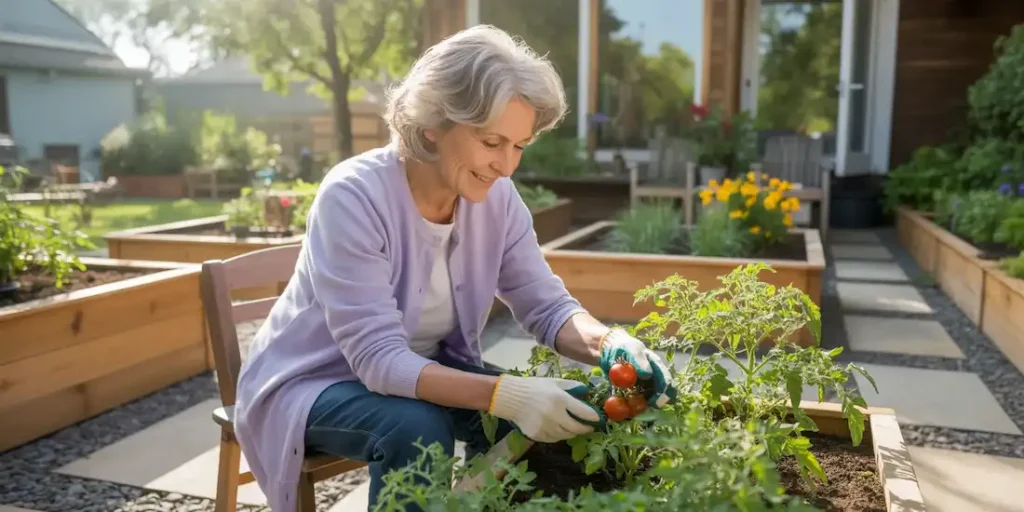
Why does gardening matter for seniors aging in place?
Gardening matters because it blends movement, purpose, and routine into one familiar activity that supports independence.
As a retired Occupational Therapist, I saw again and again that people stay stronger longer when activities feel meaningful. Gardening gives a reason to move, to care, and to stay engaged with daily life.
What are the physical benefits of gardening for seniors aging in place?
Gardening supports strength, balance, and flexibility through natural, functional movement.
Simple actions like reaching, grasping, and shifting weight help maintain:
- Lower-body strength needed for standing and walking
- Hand strength for daily tasks like cooking or dressing
- Balance and coordination through gentle weight shifting
What I’ve found encouraging over the years is that seniors are far more consistent with gardening than with prescribed exercises, because it does not feel medical or forced.
❓ Can gardening replace physical therapy or prescribed exercise for seniors?
💬 Gardening can support strength, balance, and movement, but it should not replace physical therapy when therapy is medically recommended. Gardening works best as a complementary activity that helps seniors stay active between therapy sessions or after discharge.
Can gardening really help mental health and mood in older adults?
Yes, gardening has been shown to reduce stress, anxiety, and symptoms of depression. (source: Sciencedirect.com)
Being around plants supports emotional health by:
- Creating a calming routine
- Offering visible progress and achievement
- Encouraging time outdoors or near natural light
I once worked with a client who struggled deeply with loneliness after retirement. Her emotional state shifted when she began gardening and that mattered just as much as physical strength.
How does gardening support memory and brain health?
Gardening helps cognition through repetition, sensory input, and familiarity. (source: University of Edinburgh)
Key cognitive benefits include:
- Routine-based memory cues, watering, checking soil, harvesting
- Sensory stimulation, smell of soil, texture of leaves, color changes
- Focused attention, which supports mental clarity
For people with mild cognitive impairment or early dementia, familiar gardening tasks can reduce agitation and increase calm when tasks stay simple and predictable.
You may have not heard of Dementia Gardens, but these spaces use gentle natural cues, familiar features, sensory stimulation, and safety principles to promote calm, orientation, engagement, and emotional well-being.
Is gardening safe for seniors aging in place?
Gardening is beneficial, but it must be made safe, because outdoor falls are common during gardening tasks.
Risks often come from:
- Uneven ground or stepping stones
- Overreaching while standing
- Kneeling or bending without support
- Fatigue or overheating
From an occupational therapy perspective, gardening should be treated like any other daily activity, it needs environmental support, not willpower. If you want more information about the safety considerations, you can read more about safe gardening tips for seniors that reduce fall risk and injury.
❓ Is gardening safe for seniors with osteoporosis?
💬 Gardening can be safe with the right adaptations, such as raised beds, seated tasks, and avoiding heavy lifting or twisting. Seniors with osteoporosis should avoid lifting more than 10 pounds, sudden bending, or working on uneven ground without support.
How can gardening be adapted to reduce fall risk?
Gardening becomes much safer when the environment does the work.
Helpful safety adaptations include:
- Raised garden beds at about 24 inches for seated use and 30 inches for standing
- Wide paths, ideally 36–48 inches, to allow stable walking
- Stable seating, benches with arms for rest breaks
- Non-slip surfaces instead of loose gravel
The positive side is that these changes protect energy as well as safety, which helps seniors garden longer without exhaustion. You can find practical ideas for making gardening easier for seniors by adapting tools, layout, and work height.
❓ What time of day is safest for seniors to garden?
💬 The safest time is usually early morning or late afternoon, when temperatures are cooler and energy levels are higher. Gardening during peak heat increases the risk of dehydration, dizziness, and falls.
What gardening tools help seniors with arthritis or limited strength?
The right tools reduce strain on hands, wrists, and shoulders.
Look for:
- Ergonomic handles with soft, non-slip grips
- Long-handled tools to reduce bending
- Lightweight hoses with trigger-free nozzles
- Self-watering containers to limit lifting
These tools often prevent joint pain flare-ups that cause seniors to give up activities they enjoy.
❓ Can gardening increase joint pain or arthritis flare-ups?
💬 Gardening can reduce stiffness when done gently, but overdoing it or using poorly designed tools can worsen joint pain. Short sessions, ergonomic tools, and frequent rest breaks help protect joints.
If you suffer from arthritis, you can get some great information about gardening with arthritis from the Arthritis Foundation.
Can seniors garden safely from a chair or wheelchair?
Yes, seated and wheelchair gardening is both effective and therapeutic.
Good options include:
- Tabletop planters at 28–34 inches high
- Rolling plant carts
- Vertical wall planters within easy reach
- Indoor herb gardens near windows
I once worked with a gentleman who gardened entirely from a chair using raised beds and a rolling stool. His confidence grew because he felt capable, not limited.
Does indoor gardening provide the same benefits as outdoor gardening?
Indoor gardening still supports mood, routine, and cognitive engagement.
Indoor gardening works especially well when:
- Weather limits outdoor access
- Fall risk is high
- Dementia makes outdoor supervision difficult
For seniors who cannot garden traditionally, gardening crafts for seniors offer creative, low-risk ways to enjoy plant-based activities indoors.
How much gardening is enough to be helpful?
Short, regular sessions are more beneficial than long, exhausting ones.
A helpful guideline is:
- 10–30 minutes per session
- 2–4 days per week
- Frequent rest and hydration breaks
Gardening should leave someone pleasantly tired, not sore or dizzy.
How can caregivers support gardening without taking over?
Caregivers help most by setting up safety, then stepping back.
Support looks like:
- Preparing safe spaces and tools
- Offering reminders instead of commands
- Allowing choice and control
When seniors feel ownership, gardening becomes empowering instead of frustrating.
❓ Should seniors garden alone or with supervision?
💬 Many seniors can garden independently with proper setup, but those with balance issues, memory loss, or a history of falls may need periodic supervision. Occasional check-ins often provide safety without reducing independence.
Why is gardening such a powerful aging in place activity?
Gardening supports the body, mind, and spirit at the same time.
It protects:
- Physical function through natural movement
- Mental health through purpose and routine
- Identity through continued contribution
When gardening is adapted for safety, it becomes one of the most sustainable ways to support independence at home.
What is one safe next step you can take today?
Start small and focus on safety first.
One helpful step is to:
- Add a stable chair near the garden
- Switch one planting area to a raised container
- Limit sessions to 15 minutes
Small changes protect independence, dignity, and confidence, which is what aging in place is truly about.
If you want more guidance on safe, meaningful activities for seniors aging in place, thoughtful planning can make gardening one of the most rewarding parts of staying at home.