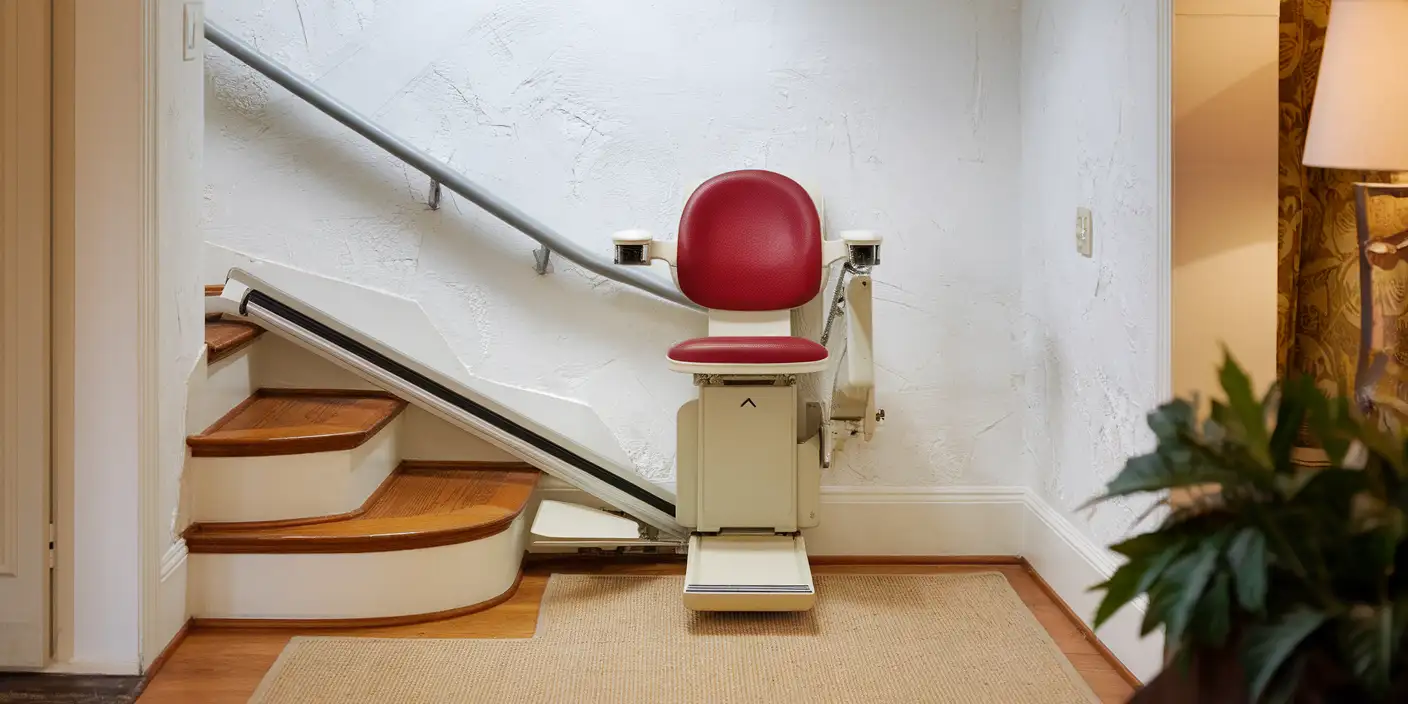
If you plan to age in place in a multi level home, you may come to the conclusion at some point that you need to make a home modification and install a stair lift to safely access the other floor(s) in your home.
The average cost of a stair lift ranges from $2,000 to $15,000 or more.
Clearly, it’s an expensive project so getting help to pay for it can be very beneficial.
Below are several options that you can look through for assistance in paying for this modification to your home.
Not sure if stair lifts are a safe option for you? Read our article on the safety features a stair lift offers.
If you live in a rental or need a stair lift temporarily, consider looking into a mobile stairlift.
Where To Get Help Paying for Stair Lifts
When it comes to purchasing a stair lift, the cost can often be a significant concern, especially for seniors on a fixed income.
However, there are several avenues of financial assistance that can make acquiring a stair lift more affordable.
Understanding these options can help seniors make informed decisions about financing their stair lifts.
Government Programs
Some government programs are designed to assist seniors with home modifications, including stair lifts.
For instance, the Older Americans Act provides funds to states for community planning and social services, home-based care, and preventive health services.
These funds can sometimes be used to help pay for home modifications.
Additionally, the Department of Veterans Affairs offers grants for veterans who need home modifications due to service-related disabilities. More on this below.
Grants and Charities
Various non-profit organizations and charities offer grants specifically for seniors needing home modifications for safety reasons.
Organizations like Rebuilding Together, a non-profit focused on home rehabilitation, and the National Council on Aging can sometimes provide financial assistance or resources for acquiring a stair lift.
Local Community and State Programs
Many states and local communities offer programs to assist seniors with home modifications.
These programs often have specific eligibility requirements and may offer direct financial assistance, low-cost loans, or tax credits for home modifications.
Checking with local senior centers or Area Agencies on Aging can be a great starting point to learn about these opportunities.
Manufacturer and Supplier Assistance
Some stair lift manufacturers and suppliers offer financing plans or rental options.
Renting a stair lift can be a cost-effective solution for those who need it for a short period.
Additionally, some suppliers might have refurbished models that are more affordable than brand-new units.
In addition, we have a list of where to buy new and used stair lifts here.
The following sections provide details on each of these options.
Does Medicare Pay For Stair Lifts?
Generally, Medicare does not cover the cost of stair lifts, as they are considered home modifications rather than durable medical equipment (DME).
However, in some cases where the stair lift includes medical equipment features, part of the cost might be covered.
It’s always worth consulting with a Medicare representative to understand any potential coverage.
Will Medicaid Pay For Stair Lifts?
Unlike Medicare, Medicaid can offer more flexibility.
Many states have HCBS waivers that provide funding for home modifications, including stair lifts, to help beneficiaries remain in their homes.
Eligibility and benefits vary by state, so it’s important to check with your state’s Medicaid office.
As noted in PayingForSeniorCare.com Medicaid will likely cover the cost for medically necessary, stair lifts provided they enable individuals to remain living in their own home and avoid nursing home placement.
Check out our list of phone numbers to Medicaid offices in every state. Give them a call to find out if you can get some funding for your stair lift project.
Medicaid’s Money Follows the Person (MFP) Program
This program is designed to help seniors transition from nursing homes to living in their own homes or community.
If you qualify, the MFP program may cover the cost of a stair lift as part of a broader package of home modifications.
Community Medicaid Programs
Some states offer community Medicaid programs that may cover home modifications under certain conditions.
These programs are often aimed at preventing the need for institutional care and might fund stair lifts to enhance mobility at home.
Does Health Insurance Cover Stair Lifts?
Most standard health insurance policies do not, unfortunately, cover the cost of purchasing and installing a stair lift but some private ones may cover the cost of purchasing and installing a stair lift but some private ones may.
As with most things – every policy and every insurance company is different so we urge you to find the phone number for your insurance agent and contact them for more information about the details of your particular policy.
“Some policies allow individuals to use benefits to cover home modifications.” – lifewaymobility.com
Will The VA Pay For Stair Lifts?
If you were in the military, your military service benefits may get you some funding from the Veteran’s Administration (VA), the VA Aid and Attendance Benefit.
As a veteran you can also apply for financial help through government grants from any of the following:
- SAH Grant (Specially Adapted Housing)
- SHA Grant (Special Home Adaptation)
- HISA Grant (Home Improvements and Structural Alterations)
State Assisted Programs in the United States
There are many state assisted programs through Medicaid that are very good resources to help you fund your stair lift project, wheelchair ramps, and mobility aids (and other needs as well).
Click here for a list of contact information for Medicaid programs in each US state.
In addition – there are other state assistance programs based on financial need that may be able to help pay for your home modifications.
You can find a list of state programs here.
Stair Lift Grants Available in England, Wales and Northern Ireland
Residents of England, Wales and Northern Ireland can apply for the Disabled Facilities Grant (DFG) which is provided for the purpose of making modifications to the home to make it safer for older adults and the disabled.
You will need a referral by a healthcare professional such as an Occupational Therapist or social care worker.
Contact your physician for more information.
In Store Financing
Stair lift companies like California Mobility provide financing, if required, through their partnership with R.T. Financial Services.
Are Stair Lifts Tax Deductible?
In order for any medical equipment to qualify for a tax deduction, it must be considered medically necessary.
This means that you must have a prescription or written recommendation from your doctor.
Generally, most home modifications that are done for the purpose of making the home a safer environment for the senior who is aging in place can be tax deductible.
Is it possible to get a free stairlift?
Other Funding Options
Aside from what I’ve already mentioned, there are other avenues seniors can explore to fund stair lifts.
These options might provide more flexibility and accessibility depending on individual circumstances.
- Personal Loans: Personal loans can be a viable option for those who have good credit and can manage additional monthly payments. Banks, credit unions, and online lenders offer various loan products that can be used to finance home modifications like stair lifts.
- Home Equity Loans or Lines of Credit: If you own your home and have built up equity, you might consider a home equity loan or line of credit. These options use the equity in your home as collateral and can provide a lump sum or a credit line to fund your stair lift installation.
- Community Aid and Local Non-Profits: Local non-profit organizations, religious groups, or community service clubs often have programs or funds set aside to assist seniors with home modifications. Reach out to local organizations in your community to inquire about available assistance.
- Manufacturer’s Financing and Rental Programs: Some stair lift manufacturers offer financing options directly to consumers, which can spread out the cost over time. Additionally, consider rental programs for temporary needs, which can significantly reduce the upfront cost.
- Crowdfunding: As a more modern approach, some individuals turn to online crowdfunding platforms to raise money for home modifications. This can be an effective way to gather small contributions from a wide network of people.
- Insurance and Legal Settlements: If your need for a stair lift is due to an injury or accident, insurance settlements or legal restitution might cover the cost. Consult with your insurance provider or attorney to explore these options.
Each of these funding sources has its own advantages and considerations.
Conclusion
The bottom line is that there are options available for you to explore to help you to pay the purchase price and perhaps the installation of a stair lift in your home.
It’s one of the best ways to stay safe while you age in place in a multi level house.