Non slip bath mats can reduce slipping in the tub, but they do not work in every bathroom, and some can create new fall hazards if they curl, slide, or trap soap film.
In this guide, I explain what works and what doesn’t, how to choose the safest mat for your surface, and how bath mats fit into a bigger plan for bathroom fall prevention.
Quick Rundown: Choose the right mat and avoid hidden hazards
- Choose the right surface match: Suction mats work best on smooth tubs, not textured floors or many tile showers.
- Understand “non slip” labels: There is no official safety standard, so real-world performance matters more than claims.
- Prevent suction failure: Clean soap scum first, press firmly, and re-seat the mat often.
- Watch for trip edges: If corners lift or the mat shifts, it is not safe.
- Control mold risk: Rinse, hang-dry, and clean weekly so water does not sit underneath.
- Know when to skip the mat: Non-slip strips, a shower chair, and grab bars may be safer.
These steps work best when they are part of a broader approach to bathroom fall prevention strategies.
When do non slip bath mats work well?
They work best on smooth, non-textured tub floors when the mat lays flat, holds suction, and drains water well. They work poorly when the surface is textured, the mat is dirty, or the edges lift.
Many families assume a mat alone makes a bathroom safe, but in reality, it is only one small part of how to improve bathroom safety.
What usually works best
- A rubber or PVC suction-cup bath mat made for inside the tub
- A mat sized to fit the tub floor without folding
- A design with drain holes so water does not pool
- A tub floor that is smooth, not pebbled or deeply textured
What does “non slip” really mean?
It means the product is designed to reduce movement, but it does not mean it meets a regulated safety standard. In the United States, there is no official certification that guarantees a bath mat will not slip.
This is why mats should be viewed as one tool within bathroom fall prevention without remodeling, not a complete solution.
What are the biggest safety risks with bath mats for seniors?
The biggest risks are sliding, curling edges, and tripping, plus hygiene problems like mold under the mat that can make surfaces slick.
When mats become unpredictable, families often need to look beyond mats and focus on proven bathroom fall prevention strategies that reduce risk from multiple angles.
Do non slip bath mats work in walk-in showers and zero-entry showers?
Sometimes they do, but many suction mats fail in walk-in showers because floors are often tile, textured, or sloped.
In these spaces, traction alone is not enough. Lighting plays a major role in safety, especially for aging eyes. Improving visibility with bathroom lighting solutions for seniors can reduce hesitation, missteps, and loss of balance.
Are non slip bath mats safe for seniors with dementia?
They can be safe if they are stable and familiar, but unsafe if they move or visually confuse.
For many families, better results come from simplifying the environment and combining lighting, grab bars, and seating rather than relying on floor coverings alone. This layered approach is explained in more detail in my guide on how to improve bathroom safety.
How do material choices affect safety?
Material affects grip and surface compatibility.
Important distinction
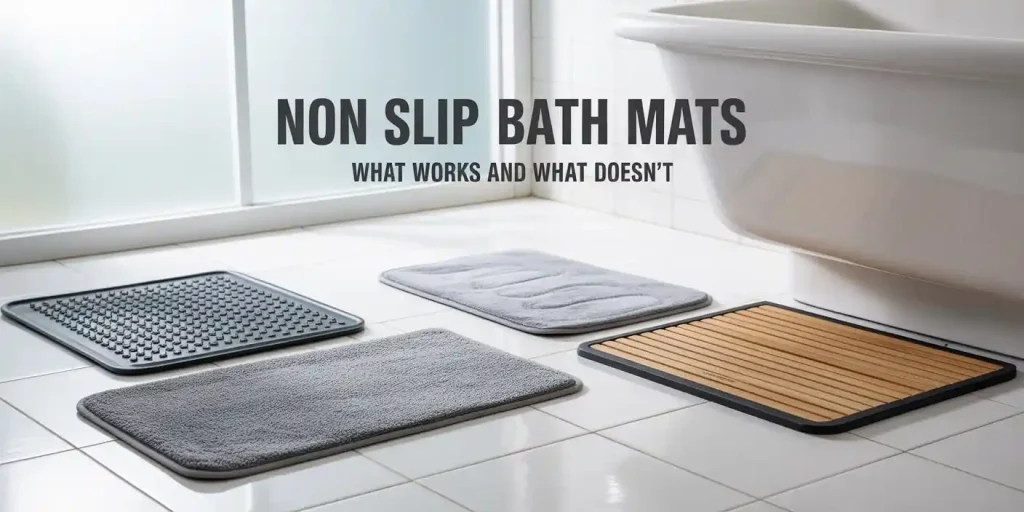
Plush or memory foam bathroom rugs are not safety mats and should never be used inside a tub or shower. If slipping rugs outside the tub are a concern, this article on how to keep bathroom rugs from slipping explains safer options.
How do you clean a non slip bath mat so it stays safe?
Cleaning prevents grip loss and mold, which directly affects fall risk.
Rinse after bathing, lift and hang-dry the mat, and clean underneath weekly. These habits support safer bathing and align well with bathroom fall prevention without remodeling strategies.
What is better than a bath mat in some bathrooms?
In higher-risk situations, non-slip strips, shower chairs, grab bars, and lighting are often safer and more reliable than mats alone.
These changes work together as part of a complete bathroom fall prevention strategy, especially for older adults with balance or cognitive challenges.
What is the bottom line on non slip bath mats?
Non slip bath mats can help when matched correctly and maintained, but a mat that moves or curls is no longer a safety tool. True safety comes from layering solutions that address traction, balance, vision, and confidence.
If you want to go deeper, start with this comprehensive guide to bathroom fall prevention strategies and then decide whether a bath mat truly belongs in your bathroom.