Staying active in the winter is about more than exercise. It’s about protecting your strength, balance, mood, and independence. Cold weather, icy sidewalks, and shorter days make movement harder, but with the right plan you can stay safe and keep moving.
Seniors can prevent winter decline with indoor workouts, safe outdoor routines, and activities that bring purpose and joy.
Quick Rundown: Tips on How Seniors Can Stay Active During the Winter
- Stay Safe: Wear traction shoes or cleats, and avoid icy sidewalks.
- Stay Strong: Build muscle and balance with sit-to-stand practice and heel-to-toe walking.
- Stay Social: Join mall walking programs, group fitness classes, or volunteer activities.
- Stay Engaged: Try chair yoga, resistance band workouts, or exergaming at home.
- Stay Ready: Always keep a storm-day backup routine for bad weather.
- Stay Nourished: Eat protein, get enough vitamin D, drink 6-8 cups of water, and rest well.
- Stay Purposeful: Add hobbies or volunteer work to stay mentally sharp and connected.
Let’s dive into the best winter activity strategies for seniors.
Why Does Staying Active in Winter Matter for Seniors?
Seniors need winter activity to prevent falls, maintain mobility, and protect brain health.
When you stop moving, muscles weaken, balance decreases, and everyday tasks get harder. Regular movement helps reduce fall risk, support heart health, and lift mood.
Exercise also protects memory and reduces winter blues. I remember helping my neighbor Carol last year. She stopped her daily walks because of icy sidewalks, and within weeks her legs grew weaker, and she became more unsteady.
Once she joined a mall walking club, her energy and confidence came back.
How Can Seniors Stay Safe While Exercising in Winter?
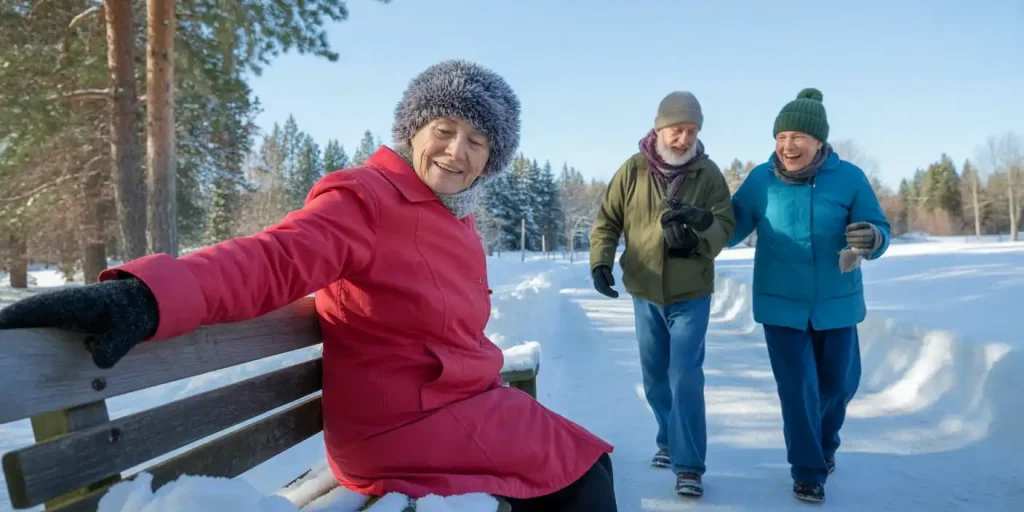
The safest way to stay active outdoors is to dress right, know your limits, and prepare your environment.
- Wear traction cleats or non-slip, rubber-soled shoes to prevent slips. For example, see ice & snow traction cleats with easy-on grips.
- Dress in layers: moisture-wicking base layer, insulating mid-layer, and a wind- and water-resistant jacket.
- Add a hat, insulated gloves, and a scarf to protect exposed skin.
- Consider using battery powered gloves / socks for even more warmth and protection.
- Skip outdoor activity if wind-chill is below 32°F with snow or rain, or under 20°F when dry.
- Use ice melt, sand, or traction mats to clear entryways.
- Avoid heavy snow shoveling, break it into small loads or use mechanical aids, because it raises cardiac risk.
I once worked with a senior man who thought snow shoveling was “exercise.” Although it can be for some, as an occupational therapist I had to gently explain that for him, it was more of a high-risk chore than a safe fitness activity.
Snow shoveling combines heavy lifting, twisting, and repetitive motion in cold weather. For older adults, that mix can strain the heart, raise blood pressure, and increase the chance of back injuries or falls.
Instead of telling him “don’t do it,” I helped him see how he could still get movement while keeping his body safe. We even worked on how to break down daily tasks into small, steady bursts of activity so he felt like he was exercising without risking injury.
❓ How cold is too cold for seniors to exercise outside in the winter?
💬 Avoid outdoor exercise when wind chill is below 32°F with moisture or 20°F in dry air. These conditions raise the risk of hypothermia, frostbite, and falls. Switch to indoor workouts when it’s unsafe.
❓ What should seniors wear to exercise outdoors in cold weather?
💬 Layering works best: moisture-wicking base layer, insulating fleece or sweater, and wind- and water-resistant outer layer. Add a hat, scarf, and shoes with good traction. This keeps you warm without overheating.
What Are the Best Indoor Activity Options for Seniors?
The best indoor activities are those that build strength, balance, and endurance in safe environments.
- Mall Walking Programs: Safe, climate-controlled, and social. Many malls run clubs with mapped step goals.
- Senior Center Classes: Chair yoga, gentle strength training, and water aerobics designed for older adults.
- At-Home Workouts: Free YouTube videos with 10-30 minute sessions for flexibility and strength.
- Exergaming: Video-based workouts or balance games that combine physical and brain training.
❓ What equipment should seniors keep at home for safe winter workouts?
💬 Keep simple gear: resistance bands, light dumbbells (1-5 lbs), a sturdy chair, a non-slip exercise mat, and traction socks.
Why Should Seniors Consider Aquatic Exercise in Winter?
Indoor pools and water aerobics provide joint-friendly movement that relieves stiffness and improves circulation.
Most heated pools stay at 80-88°F, which is ideal for arthritis or sore muscles. Walking in shallow water, gentle swimming, or joining a water aerobics class gives both cardio and strength benefits.
Just 20-30 minutes, 2-3 times a week can improve balance and endurance without strain.
How Can Seniors Build a Winter Exercise Routine That Sticks?
The most effective routine includes strength, balance, mobility, and endurance, spread across the week.
Weekly Winter Routine Example:
- Monday: Sit-to-stand practice, heel-to-toe walking, supported balance holds (20 minutes).
- Tuesday: Mall walking or indoor walking track (30 minutes).
- Wednesday: Chair yoga or posture flow video (20 minutes).
- Thursday: Exergaming or low-impact cardio session (25 minutes).
- Friday: Water aerobics in a heated pool (30 minutes).
- Weekend: Outdoor walk if sidewalks are clear, or storm-day backup workout indoors.
Target 150 minutes of moderate-intensity activity each week (30 minutes, 5 days). Break it into 10-15 minute bouts if that feels easier. Always warm up for 3-5 minutes and cool down for 5 minutes.
❓ Can seniors safely exercise alone in the winter?
💬 Yes, but always take precautions. Exercise near a phone, let a friend know your schedule, and stay in safe, slip-free spaces. If going outside, share your route and expected return time.
How Should Seniors Adapt If They Have Health Conditions?
The safest way is to adapt exercises to your condition and talk to your doctor before starting.
- Arthritis: Water aerobics, chair yoga, or resistance band routines.
- Heart Conditions: Avoid heavy shoveling or sudden exertion. Choose steady, light cardio.
- Balance Issues: Always stay near a sturdy chair, wall, or rail support.
Small, consistent steps matter more than intensity. Even 10 minutes twice a day is safer and better than doing nothing.
How Can Seniors Make Their Home Safer for Winter Activity?
The key is to create a well-lit, clutter-free, slip-proof space.
- Add bright LED lights in hallways and exercise areas.
- Remove loose rugs or use non-slip mats.
- Install grab bars in bathrooms and near stairs.
- Use traction mats and ice melt on steps and entryways.
This prevents falls and gives peace of mind while exercising indoors.
What Role Do Nutrition, Sleep, and Rest Play in Winter Activity?
Good food, hydration, and rest help fuel safe movement and recovery.
- Nutrition: Eat protein at every meal, colorful vegetables, and vitamin D-rich foods like salmon, eggs, or fortified milk. Ask your doctor about supplements.
- Hydration: Drink 6-8 cups of water daily, even when you don’t feel thirsty.
- Sleep: Aim for 7-8 hours each night, stick to a routine, and avoid screens before bed.
❓ How can seniors get enough sunlight and vitamin D in the winter?
💬 Try 10-20 minutes of daylight exposure each day, even sitting near a bright window. Combine with vitamin D-rich foods or supplements if advised by your provider.
Can Seniors Stay Active with Hobbies and Volunteering?
Yes, hobbies and volunteering count as activity while also fighting isolation and adding purpose.
- Active hobbies: Cooking, light gardening, or crafts that use fine motor skills.
- Brain hobbies: Puzzles, painting, or memory games.
- Volunteering: Walking dogs, mentoring online, or helping at community events.
These activities keep both the body and mind engaged.
How Do Seniors Stay Motivated and Connected in Winter?
The best motivators are accountability, social contact, and celebrating progress.
- Join a 12-week walking challenge with friends.
- Focus on exercise as “brain medicine” that protects memory.
- Reward yourself with a coffee meet-up after activity.
- Pair social contact with movement, mall walks, fitness classes, or group calls for online exercise.
When activity feels social and purposeful, it’s easier to stick with.
Conclusion
Winter doesn’t have to mean losing independence or mobility. With the right strategies, you can stay active, safe, and connected all season long.
Start small: try a 10-minute chair yoga video, take a mall walk, or join a senior swim class. Staying active in winter protects your strength, your balance, and your joy.