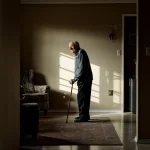
Bathroom lighting for seniors is more than a design choice, it’s a safety necessity. The right lighting reduces fall risks, supports aging eyes, and makes nighttime bathroom visits easier.
Motion sensors, LED nightlights, and layered lighting help older adults stay safe and independent at home.
Quick Rundown: Bathroom Lighting That Keeps Seniors Safe From Falls
- Poor lighting = high risk: Dim or outdated fixtures can cause trips, missteps, and nighttime disorientation.
- Layered lighting works best: Combine ambient ceiling lights, task lights at mirrors, and pathway lights near floors.
- Motion-sensor upgrades: Hands-free illumination prevents fumbling for switches in the dark.
- Circadian-friendly nightlights: Amber or red tones reduce confusion and support sleep cycles, especially in dementia care.
- Smart voice control: Alexa-enabled systems let seniors adjust lights safely without touching switches.
- Pair with other safety tools: Grab bars, non-slip floors, and emergency devices create a fully protected bathroom.
If you’ve ever worried about a loved one tripping in the bathroom at night, you’re not alone. I’ve seen how one simple change in lighting can prevent a fall and bring peace of mind to families.
As a certified aging-in-place specialist and retired occupational therapist, I’ll guide you through practical, affordable lighting upgrades that work in real homes.
You’re about to discover why bathroom lighting isn’t just about style, it’s one of the most effective fall-prevention tools for older adults.
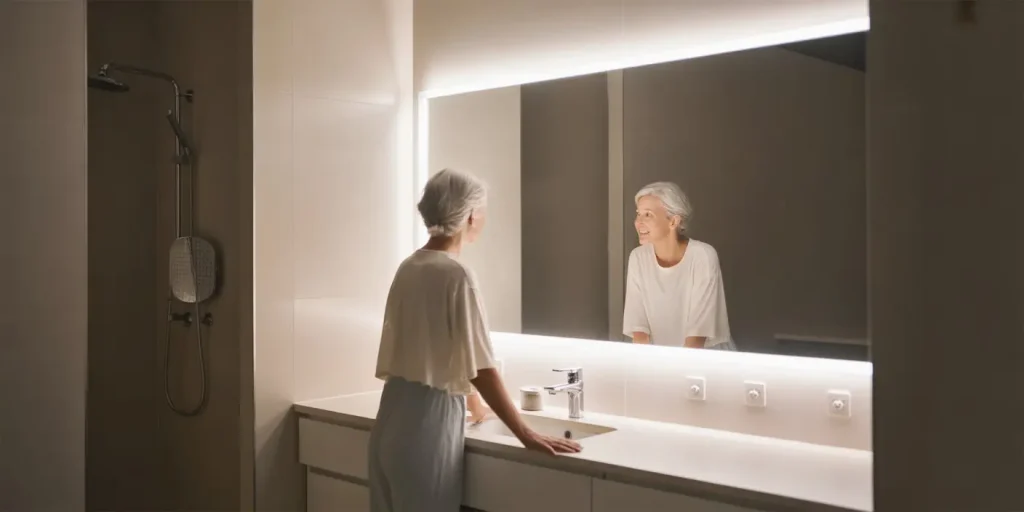
Why Is Bathroom Lighting So Important for Seniors?
As we age, our eyes change. We need brighter, more even lighting to move around safely, especially in places like the bathroom.
Without proper lighting, seniors face:
- Missed steps around the toilet or tub
- Disorientation at night
- Trouble grooming or reading medication labels
- Higher risk of falls and injury
One patient of mine, Mrs. Hall., told me her husband slipped on the bathroom floor at 2 a.m. He couldn’t see well in the dark, and there were no nightlights.
After that scare, we made some quick changes that helped prevent it from happening again.
What Kind of Lighting Do Older Adults Need in the Bathroom?
Seniors benefit from lighting that is:
- 300 – 1,000 lux in total brightness
- Color Rendering Index (CRI) 90+ for accurate color vision
- Warm color temperature (around 3200K) to feel calm and natural
- Even and glare-free so shadows don’t cause confusion
Lighting should support both mobility and vision changes, which are common with age.
Lux Light Meter Pro (Apple / Android)
A great app to put your smart phone is the Lux Light Meter Pro. You can get an accurate reading of the lux units in any area.
- Offers both lux and foot‑candle units, real-time readings, and simple calibration settings
- Rated consistently high and frequently recommended as one of the best lux meter apps available.
❓ What is the safest color temperature for bathroom lighting for seniors?
💬 A warm white light around 2700K to 3200K is ideal for seniors. This range is soft on aging eyes, reduces glare, and helps maintain a calm, relaxed environment, especially in the evening. Cooler temperatures (above 4000K) may feel harsh and can disrupt sleep cycles, particularly for older adults who are sensitive to bright or bluish light.
Best Bathroom Lighting Solutions for Aging in Place
✅ Use Layered Lighting for Full Visibility
Relying on one overhead light isn’t safe. Seniors need layered bathroom lighting:
- Ambient lighting (recessed LED ceiling lights)
- Task lighting (vanity fixtures on both sides of the mirror)
- Accent or pathway lighting (toe-kick LED strips under cabinets or along baseboards)
After we added vanity sconces to my aunt’s bathroom, she said, “Now I can finally see to brush my hair without shadows.”
❓ Where should I place lighting to prevent bathroom falls?
💬 Focus on high-risk areas: the bathroom doorway, around the toilet, inside the shower, and along the path from the bedroom. Install motion-sensor or presence-based lights low to the ground (like toe-kick or under-cabinet strips) and pair them with overhead task lights to eliminate shadows and improve depth perception.
✅ Add Motion-Sensor Lighting for Fall Prevention
Motion-sensor lights help seniors avoid fumbling for switches. Ideal placements include:
- Bathroom entrance
- Toilet area
- Under vanity or cabinets
Look for features like:
- Adjustable brightness
- Warm dimming
- Battery backup or hardwiring
There are all kinds of motion sensor lights that you can add to your bathroom.
These lights are part of a fall prevention strategy that works without needing voice commands or tech learning.
✅ Install Circadian-Friendly Nightlights
Seniors often wake at night. Use nightlights for seniors that:
- Stay dim enough to avoid waking them fully
- Use amber or red tones, not blue light
- Sit low to the floor, like toe-kick LED strips or plug-in baseboard lights
- Are motion-activated or dusk-to-dawn
Lighting that supports natural sleep cycles, or human-centric circadian lighting, can also ease confusion in people with dementia.
❓ Can lighting help a senior with dementia feel less confused at night?
💬 Yes. Soft, low-glow lighting that turns on automatically can reduce confusion and agitation at night, especially for seniors with dementia. Using visual pathway lights (like LED strips from bed to bathroom) helps them orient themselves without feeling startled by sudden brightness. Avoid harsh or flickering lights, which can increase distress.
How Do You Make Bathroom Lighting Easy for Seniors to Control?
✅ Use Universal Design and Accessible Controls
Keep lighting controls simple. Follow universal design guidelines:
- Use rocker-style light switches or smart scene controllers
- Mount switches 36 – 48 inches high for reachability
- Place controls near bathroom entries and exits
- Choose options with large labels or tactile buttons
You can set up:
- “Night Mode” for soft path lighting
- “Grooming Mode” for full brightness at the mirror
- Hands-free motion settings
These small changes give older adults more control and confidence.
Here’s a new section you can seamlessly add to your article, written in your compassionate, clear brand voice and optimized for AEO/GEO with specific, actionable details. It focuses on using Alexa for lighting control and emergency support in the bathroom:
How Alexa Can Help With Bathroom Lighting and Emergencies
Smart assistants like Alexa can make bathroom lighting safer and easier for older adults, especially when paired with voice-friendly devices.
💡 Use Alexa to Control Lights Without Touching Anything
For seniors with limited mobility or vision problems, reaching a switch can be tough. With Alexa, you can use voice commands to:
- Turn lights on or off (“Alexa, turn on the bathroom light”)
- Dim the lights or change their color temperature
- Activate a “night mode” scene with softer lighting
- Set timers to turn off lights automatically
To use Alexa for lighting, you’ll need:
- Smart bulbs like Philips Hue, Sengled, or Kasa
- Or smart plugs if you’re using standard lamps
- A compatible Alexa device (like Echo Dot or Echo Show)
Once connected, the system responds instantly to simple voice commands, even if your hands are wet or you’re using a walker.
How Much Does It Cost to Upgrade Bathroom Lighting?
Here’s a cost breakdown:
- LED vanity lights: $50 – $150
- Motion-activated nightlights: $10 – $40 each
- Smart wall switches: $30 – $80
- Professional installation: $100 – $300
You can start small:
- Add nightlights for navigation
- Replace old fixtures with high-CRI LED lights
- Install motion sensors near high-risk areas
❓ Should bathroom lighting for seniors be hardwired or plug-in?
💬 Hardwired lighting is more secure and permanent, making it a better choice for ambient and task lighting in a senior’s bathroom. However, plug-in LED nightlights or battery-powered motion lights can be great low-cost additions in tight spaces or as temporary upgrades. Ideally, use both for layered safety.
Can Better Lighting Improve Mood and Sleep?
Yes. Proper bathroom lighting supports:
- Safer nighttime navigation
- Better sleep patterns
- Lower anxiety during late-night bathroom visits
- Fewer fall-related injuries
Research shows that destination visual-cue lighting, like LED strips leading to the toilet, can reduce nighttime falls by over 30%. It also lowers stress for seniors with memory loss or vision problems.
What Should I Avoid in a Senior Bathroom?
- Only using overhead lighting
- Fluorescent or flickering bulbs
- High-gloss tiles without proper lighting
- Controls that require complex apps
Choose non-slip flooring, avoid glare, and eliminate shadows. These details matter just as much as the light itself.
Bonus Safety Upgrades to Pair with Bathroom Lighting
Lighting alone isn’t enough. Combine it with other aging-in-place bathroom safety solutions:
✅ Install Grab Bars
- Near the toilet, shower, and tub
- With visual contrast so they’re easy to spot
- Consider lighted grab bars for visibility at night
✅ Use Non-Slip Surfaces
- Textured tiles or slip-resistant mats
- Curbless showers with clear, well-lit entry points
✅ Add Safety Devices
- Emergency pull cords near the toilet
- Wall-mounted bathroom call buttons
- Anti-fog mirrors to support vision in humid spaces
❓ Are there lighting options that can work during a power outage?
💬 Yes. You can find battery-powered motion lights, solar backup lights, and smart LED bulbs with emergency battery backup. These are helpful for seniors who may not be able to safely navigate a dark home during an outage. Keep at least one emergency light in the bathroom and hallway for safety.
Can Bathroom Lighting Be Part of a Smart Home System?
Absolutely. Think of lighting as one piece of a smart home safety ecosystem. Other tools that work well with senior-friendly bathroom lighting:
- Wearable fall detectors
- Voice-free emergency alerts
- Reminder systems (for medication or hydration)
- Smart thermostats to prevent hot water burns
- Motion sensors outside the bathroom to detect wandering
These devices can give peace of mind to caregivers and help seniors live independently longer.
Real-Life Example: How One Family Made Lighting Work
A patient’s father fell trying to use the bathroom one night. We added:
- A toe-kick LED strip from the bed to the toilet
- Motion-activated lights near the vanity
- A lighted grab bar next to the toilet
The change was instant. His son told me, “He hasn’t fallen since. He feels safer, and we all sleep better.”
Finally: Simple Lighting Can Change Everything
If you’re caring for a loved one or preparing your home to age in place, don’t wait for a fall to happen. Start with one or two lighting changes.
They don’t have to be expensive. Even small upgrades, like motion lights or night-friendly LEDs, can make a big difference.
Bathroom lighting isn’t just about brightness. It’s about safety, confidence, and dignity.