Caring for someone you love can be deeply meaningful, but it can also feel incredibly lonely. You may spend long hours at home, miss out on social events, or feel like no one truly understands the weight you carry.
That kind of isolation doesn’t just affect your mood, it can take a toll on your health and well-being, too.
The hopeful news? You don’t have to carry this alone. Caregiver loneliness is real, but there are ways to ease it.
With the right support, connections, and coping strategies, you can feel less isolated and more supported in your role.
Quick Rundown: Coping with Caregiver Loneliness
- Acknowledge the Feeling: Recognizing loneliness is the first step to finding meaningful solutions.
- Stay Socially Connected: Phone calls, video chats, and short visits with friends help ease isolation.
- Join Support Networks: Caregiver groups, online or local, provide understanding and shared experiences.
- Make Time for You: Hobbies, exercise, or even quiet reading can restore a sense of self beyond caregiving.
- Seek Professional Help: Counseling or therapy offers guidance when loneliness turns into lasting sadness.
- Accept Help When Offered: Let family, friends, or respite services step in so you don’t carry the burden alone.
Now, let’s talk about why caregiver loneliness happens and how you can begin to find connection and relief.
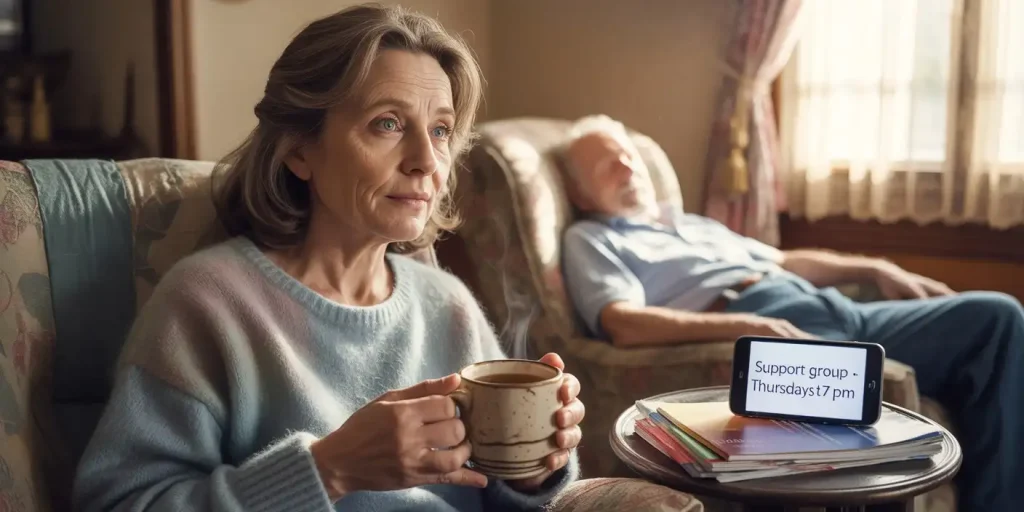
You Are Not Alone in Feeling Alone
You’re doing everything, meds, meals, appointments, lifting, helping, making sure your loved one is safe. But somewhere along the way, you may have lost your personal identity. That’s where loneliness sneaks in.
You might feel like the only person in the world who understands your caregiving responsibilities. You might even feel invisible in your own home. Friends stop calling. You can’t remember the last time you did something just for you. The silence gets heavy.
I remember Diane, a woman who cared for her husband after his stroke. She said, “People ask how he’s doing, but no one asks about me.”
Slowly, she stopped attending church, stopped chatting with her sister, stopped doing things that brought her peace. She wasn’t just tired, she was emotionally overwhelmed.
What Caregiver Loneliness Feels Like
This is more than just being alone.
Caregiver loneliness can look like:
- Feeling left out of conversations.
- Going days without meaningful interaction.
- Losing interest in hobbies.
- Feeling emotionally distant from family.
- Wondering if anyone notices you anymore.
I once worked with a woman caring for her father with Parkinson’s. She stopped painting, reading, even going outside. She said, “It’s like I’m fading away.” And that’s a sign of caregiver burnout and deep loneliness.
Why Caregiver Loneliness Can Harm Your Health
Caregiver loneliness isn’t just an emotional feeling, it’s a real health risk.
According to caregiver support organizations, 40 to 70 percent of caregivers show symptoms of depression. Loneliness also increases your risk of high blood pressure, heart disease, and sleep problems.
When you carry stress every day without relief, it starts to affect your mental well-being and physical health.
I want you to know this because your health matters too.
❓How do I talk to my doctor about how caregiving is affecting my health?
💬If caregiving is wearing you down, mention it at your next doctor visit. Your doctor can check for signs of chronic stress or depression and may connect you with local support.
Emotional Signs You Might Be Ignoring
You might be emotionally drained if:
- You feel hopeless or tear up easily.
- You snap at others, even though you don’t mean to.
- You’ve lost interest in caring for yourself.
- You have trouble focusing or making decisions.
These are signs of chronic stress and emotional fatigue, and they don’t mean you’re weak. They mean you need support.
❓What if I feel guilty taking time for myself?
💬Guilt is common, but it doesn’t mean you’re doing something wrong. Self-care helps you show up with more patience and strength. Taking care of yourself is taking care of your loved one.
What You Can Do To Feel Better
Let’s talk about real-life steps you can take, ones that fit into your day.
1. Join a Support Group
Support groups connect you with people who are also on this caregiving journey. They understand the emotional challenges and offer peer support without judgment. You can join online forums or meet in person.
Try these resources:
❓Are there ways to meet other caregivers outside of support groups?
💬If groups aren’t your thing, try volunteering at senior centers or attending local caregiving workshops. These settings often bring caregivers together naturally.
2. Use Technology to Stay Connected
Digital tools like smart speakers, virtual companions, or AI chat apps can offer reminders, play music, and provide a little companionship. They can also help with time management by setting schedules or medication alerts.
❓How can I reconnect with friends after feeling isolated for so long?
💬Start small. Send a short text to one friend. Invite someone for a short walk or coffee. Explain that you’ve been focused on caregiving, and you’re trying to reconnect. Most people will understand.
3. Take Breaks With Respite Care
You don’t have to be “on” 24/7. Use respite care services, even for a few hours a week. It gives you space to breathe. Call your local Area Agency on Aging or use the Eldercare Locator to find help.
4. Speak Up – And Be Honest
Talk to someone you trust. A therapist, doctor, friend, or clergy member. Let someone know how caregiving has changed your life. You deserve emotional support too.
5. Practice Self-Care
Self-care doesn’t need to be a big event. Walk outside for five minutes. Listen to your favorite song. Do one small thing every day that’s just for you. These tiny steps help build emotional resilience.
❓Is it okay to ask family or friends for help, even if they seem busy?
💬Sometimes loved ones want to help but don’t know how. Be specific. Ask someone to pick up groceries, sit with your loved one for an hour, or just call once a week to check in.
If You’re Caring for Someone With Dementia
Dementia caregivers often face something called “ambiguous loss.” It feels like grieving someone who’s still alive. You may feel lonely even while sitting beside your loved one.
This experience is common. Please seek out dementia-specific support. You’ll get practical strategies and understand you are not alone in this.
Financial Stress Can Make You Feel More Isolated
Many caregivers reduce work hours or leave their jobs to provide care. That leads to financial strain, which increases isolation.
You may be eligible for:
- Medicaid waiver programs
- Veteran’s benefits
- Paid family leave (check your state laws)
Visit BenefitsCheckUp.org to explore what’s available.
A Story of Hope
Joe cared for his wife who had Alzheimer’s. He said, “I feel like I’m invisible now.” I encouraged him to try a caregiver group. He resisted at first, “I’m not a talker,” he said. But after three meetings, he told me, “I laughed today. I didn’t think that would happen again.”
Joe didn’t fix everything. But he found a support network, and that made all the difference.
You Deserve Support, Too
If I could sit with you now, I’d remind you: you are doing something incredibly hard. And you don’t have to carry it all alone.
Your loved one needs you, yes. But you need you, too.
You’re still you. And you still matter.
Resources That Might Help You Today
- Family Caregiver Alliance
- Alzheimer’s Association
- Eldercare Locator
- BenefitsCheckUp.org
- AI Companion Tools
- Local home health agencies or faith-based respite programs