Living alone as an older adult doesn’t have to mean living without support. In fact, there are many helpful services for elderly living alone that make daily life safer, healthier, and more connected.
From meal delivery to home care, transportation, and technology support, these services can bridge the gap between independence and peace of mind. The encouraging part is that most of these options are flexible, affordable, and tailored to meet individual needs.
Quick Rundown: Essential Services That Help Seniors Living Alone Stay Safe and Supported
- Meal and Nutrition Programs: Meals on Wheels and grocery delivery services ensure consistent access to healthy food.
- Transportation Assistance: Senior ride programs and ride-share options like Lyft Silver help maintain mobility and independence.
- Home Care and Companionship: In-home aides and friendly visitor programs provide help with chores, errands, and emotional support.
- Medical Alert and Monitoring Systems: 24/7 emergency response tools offer peace of mind for seniors and families alike.
- Home Maintenance Support: Cleaning, handyman, and yard services reduce fall risks and keep homes in good condition.
- Community and Social Resources: Local senior centers, volunteer programs, and faith-based groups foster connection and purpose.
Now, let’s take a closer look at these services, beginning with one of the biggest daily needs: access to nutritious meals.

The Aging Population: A Global Shift
Did you know that in 2020, according to the US Census, about 1 in 6 people in the United States were age 65 and over? In 1920, this proportion was less than 1 in 20.
This change means we need to prepare to support a larger population of seniors. This is especially important for older adults living alone, who may need extra help with daily activities and staying connected.
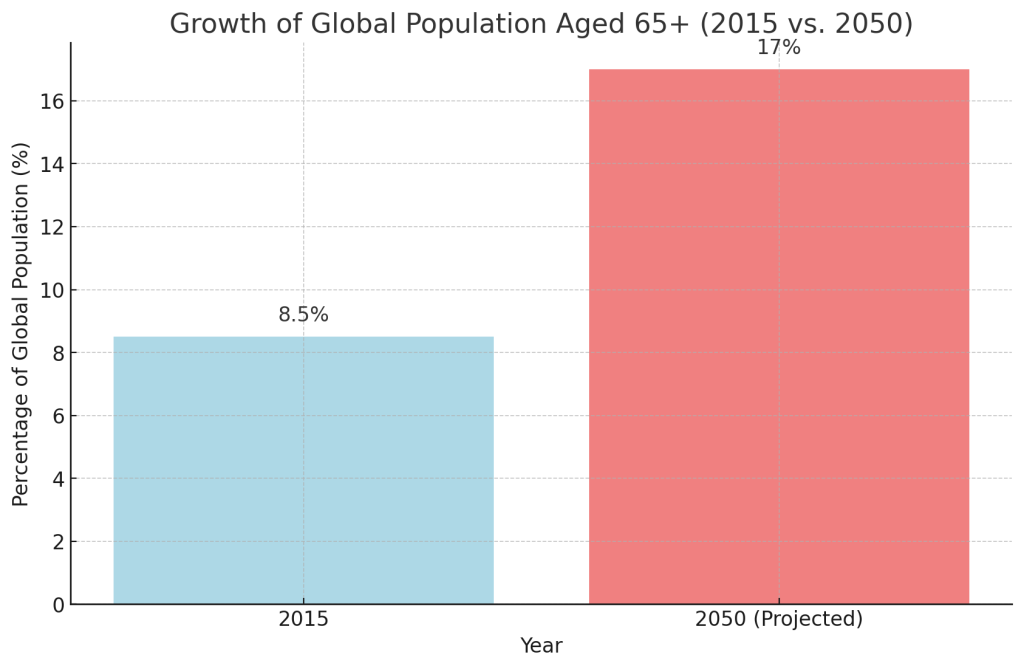
Here is a bar chart comparing the percentage of the global population aged 65 and older in 2015 and the projected percentage for 2050. It visually shows the significant growth from 8.5% in 2015 to a projected 17% in 2050. (source: National Institute of Health)
If you’d like additional comparisons or modifications, let me know!
Aging in Place: What Does It Mean?
Most older adults want to stay in their own homes as they age – this is called aging in place. Studies show that nearly 90% of seniors want to continue living in familiar surroundings, where they can keep their independence. (source: AARP)
But aging in place requires planning, especially when it comes to health care, safety, and staying connected.
Key Areas to Focus On for Aging in Place
Health Care Planning
Taking care of your health is important as you age, especially if you want to continue living on your own. Pamela D. Wilson, a geriatric care manager, suggests focusing on the following:
- Understand Your Diagnosis and Medications: Be an active participant in conversations with your doctor. Understand your health conditions and know how to manage them.
- Preventing Falls: Falls are a major concern for older adults. Staying active to maintain strength and balance can help reduce the risk of falling. This means not just being careful but keeping physically active to stay strong.
Maintaining Cognitive Health
It’s also important to take care of your brain health. Staying mentally engaged helps prevent isolation and cognitive decline.
Here are some ways to maintain good mental health:
- Socialize Regularly: Make time to interact with family, friends, or neighbors.
- Pursue Hobbies: Activities like puzzles, crafts, or reading help keep your mind sharp.
- Mentally Stimulating Activities: Try learning something new or playing games that challenge your memory and focus.
The Challenges of Aging in Place
While aging in place is ideal for many, it can also be difficult. Some media portray aging in place as easy, but the reality can be more complex. Not all older adults have access to the resources they need, especially if they live alone.
Family Caregiver Struggles: Caregivers often face heavy responsibilities when helping their aging loved ones. Many families juggle jobs, children, and caregiving duties, which can lead to emotional and physical stress.
Technology and the Digital Divide: Technology can be both helpful and isolating. Many older adults may struggle to use new devices, which can make them feel more isolated. Access to technology—such as having a phone or internet—is also crucial for staying connected.
Promising Resources and Services for Older Adults
There are many services designed to help older adults age in place. Here are some options that might be helpful:
In-Home Care Services
Home Instead Senior Care is one service that provides a range of in-home care options for older adults. These services can include help with personal care, Alzheimer’s and dementia care, and even hospice support.
This kind of service can allow older adults to remain in their homes while still getting the help they need.
VA Aid and Attendance Program
If you are a veteran or the family member of one, Vet Assist might be a valuable resource. It helps eligible veterans apply for the VA’s Aid and Attendance program, which provides financial help for in-home care.
Vet Assist can even cover the cost of care upfront while waiting for VA approval, helping to ease both financial and emotional stress.
Technology Solutions for Aging in Place
Technology can play a big role in helping older adults age in place safely and comfortably. Here are some promising technology solutions that can make a difference:
Fall Detection Devices
Fall prevention is key to aging in place safely. The National Council on Aging (NCOA) provides reviews on various fall detection devices, which can help older adults get help quickly if they fall.
These devices can be life-saving and help provide peace of mind for both older adults and their families. Some devices can even detect a fall automatically and alert emergency contacts without needing the user to press a button.
Medication Management Devices
The Hero Medication Management Device can help older adults manage their medications. It dispenses the right dose at the right time and even alerts family members if a dose is missed.
This can prevent serious complications from missed or incorrect medications.
Other similar devices include MedMinder and PillDrill, which also help keep track of medication schedules and provide reminders, ensuring medications are taken properly.
Smart Home Technology
Smart home technology can greatly improve safety and convenience for older adults.
Devices like smart speakers (such as Amazon Echo or Google Home) can be used to set reminders, control lights, make phone calls, or even check the weather—all through simple voice commands.
Smart doorbells with video cameras can help older adults see who is at the door without having to get up, adding an extra layer of security.
Smart lighting can also be beneficial. Motion-sensor lights can automatically turn on when someone enters a room, reducing the risk of falls at night.
Smart thermostats can help older adults easily control the temperature in their homes, ensuring comfort without the need to manually adjust the settings.
Virtual Companions for Older Adults
ElliQ is a virtual companion designed specifically for older adults. It uses artificial intelligence to engage in conversation, offer health tips, suggest activities, and even remind users to take their medications.
ElliQ helps reduce loneliness by proactively initiating interactions and providing personalized suggestions based on the user’s preferences.
Amazon Alexa Together is another service that provides a virtual companion experience for older adults. It allows family members to remotely monitor their loved ones, receive alerts, and even set up customized reminders.
Alexa Together also offers 24/7 urgent response support, making it a useful tool for both companionship and safety.
These virtual companions can be a comforting presence for older adults living alone, helping them feel less isolated while offering practical support.
Health and Wellness Apps
Health and wellness apps can also support aging in place by helping older adults track their physical activity, monitor vital signs, and even meditate for relaxation.
Apps like Fitbit or MyFitnessPal allow users to set fitness goals and monitor their progress. Headspace and Calm are popular apps that provide guided meditation, which can help reduce stress and improve overall well-being.
Addressing Loneliness and Isolation
Loneliness is a major concern for older adults, especially those living alone. It is important to stay socially engaged to prevent isolation, which can negatively impact health.
Papa Pals
Papa Pals is a service that provides not only companionship but also help with errands, transportation, and home safety.
In some cases, insurance plans even cover these services, recognizing that emotional and social needs are as important as physical health.
Senior Centers
Senior centers are great community resources that offer social activities, exercise classes, and educational programs. Many senior centers provide transportation to and from events, making it easier for older adults to participate and meet others.
Joining a senior center can be a fantastic way to stay socially active and engaged with the community.
Friendly Visitor Programs
Many organizations offer friendly visitor programs, where volunteers visit older adults in their homes to provide companionship. These visits can help combat loneliness and provide emotional support.
Programs like Little Brothers – Friends of the Elderly or local church groups often run such initiatives, offering regular social interactions for older adults living alone.
Telephone Reassurance Programs
Telephone reassurance programs connect older adults with volunteers who make regular phone calls to check in on them. These calls can be a source of comfort and connection, particularly for those who may not have many visitors.
Programs like AARP’s Friendly Voices are available to ensure older adults have someone to talk to regularly.
Virtual Social Groups
Virtual social groups can be a great way for older adults to connect with others without leaving home.
Online platforms like Senior Planet offer classes, discussion groups, and activities that allow older adults to socialize, learn, and stay connected. These virtual meetups can be especially beneficial for those with limited mobility or who live in more remote areas.
Community-Based Support
Community programs are also essential in supporting older adults. For example, in Seoul, volunteers help older adults get to medical appointments and provide companionship during visits.
This kind of community support can make a big difference, especially for those without close family nearby.
In Germany, a community called the Department of Future Aging has been designed to help older residents live comfortably and independently.
This town is set up specifically to be age-friendly, making everyday activities easier for older adults.
Key Takeaways
- Plan Ahead: The best time to plan for aging in place is now. Think about what you might need as you grow older and start making changes today.
- Stay Active and Engaged: Physical activity helps prevent falls, and staying mentally engaged helps combat loneliness and cognitive decline.
- Use Available Resources: There are many services out there, from in-home care to community support. Find out what is available in your area to help you stay independent.
- Keep an Open Mind: Aging in place isn’t one-size-fits-all. Your needs may change over time, so it’s important to remain flexible and explore different options.
One Small Step
What is one small step you can take this week to prepare for the future or support an older adult you know?
It could be something simple like reaching out to a neighbor, researching local services, or talking to a loved one about future plans. Every little step counts.
Final Thoughts
Aging in place is a wonderful goal, but it takes planning and support to make it possible. With the right resources and community support, older adults can live comfortably and independently in their homes for many years to come.