The bedroom should be a place of rest and comfort, but for older adults, it can also be one of the most dangerous rooms in the home. Learning how to make the bedroom safer for seniors can prevent falls, improve sleep, and support independence day and night.
Many caregivers worry about hidden hazards like clutter, poor lighting, or furniture that’s hard to navigate. These concerns are real, but the uplifting news is that small, thoughtful changes can transform a bedroom into a secure, calming space that promotes both safety and peace of mind.
Quick Rundown
- Good lighting reduces nighttime fall risks.
- Clutter-free floors and secured rugs prevent tripping.
- Bed height and supportive furniture improve accessibility.
- Safety devices like grab bars or bed rails add security.
- Fire safety and emergency access should not be overlooked.
With these essentials in place, let’s walk through the most effective ways to make a bedroom safer for seniors while still keeping it warm and welcoming.

The Importance of Bedroom Safety for Seniors
Bedroom safety is crucial for seniors, with fall prevention being a top priority. Falls are a major risk for older adults, often leading to serious injuries and loss of independence.
Some simple modifications can help seniors feel more secure and independent while reducing the chance of an accident.
Falls are a leading cause of injury among older adults. In fact, one in four Americans aged 65 or older falls each year, with many of these falls occurring in the home, including the bedroom. (source: CDC).
Here’s a comprehensive Fall Prevention Checklist.
The Connection Between Environmental Safety and Mental Well-being
A safe bedroom is not just about physical security, but also about creating a sense of emotional and psychological safety.
When we feel secure and protected in our environment, our minds are better able to relax and unwind, leading to improved sleep quality and reduced anxiety.
Okay, so what can older adults do to help make their bedroom a safer space and help to prevent falling? Here are some tips:
- Install nightlights or extra lamps to improve lighting, especially in areas where you need to walk or get out of bed.
- Move furniture or remove furniture in order to create a clear path for walking.
- Use non-slip mats or stickers on the floor to prevent slipping.
- Make sure your bed is at a comfortable height and consider using a bed rail or grab bar for extra support.
- Keep clutter and tripping hazards, like cords or shoes, to a minimum.
- Take advantage of the amazing assistive technology available these days.
Now, let’s talk a bit more about each one of these tips. But first, we have to start with a baseline, so let’s assess the situation.
Assessing the Bedroom Environment
To make a bedroom safer for seniors, it’s important to start by evaluating the current setup. A thorough assessment can help you identify areas that may need adjustment or improvement to prevent accidents.
Take a walk around your bedroom and make a mental note of any potential hazards or areas that could use improvement. Ask yourself:
- Are there any dark corners or areas where it’s hard to see?
- Are there any cords or wires that could be tripping hazards?
- Are there any cluttered areas or piles of clothes that could cause me to trip?
- Are there any slippery surfaces, like a rug or tile floor, that could be a hazard?
- Are there any areas where I have to navigate through tight spaces or corners?
If you answered “yes” to any of these, then you know it’s time to get to work.
Solutions To Make Your Bedroom Safer
Lighting Solutions
Proper lighting is the first issue to tackle. It plays a crucial role in making the bedroom safer for seniors, especially when moving around at night. Inadequate lighting can lead to trips and falls, which are particularly dangerous for older adults.
By using the right lighting solutions, seniors can navigate their bedroom with greater confidence and reduce the risk of injury.
1. Strategic Placement of Night Lights
Night lights are a simple yet effective way to improve bedroom safety. Placing them strategically along the floor, especially near the bed and along the path to the bathroom, can help prevent falls by ensuring that the way is clearly visible.
Night lights should provide enough illumination to guide movement but not be too bright to disrupt sleep. Ideally, place them in areas where seniors might walk during the night, such as next to the bed, in the hallway, or near doorways.
See a collection of motion sensor night lights here.
2. Motion-Activated Lighting Options
For seniors who may struggle with finding light switches in the dark, motion-activated lights are a great option.
These lights automatically turn on when they detect movement, making them ideal for late-night trips to the bathroom or when getting up out of bed. They can be placed along the floor, mounted on walls, or positioned near doorways for maximum coverage.
This type of lighting not only improves safety but also adds convenience, as there’s no need to fumble with switches in the dark.
See a collection of motion activated lights here.
3. Accessible Bedside Lamps
In addition to night lights, having a bedside lamp within easy reach is essential. Seniors should not have to stretch or get out of bed to turn on a light.
Choose lamps with large, easy-to-operate switches or touch-activated lamps, which can be turned on with a simple tap. This ensures that seniors have immediate access to light if they wake up during the night.
Consider placing the lamp close enough that it can be easily accessed without having to lean too far or risk losing balance. Accessible light switches are also crucial for overall bedroom safety.
See accessible bedside lamps here.
By integrating these practical lighting solutions, seniors can enhance their bedroom safety, reducing the risk of accidents and allowing for safer navigation of the space, especially in low-light conditions.
Furniture Arrangements and Modifications
The way furniture is arranged in a senior’s bedroom can make a big difference in terms of safety and ease of movement.
Thoughtful modifications and secure placements can reduce the risk of falls while also making the space more functional and comfortable for elderly individuals.
1. Securing Unstable Furniture
Unstable furniture can easily tip over or wobble, posing a significant hazard in the bedroom. It’s important to make sure that all furniture, especially pieces like dressers and nightstands, are stable and securely anchored.
If necessary, use furniture brackets or wall mounts to prevent tipping. This is particularly important for seniors who may use furniture for support when standing up or moving around.
Eliminating the risk of furniture shifting or tipping over helps create a safer environment.
2. Chairs with Armrests for Support
Having a sturdy furniture like a chair with armrests in the bedroom can provide seniors with extra support when sitting down or standing up. Armrests make it easier to push up from a seated position, reducing the strain on the knees and back.
When choosing a chair, make sure it’s at the right height so that the person’s feet touch the ground comfortably when sitting. Avoid using low or overly soft chairs, as these can be difficult to get out of, increasing the risk of a fall.
3. Optimal Furniture Placement for Mobility
The placement of furniture should allow for easy navigation, especially for those who may use mobility aids like walkers or canes.
Keep pathways between the bed, bathroom, and closet clear of obstacles. Avoid placing furniture too close together, which can create tight spaces that are hard to move through.
A general rule is to leave at least a 36-inch clearance in pathways to ensure smooth movement.
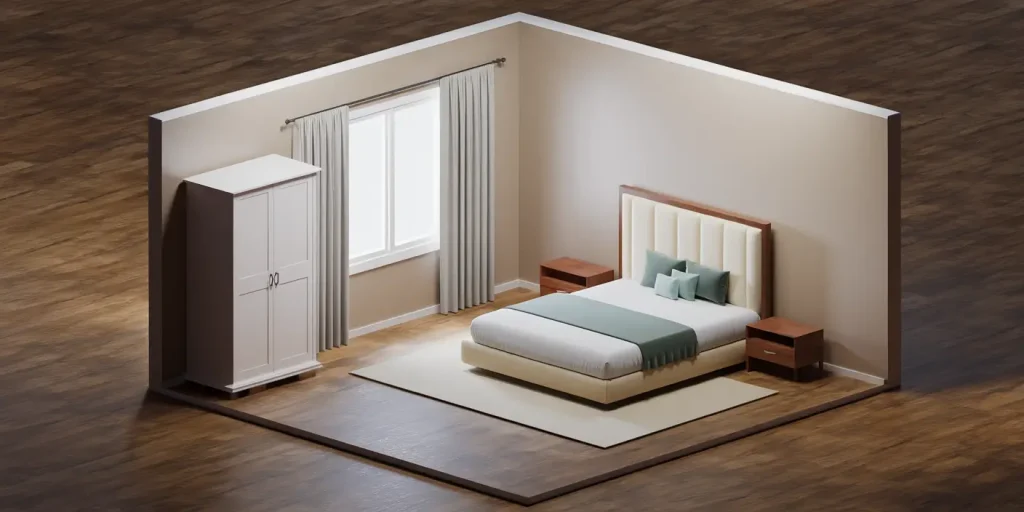
Additionally, place essential items, like a nightstand, within easy reach from the bed, so seniors don’t have to stretch or strain to access them.
Make The Floor Safer
Ensuring the flooring in a senior’s bedroom are safe is essential for preventing falls. Many accidents in the home happen due to tripping or slipping on rugs.
1. Removing Tripping Hazards
One of the first steps to improving bedroom safety is to remove any potential tripping hazards.
This includes items like electrical cords, shoes, or other small objects that may be left on the floor. Keep the floor clutter-free, especially in areas where seniors walk most, like between the bed and the bathroom or closet.
Clear floors make it easier to navigate the room without the risk of stumbling over something.
2. Non-Slip Mats and Secure Rugs
If there are any rugs in the bedroom, it’s important to make sure they are secure. Loose or curling edges on rugs can easily cause someone to trip, especially if they use a walker or cane. Use non-slip mats or pads under the rugs to keep them firmly in place.
Additionally, consider removing small throw rugs, which are common tripping hazards. If a mat is necessary, such as next to the bed or in front of the closet, ensure it has a non-slip backing to provide extra grip. Non-slip flooring throughout the bedroom can also significantly reduce the risk of falls.
See a collection of non-slip mats and rug grippers here.
3. Creating Clear Pathways
Make sure that the pathways in the bedroom are wide and clear. Furniture should be arranged in a way that allows easy movement, especially for seniors who may use mobility aids like walkers or canes.
Avoid placing furniture or decorative items in walking areas, as these can create obstacles. A clear, well-lit pathway from the bed to the door and the bathroom can significantly reduce the chance of a fall, making the room safer for nighttime trips.
Bed Safety
Ensuring bed safety is a key aspect of creating a secure and comfortable bedroom environment for seniors. The bed itself should not only offer comfort but also be easy to access and support mobility.
Making a few thoughtful adjustments can significantly reduce the risk of falls and help seniors maintain their independence.
1. Optimal Bed Height for Easy Access
One of the first things to check is the height of the bed. The ideal bed height allows seniors to sit on the edge with their feet flat on the floor, ensuring they can stand up or sit down without straining.
A bed that is too high can make it difficult to get in and out of, while one that’s too low can be equally challenging and increase the risk of falls. The goal is to have the bed at a height that promotes safe and easy transfers. Consider an adjustable bed height option for maximum flexibility and comfort.
2. Bed Rails and Transfer Poles
For seniors with mobility issues or balance concerns, installing bed rails or transfer poles can provide additional support.
Bed rails can offer stability when getting in or out of bed, and they also serve as a barrier to prevent accidental falls during the night.
Transfer poles, which are vertical poles secured between the floor and ceiling, can assist with standing up from a sitting position. Both options provide added security without restricting movement, making the bedroom a safer space overall.
See a collection of bed rails and transfer poles here.
3. Fall Mats and Their Placement
To further reduce the risk of injury, consider using fall mats. These mats are placed beside the bed and are designed to cushion the impact if a fall occurs.
They’re particularly useful for seniors who are at a higher risk of falling out of bed.
When choosing a fall mat, ensure it’s positioned correctly—ideally on both sides of the bed, if the senior gets up from either side—to provide maximum coverage and safety.
See a collection of fall mats here.
Decluttering The Bedroom
Cluttered areas and piles of clothes can be a major tripping hazard in the bedroom. When clothes, shoes, and other items are scattered around the room, it can create a obstacle course that’s just waiting to trip you up.
And let’s be honest, we’ve all been there – rushing to get dressed in the morning, or trying to find that one missing sock, and suddenly we’re stumbling over a pile of clothes or a stray shoe.
But cluttered areas aren’t just a tripping hazard – they can also make it harder to navigate the room, especially for older adults who may have mobility issues or vision impairments.
When the floor, chairs and furniture are clear and the room is organized, it’s much easier to move around and find what you are looking for.
And let’s not forget about the stress and anxiety that clutter can cause! When the room is cluttered, it can feel overwhelming and make it harder to relax and unwind.
So, what can you do to tackle cluttered areas and piles of clothes in your bedroom?
Start by taking a few minutes each day to tidy up and put away any items that are out of place. Try to put things back in their designated spot, whether it’s a drawer, a closet, or a shelf.
And consider implementing a “one in, one out” policy, where you get rid of an old item every time you bring a new one into the room. This can help keep clutter at bay and make it easier to maintain a tidy and safe bedroom.
Assistive Devices and Technology: How Can Seniors Make Their Bedroom Safer?
Incorporating assistive devices and modern technology can significantly enhance bedroom safety for seniors.
These tools not only offer peace of mind but also make it easier for elderly individuals to maintain their independence while staying safe.
1. Medical Alert Systems for Bedrooms
A medical alert system is a valuable addition to any senior’s bedroom. These systems allow for immediate access to emergency help, which can be critical if a fall or medical issue occurs. Some systems offer wearable devices, such as bracelets or pendants, that can be pressed to call for assistance.
Other systems feature bedside buttons or voice-activated alarms that can be used in case of an emergency. Alexa devices are one of those voice-activated devices that I would recommend.
Having this level of access ensures that help is just a button press away, especially for seniors who live alone or are prone to falls. Some advanced systems even include fall detection devices that can automatically alert emergency services if a fall is detected.
2. Voice-Activated Devices for Convenience
Voice-activated devices, such as smart speakers, can make daily tasks easier and safer for seniors.
These devices allow seniors to control lights, set alarms, or call for help without needing to get out of bed. For example, by simply saying a command like “turn on the light,” a senior can illuminate their bedroom without having to fumble for a switch in the dark.
This is especially useful for seniors with mobility issues, as it reduces the need to move around unnecessarily.
3. Smart Home Technology for Safety
Smart home technology can enhance bedroom safety through automated features like lighting controls, thermostat adjustments, and security monitoring.
Motion sensors can trigger lights to turn on when a senior gets out of bed, reducing the risk of stumbling in the dark. Additionally, smart locks and security cameras can help caregivers remotely monitor the safety of their loved ones.
These technologies provide an extra layer of protection, ensuring that the senior’s bedroom remains secure and well-equipped for any situation.
Answers To Some Common Questions About Bedroom Safety For Older Adults
“My parent is having trouble getting in and out of bed. Are there any tools or equipment that can help them?”
Yes, there are several products you can look at.
- Bed Rails: Bed rails are long, sturdy bars that attach to the sides of the bed and can help prevent your parent from rolling out of bed or falling off. They come in different styles, such as fixed, adjustable, or removable.
- Bed Risers: Bed risers are devices that elevate the bed frame, making it easier to get in and out of bed. They can be especially helpful for people with mobility issues or back pain.
- Transfer Boards: Transfer boards are long, flat boards that can be placed on the bed to help your parent transfer from a sitting position to a lying position. They can also be used to help them get out of bed.
- Grab Bars: Grab bars are installed near the bed to provide a secure handhold for your parent to grab onto while getting in and out of bed. They can be installed on the wall or on the bed frame. Grab bars installation can significantly improve bedroom safety and mobility.
“How do I know if the lighting in my parent’s bedroom is adequate?”
Well, there is actually an app for that! It’s the Photometer Pro App.
This app allows you to check the brightness of any space in real-time using your smartphone. It measures illuminance (in lux) and helps determine if the lighting meets the recommended levels for elderly individuals, typically 300-500 lux for general areas and up to 750 lux for task lighting.
Using this app, you can take readings near the bed, closet, and any pathways to ensure the lighting is consistent and appropriate for safety and comfort.
Remember, just because it may seem bright enough for you, does not mean that your older parent sees the same way.
“My parent uses a walker, but their bedroom is small and it’s hard for them to navigate. What can we do?”
First, try to clear any clutter and move unnecessary furniture out of the way. The more open space they have, the better. Rearrange the furniture so there’s a clear, straight path from the bed to the door and any other important areas, like the closet or bathroom.
You might also think about switching to smaller furniture that doesn’t take up so much room. Sometimes even moving the bed a little can make a big difference in how easy it is for them to get around.
Lastly, consider adding grab bars along the walls for extra support, or look into a foldable walker that’s easier to maneuver in tight spaces. These small changes can help your parent move around more safely and comfortably.
Additionally, easy-to-reach storage solutions can help keep the floor clear and reduce tripping hazards.
“What is the best type of bed frame to prevent falls?”
Well, it’s not really about the bed frame, it’s more about the height of the bed.
A lower bed frame reduces the distance from the bed to the floor, which can minimize the impact if a fall happens, and it can make it easier to get in and out of bed. Look for a bed frame that has a non-slip base or adjustable height options to find the safest level for your parent.
For more information about fall prevention strategies in other rooms of the home, read the following: