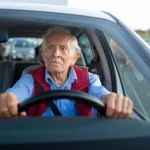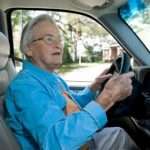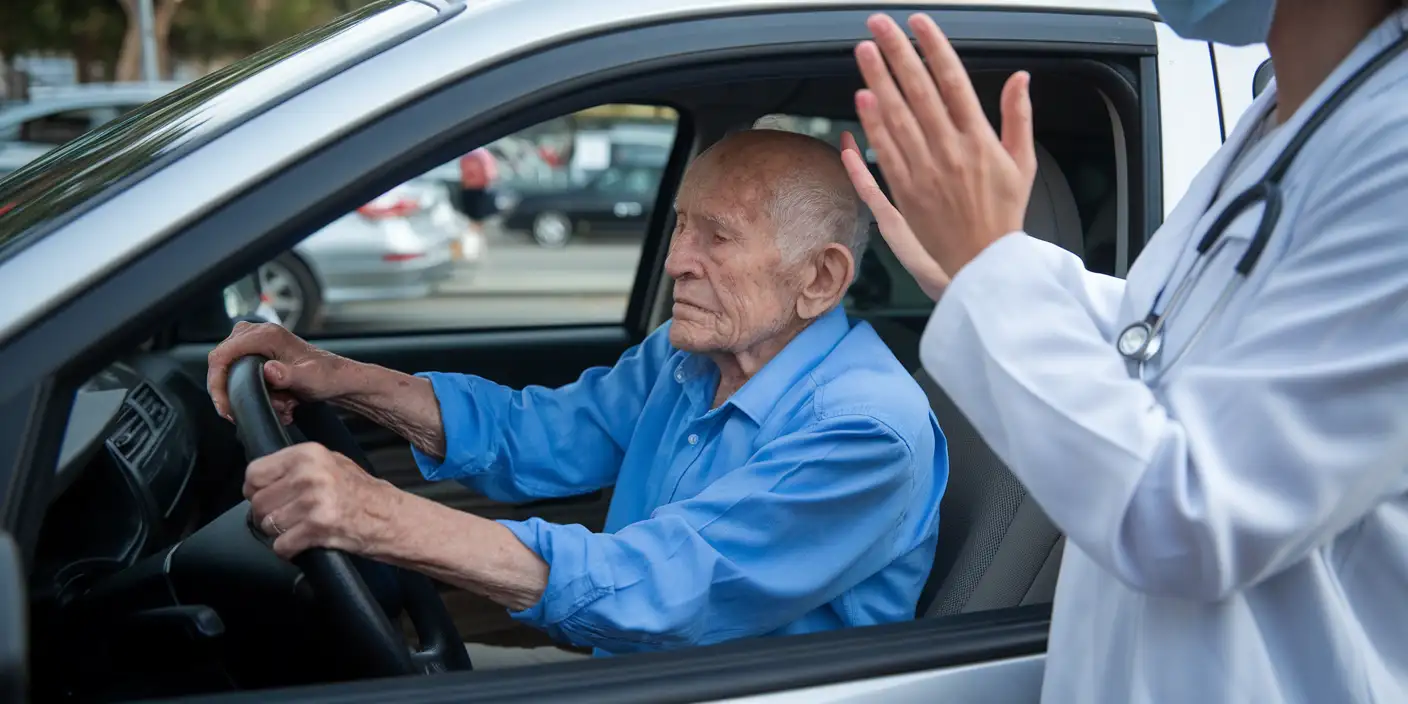
Trying to reason with older people with severe dementia about giving up their driving privileges is a complex task, often leading to long and loud arguments. No doubt they will likely give you a hard time.
For family caregivers, this can be a daunting challenge.
Here’s some guidance on how to approach this sensitive issue.
Strategies to Prevent Driving in Dementia Patients
The approach to prevent driving in someone with a dementia diagnosis varies based on the severity of their cognitive function.
Here are some steps you can take:
- Get an independent driving evaluation for a driver with mild dementia
- A second person in the car may be necessary
- Hide or remove the car keys from the home
- Hide all items related to the person’s driving habits
- Tell them the car is in the shop
- Disable the car so that it won’t run
- Report the driver to the DMV (Department of Motor Vehicles)
Our Tips On Keeping Someone With Dementia From Driving
I first want you to understand that your senior loved one is experiencing a difficult issue. It’s a loss of independence when they stop driving and revoke their driver’s license.
If it’s unsafe for them to keep driving, their dementia level will determine which techniques you could use to stop them and what may work.
Each individual is unique therefore, each individual requires their own set of unique solutions.
The problem that I saw as an occupational therapist was that many people who were dealing with someone with dementia tried to reason with that person.
But, the issue there is that it’s not prudent to think that you can reason with someone whose thinking pattern has become faulty.
What I’m trying to say here is that there usually is no way to reason with someone who has dementia or Alzheimer’s disease.
So, that means that other tactics are needed (yes, I know even sneaky ones), but it’s for a good reason.
You want to help that person be as safe as possible – for their own sake and for the sake of others on the road.
1. Independent driving evaluations
An independent driving test can be done by contacting an occupational therapist to assess the person’s ability to safely operate a vehicle.
According to the American Occupational Therapist Association, these health professionals “are trained to assess physical, visual, and mental abilities required for safe driving. Occupational therapists are health care specialists that have the knowledge needed to recognize changes associated with medical conditions or aging and to tailor evaluation and intervention plans to each individual.”
In this type of test, the OT does both an in-office assessment and a road test.
In my opinion, this is the best way to assess a person’s driving capabilities.
They are assessing the driver for things like degree of cognitive impairment, reaction times, decision making ability when faced with traffic lights or traffic signs, etc.
If there are too many red flags, the OT can work with you to find other transportation options. This may include public transportation services.
2. Have Another Driver In The Car
If it’s a very mild form of dementia, have another driver in the car.
Most all dementia starts off as very mild and then progresses.
So, if you or your senior loved one has been diagnosed with mild dementia and you want to be cautious (as you should be), you can set up the rule that from now on, whenever that person drives there must be a second person in the car as well.
3. Hide Or Remove The Car Keys
If the dementia / Alzheimer’s is severe enough, removing or hiding the car keys is an option.
When your senior loved one begins searching for them or asks for them – you should be able to redirect them onto another topic or project.
Saying something like “Oh, well before you start looking for those keys, can you help me to make dinner?” is an example of what you could say.
Again, this should only work if they are at the stage with their disease where they can be easily distracted and can forget that they were looking to drive somewhere.
This act of be untruthful is called therapeutic fibbing.
4. The Car Is In The Shop
I know, this is another kind of “sneaky trick” but it does work.
When your elderly parent or senior loved one asks about the car you can simply say something like “It’s in the shop for repairs.” Then redirect them to another topic and/or project.
Again, this only works if their disease is at the stage where they can forget from minute to minute what they were doing or saying.
You would, of course, move the car to someone else’s driveway (where it can’t be seen or found by the person with dementia) or you could sell the car.
5. Disable The Car As A Last resort
If you can disable the car in some way, flat tire, pulling out a vital engine part, etc, this may, at the very least, keep the person with dementia from driving at that very moment.
If you have a good relationship with your auto mechanic, you may want to ask him/her to be in “on the con” with you in case they are contacted by the person with dementia about how to fix the car.
I know this may sound terrible to some, but it’s important to understand that when you are dealing with someone with dementia, you are there to protect them.
Allowing someone with these types of cognitive problems to drive can be not only dangerous to them and others but fatal as well.
No true friend would allow a drunk person to drive – why would those same rules not apply to someone with dementia?
6. Report The Driver To The DMV
A friend of mine did this for their father and it worked out great. She did so anonymously, so I would recommend that you do that as well.
This way, the person “responsible” would be invisible.
In some states, you can have the older person’s family doctor complete the report to add medical authority to it.
7. Hide All Items Associated With The Car
I would also recommend that you make sure that your own car keys, their car keys, and any items at all related to the car and their driving habits be removed from their home.
Out of sight, out of mind (hopefully). You don’t want to invite any major mood swings!
If your father wore a specific hat whenever he drove the car, hide the hat, etc.
Again, I know that all of these seem very sneaky and like you’re playing a dirty trick on your loved one, but it’s the safest option for them and for those innocent people who will be on the road with them.
Please understand that the most important thing is their safety and that of others who are on the road with them.
8. Distraction Can Also Work Sometimes
One additional tip is to do what you can to keep your older adult with dementia busy with a project, an activity, a task.
That may help to keep them from trying to drive somewhere.
Warning Signs That Someone With Dementia Should Stop Driving
Mild dementia usually comprises the following symptoms:
- getting lost in familiar places or on familiar routes
- difficulty problem solving
- personality changes
- memory loss
All of these warning signs can (but may not necessarily) affect the physical act of driving but they can certainly contribute to problems with the driving task.