| Quick Answer Aromatherapy can help people with dementia feel calmer, sleep better, and experience less agitation. Essential oils like lavender, lemon balm, and rosemary work by stimulating the brain’s smell receptors, which are directly connected to memory and emotion centers. While aromatherapy is not a cure, it is a safe, gentle tool that can meaningfully improve daily comfort and quality of life. |
My neighbor Ruth called me one afternoon, exhausted and close to tears. Her mother, who had moderate dementia, had been pacing the hallway since breakfast, too agitated to eat, too restless to rest. Ruth had tried music, redirecting, and gentle conversation, nothing helped.
I mentioned aromatherapy. Ruth was skeptical. But that evening, she diffused lavender in her mother’s room. Within twenty minutes, her mother sat down, picked up a photo album, and stayed calm for the rest of the evening.
What Ruth experienced is something caregivers and researchers are increasingly documenting. Scent is one of the most direct pathways to the emotional brain, and for people living with dementia, that pathway often remains open long after others have narrowed.
If you are caring for someone with dementia and looking for gentle, non-drug approaches to ease agitation, anxiety, or sleep problems, this article is for you.
Read on to learn how aromatherapy works, which essential oils are most helpful, and how to use them safely at home.
What Is Aromatherapy For Dementia?
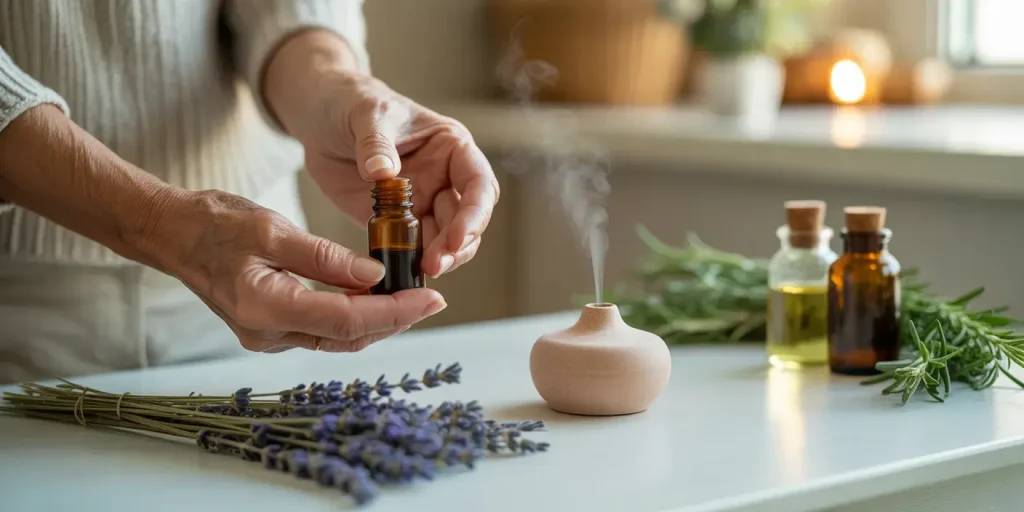
Aromatherapy is the use of concentrated plant-based essential oils to support physical and emotional well-being. For people with dementia, it is used as a complementary approach, meaning it works alongside, not instead of, medical treatment.
The olfactory system, our sense of smell, has a direct connection to the brain’s limbic system, which governs emotion and memory. This connection is unique: smell bypasses the usual brain pathways and reaches emotion centers almost instantly. That is why a familiar scent can trigger a vivid memory or a wave of calm in ways that words sometimes cannot.
For people with Alzheimer’s disease or other forms of dementia, verbal communication and logical reasoning become harder over time. But the emotional and sensory parts of the brain often remain responsive much longer. Aromatherapy can gently engage those parts of the brain.
A 2024 meta-analysis of 15 randomized controlled trials involving 821 dementia patients found significant reductions in agitation and other behavioral and psychological symptoms after aromatherapy treatment. (source: ScienceDirect)
Why Does Aromatherapy Help People With Dementia?
Aromatherapy helps because scent is processed by the same brain regions that store emotional memory. Even when someone can no longer remember names or places, they may still respond strongly to familiar or soothing smells.
Here is what the research tells us. Studies have found…
- Lavender aromatherapy can reduce agitation and anxiety in dementia patients without the side effects associated with sedating medications.
- Lemon balm has shown promise in reducing behavioral symptoms.
- Rosemary has been linked to improved alertness and mood.
These effects are not a cure for cognitive decline. But they can reduce the frequency and intensity of difficult moments, which matters enormously for both the person with dementia and their caregiver.
Aromatherapy can also work on a deeply personal level. Scents tied to a person’s earlier life, fresh bread baking, a particular floral perfume, the smell of pine, can trigger a sense of comfort and recognition that other interventions cannot replicate.
Which Essential Oils Are Most Helpful For Dementia?
Not all essential oils are equally suited for use with older adults or people with dementia. The following have the strongest evidence and the gentlest safety profiles.
- Lavender – The most studied essential oil for dementia care. Known for its calming and anti-anxiety effects. Effective for reducing agitation and improving sleep.
- Lemon balm – A gentle herb-based oil shown in clinical trials to reduce behavioral symptoms of dementia, including restlessness and distress.
- Rosemary – Associated with improved alertness, mood, and cognitive performance in studies. Best used in the morning or midday, not at bedtime.
- Bergamot – A citrus oil with uplifting properties. Helpful for low mood or mild depression, which is common in early-stage dementia.
- Sweet orange – Gentle and familiar. Many older adults associate citrus smells with freshness and home. Good for daytime use.
- Cedarwood – Earthy and grounding. Helpful for evening restlessness and can support sleep onset.
- Ylang-ylang – Floral and soothing. Can help reduce anxiety, but use sparingly as it can be overpowering at high concentrations.
Signs That Aromatherapy May Help Your Loved One
You may notice certain patterns that suggest aromatherapy could make a meaningful difference. These are common dementia-related behaviors where essential oils have shown the most benefit.
- Late-afternoon or evening agitation, sometimes called sundowning, usually marked by pacing, calling out, or increased confusion
- Difficulty falling asleep or frequent nighttime waking
- Chronic low-level anxiety that does not have a clear cause
- Restlessness during personal care tasks like bathing or dressing
- Low mood or emotional withdrawal
- Resistance to touch or redirection that is not explained by pain
If your loved one shows any of these signs regularly, aromatherapy is worth trying. It is low-risk, non-invasive, and can often be introduced gently without disrupting an existing routine.
How To Use Essential Oils Safely With Someone Who Has Dementia
Safety is always the first consideration when using essential oils with older adults. Seniors have thinner skin, more sensitive respiratory systems, and may not be able to communicate if something feels uncomfortable.
Here is what I recommend.
Start with diffusion.
A waterless diffuser is, in my opinion, the safest and most effective delivery method. This JCLOUD Waterless Diffuser uses cold-air nebulizing technology to convert pure essential oils into dry mist microparticles, no water, no heat, and no dilution, so your loved one gets the full therapeutic benefit of every drop. It plugs directly into any wall outlet, covers up to 500 square feet, and is simple enough for any caregiver to operate right out of the box.
Always dilute before skin contact.
I do not recommend applying essential oil to the skin without testing a very small area first. You can dilute it to be safe but personally, I prefer using a diffuser vs applying it directly to someone’s skin.
Choose one scent at a time.
Avoid mixing multiple essential oils until you know how your loved one responds to each one individually. Strong or complex scent combinations can be overwhelming.
Watch for reactions.
Essential oils are generally safe for older adults when used carefully! Signs that a scent is not being tolerated well include agitation, coughing, skin redness, or a person turning away or becoming distressed. Stop use immediately and ventilate the room if this happens.
Avoid certain oils.
Eucalyptus, peppermint, and tea tree oil can be too stimulating or irritating for older adults with respiratory conditions. Always check with the person’s physician before starting aromatherapy, especially if they have asthma, allergies, or are on multiple medications.
What Happened When Margaret Tried Lavender
Robin Kessler worked with a male dementia resident she called “Red”, a former barber who was constantly agitated, incoherent, and mumbling. His family told her he had always been a polished, well-groomed man who loved masculine colognes, and still kept a bottle of Old Spice on his dresser.
Robin crafted a custom blend of Vetiver, Cedarwood, Rosemary, and Sweet Marjoram, woody, spicy scents similar to what you’d smell in a barbershop, and had the caregiver diffuse it for a few hours a day.
Two days later, his daughter called in tears. He had calmed down, started talking instead of mumbling, began eating again, and smiled every time the diffuser turned on.
When Robin visited and asked why they called him “Red,” he grinned and said, “Because I have red hair, can’t you see that?” His hair was white, but the scent had brought him back.
If you’d like to read the full story, you can find it here: Aromatherapy Experience with Hospice Patients.
Tools And Resources For Aromatherapy In Dementia Care
You do not need to spend a lot of money to try aromatherapy at home. Here are the basics to get started.
- Waterless diffuser – Look for one with an automatic shut-off timer. Models in the $20 to $40 range work well for home use. I personally recommend the ones with a clear holder so you can see when you need to replace the essential oil.
- Therapeutic-grade essential oils – Lavender and lemon balm are good starting points. Look for oils that are 100% pure with no added fillers or synthetic fragrances.
- A carrier oil – Sweet almond or fractionated coconut oil are gentle and widely available at pharmacies and grocery stores.
- A small notebook – Track which oils you use, when, and how your loved one responds. This helps you identify patterns and share information with their care team.
- Your loved one’s physician – Always loop in the doctor before starting aromatherapy, particularly if the person takes medications or has respiratory conditions.
Aromatherapy is increasingly recognized in memory care settings. If your loved one lives in an assisted living facility or memory care community, ask whether they have a complementary therapy program that includes sensory-based approaches.
When To Seek Additional Support Beyond Aromatherapy
Aromatherapy can ease discomfort, but it is not appropriate as the only response to severe behavioral symptoms. There are times when you need to involve a physician or dementia care specialist.
Seek medical attention if your loved one experiences sudden and dramatic changes in behavior, confusion, or agitation. These can signal a urinary tract infection, medication reaction, or other treatable medical issue, not just dementia progression.
Also contact their care team if aromatherapy and other non-drug approaches are not providing adequate relief and your loved one is in consistent distress. There are medications and specialized behavioral interventions that may help.
And please, if you are the caregiver, take your own needs seriously. Caregiver burnout is real, and it affects your ability to provide good care. Aromatherapy can help you too. A few minutes with lavender in your own space is not indulgent. It is practical self-care.
You Are Already Doing Something Remarkable
When Ruth called me that afternoon, she was exhausted, not because she was doing things wrong, but because caring for someone with dementia is genuinely hard work. She was looking for one small thing that might help. Aromatherapy gave her that.
The lesson I have taken from years of working with families in similar situations is this: small, consistent, sensory interventions can create meaningful moments of calm. You do not need to solve dementia to improve the quality of a day. You need tools that are gentle, safe, and within your reach.
Aromatherapy can be one of those tools. It will not reverse cognitive decline or memory loss. But it can reduce agitation, ease anxiety, and help the person you love feel a little more at home in their own skin.
Start simple. Try lavender in a diffuser this week. Watch what happens. You might be as surprised as Ruth was.
Frequently Asked Questions
| Does aromatherapy really help dementia patients? Yes, there is growing clinical evidence that certain essential oils, especially lavender and lemon balm, can reduce agitation, anxiety, and sleep disturbances in people with dementia. Aromatherapy does not treat the underlying disease, but it can meaningfully improve comfort and quality of daily life. It works by stimulating the olfactory system, which connects directly to the brain’s emotional and memory centers. |
| What is the best essential oil for dementia and anxiety? Lavender is the most researched and widely recommended essential oil for dementia-related anxiety. It has a strong safety profile, is widely available, and has been shown in multiple studies to reduce agitation and calm distress. Lemon balm is a close second, particularly for behavioral symptoms. Both can be used safely in a diffuser in a home or care setting. |
| Is aromatherapy safe for elderly people with dementia? Aromatherapy is generally safe for elderly people with dementia when used correctly. The key safety rules are: always dilute essential oils before skin contact, never apply undiluted oil directly to skin, use a diffuser in short sessions rather than continuously, and avoid strong oils like eucalyptus or peppermint that may irritate the respiratory system. Always check with the person’s physician before starting, especially if they have asthma or take multiple medications. |