For many older adults, the water is a source of joy, whether it’s swimming laps, exercising in the pool, or simply relaxing by the shore. But if you’re a senior or caring for one, you may also know the unease that comes with it.
Slippery surfaces, unsteady footing, and unexpected fatigue can quickly turn a pleasant activity into a dangerous situation.
Here’s the good news: the right safety gear can turn worry into confidence. With simple products designed to reduce risks, seniors can continue enjoying the water while staying safe and supported.
Quick Rundown: Safety Gear That Keeps Seniors Confident in the Water
- Prevent Slips: Non-slip shoes, deck mats, and grab bars reduce dangerous falls around pools.
- Add Barriers: Fencing, covers, and alarms limit risky access, especially helpful for dementia care.
- Support Mobility: Pool lifts, ramps, and flotation belts make entering, exiting, and swimming easier.
- Boost Comfort: Protective swimwear, goggles, and earplugs keep seniors comfortable and safe.
- Prepare for Emergencies: Rescue tools, waterproof phones, and CPR kits ensure quick response if needed.
- Encourage Safe Habits: Never swim alone, take senior swim classes, and check pool temperature regularly.
Now, let’s explore the most effective safety gear for seniors in the water and how each item can make swimming and pool time safer and more enjoyable.
Let me walk you through the tools I use and recommend to help older adults stay steady, secure, and confident in and around the pool.
Why Pool Safety Matters for Older Adults
As we age, things change: vision may decline, reflexes slow, muscles weaken, and balance can become unpredictable. Add in cognitive challenges like dementia, and the pool becomes a high-risk zone.
Falls on wet decks, confusion in water depth, and fatigue while swimming are all common—and dangerous. But here’s the good news: pool safety isn’t about restriction. It’s about freedom with peace of mind.
Physical Pool Safety Tools for Seniors
Removable Mesh Pool Fencing
Install a 4-foot-tall fence with a self-closing, self-latching gate. Especially crucial for seniors with memory issues.
Tip: Black mesh is easier to see through, and latches should be placed out of easy reach.
❓ What if my elderly parent has dementia and wanders toward the pool?
💬 Use a combination of safety fencing, gate alarms, and wearable safety alerts to keep them safe. Supervision is essential, and pool access should be locked when not in use.
Pool Safety Net or Safety Cover
These create a strong barrier over the water when the pool isn’t in use. They also keep leaves and bugs out.
Tip: Choose covers that can hold adult weight and lock securely.
Gate and Pool Alarms
Install smart alarms that alert you if someone enters the pool area. Some models send notifications directly to your phone.
❓ How often should I inspect or maintain pool safety gear?
💬 Check safety gear like alarms, grab bars, fencing, and flotation devices at least once a month. Also test batteries in alarms, check for loose screws, and replace worn-out gear.
Motion-Sensor Pool Lighting
Dim lighting is a hidden danger. Install lights along walkways, steps, and edges.
Tip: Look for waterproof LED motion lights with at least 100 lumens of brightness.
Pool Grab Bars and Handrails
Install grab bars near steps and ladders. They’re essential for those with reduced mobility.
Client Story: “I finally felt safe enough to swim again,” one client told me after we installed hers.
ADA-Compliant Pool Lift or Entry Ramp
These make getting in and out of the pool safer for those with limited mobility or wheelchair users.
❓ What’s the safest way for a senior to get into a pool alone?
💬 The safest method is using an ADA-compliant pool lift or entry ramp, paired with grab bars and non-slip surfaces. Even with the right tools, it’s still best to have someone nearby just in case.
Non-Slip Pool Deck Coating and Mats
Apply rubberized coatings or place textured mats around the deck to prevent slips.
Tip: Avoid smooth concrete or glossy tiles. They’re beautiful but treacherous.
❓ Can therapy in a pool be safe for seniors with arthritis or joint pain?
💬 Yes! Water-based therapy can reduce joint strain, improve flexibility, and ease pain. Just be sure the water is warm (around 88°F), and always use safety gear like flotation belts and grab bars.
Personal Safety Gear For Older Swimmers
Water Shoes with Non-Slip Soles
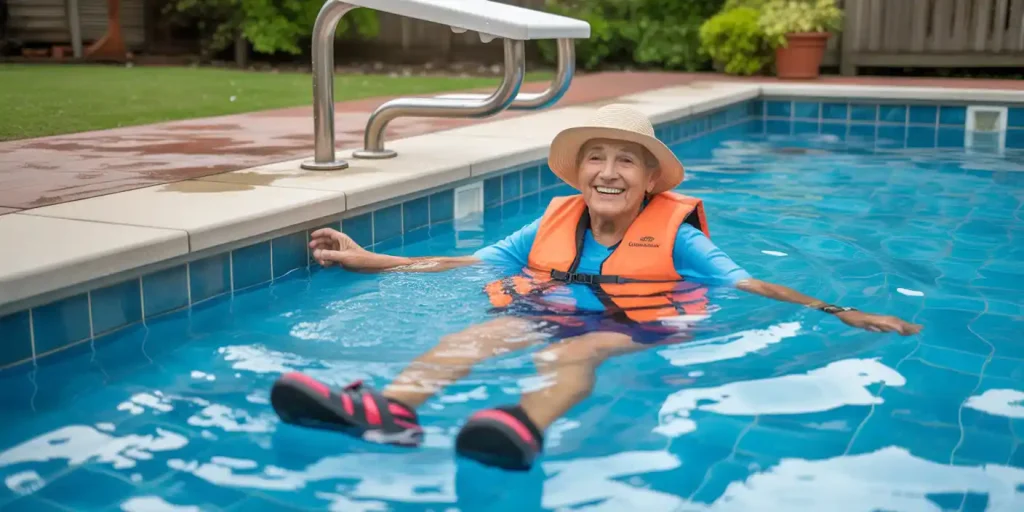
Non-slip water shoes help reduce fatigue and give extra grip on slippery surfaces.
Adult Flotation Devices and Swim Belts
Life vests, swim belts, or pool noodles help support those with weak core muscles or who tire easily.
❓ Are inflatable flotation devices safe for seniors?
💬 Inflatable floaties are not recommended for seniors who need real support. Use Coast Guard-approved flotation devices that offer firm support and stay in place without deflating.
Thermal or UV-Protective Swimwear
Helps regulate body temperature and protect against sunburn. Ideal for seniors with circulation issues or sensitive skin.
Swim Goggles, Earplugs, and Nose Clips
Small accessories that make swimming more comfortable for those with dry eyes, hearing aids, or sinus issues.
Emergency and Health Readiness
Rescue Tubes, Life Rings, and Reaching Poles
Keep visible, easy-to-reach tools on hooks near the pool. You never want to be digging through storage during an emergency.
Emergency Alert System or Waterproof Phone
Smartwatches or pendants with emergency buttons can call for help immediately, even in the water.
CPR Guide and First Aid Kit
Mount a waterproof CPR guide and keep a stocked kit nearby. Minutes matter in a crisis.
Check Pool Water Temperature
Extreme water temperatures can cause muscle cramps or blood pressure drops. Keep pool water between 82–88°F.
Supervision and Training Tips
Never Swim Alone: Use the Buddy System
Even confident swimmers should have someone close by. Never swim alone, even if you feel strong.
Take a Senior Swim or Safety Class
Classes build strength and confidence while promoting safe techniques tailored to older adults.
Hydration and Rest Breaks
Seniors often don’t realize they’re dehydrated or overtired in the pool. Keep water nearby and rest often.
Final Thoughts From Me To You
If you’re here, you care deeply, about your safety or someone else’s. Pool safety isn’t about limiting joy. It’s about creating peace of mind.
By choosing the right safety gear, from alarms to floatation belts, you’re empowering independence while protecting what matters most.
Let the water be a place of connection, confidence, and calm. You deserve to feel secure every time you dip your toes in.