Nighttime can feel especially heavy for many older adults. What once was a peaceful part of the day may now bring worry, restlessness, or even fear.
If your loved one is afraid to be alone at night, you’ve probably noticed the toll it takes, trouble sleeping, repeated calls for reassurance, or anxiety that lingers well into the next day. It’s a difficult cycle, and it can leave both seniors and caregivers feeling exhausted.
The reassuring truth is that this fear is common, and there are gentle ways to bring back a sense of safety.
With the right strategies, you can help your loved one feel calmer at night while also protecting your own rest and peace of mind. This article explores the causes behind nighttime fear in the elderly and offers practical solutions that restore comfort and security.
Quick Rundown: Nighttime Fears in Seniors, Helping Loved Ones Feel Safe After Dark
- Why It Happens: Health worries, fear of falling, dementia, loneliness, or poor lighting often fuel nighttime anxiety.
- Make the Home Safer: Use nightlights, grab bars, clear walkways, soundproofing, and emergency alert systems.
- Create Calm Routines: Encourage regular sleep schedules, soft music, aromatherapy, and comforting objects.
- Address Health Needs: Review medications, treat sleep disorders, and consider CBT or counseling for persistent anxiety.
- Stay Connected: Regular check-ins, pets, video calls, and social activity ease feelings of isolation.
- Protect Caregivers Too: Use respite care, stress management, and support groups to prevent burnout.
Let’s start by exploring the most common reasons older adults feel afraid to be alone at night and how you can gently address them.
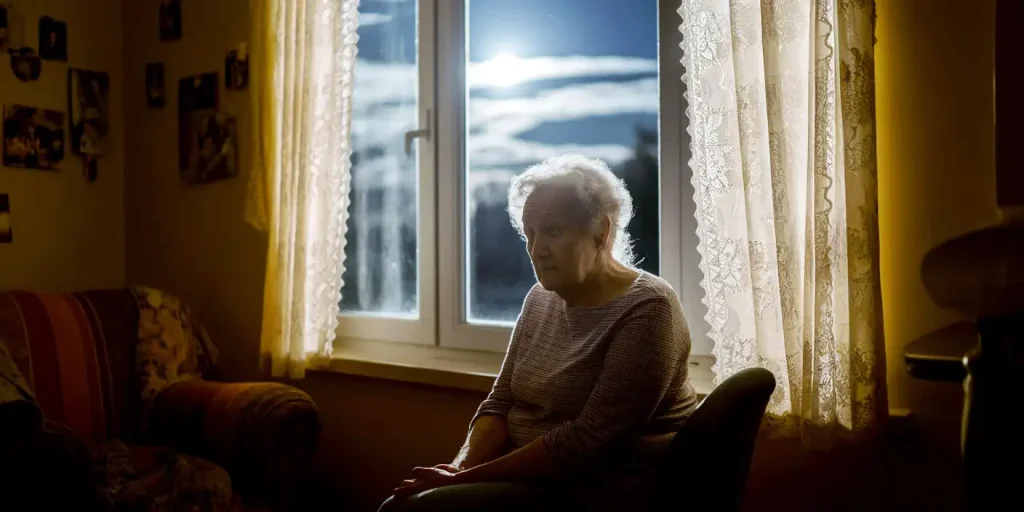
Why Are Seniors Afraid to Be Alone at Night?
Let’s first talk about how real this fear can be and why it happens. If your loved one seems anxious or uneasy as night approaches, you’re not imagining it.
Nighttime fears in seniors are real, and they can stem from different concerns, such as:
- Health Worries – Many seniors worry about having a medical emergency, like a heart attack or stroke, with no one there to help.
- Fear of Falling – Falls are a major concern for older adults, and the thought of getting hurt and not being able to call for help can be overwhelming.
- Cognitive Decline – Conditions like dementia and Alzheimer’s disease can cause confusion and fear, especially at night.
- Sundowning Syndrome – Some seniors with dementia feel more agitated or confused in the evening, making them feel unsafe.
- Loneliness and Social Isolation – The quiet of nighttime can make loneliness feel even stronger, leading to anxiety.
- Fear of Intruders – Some seniors worry about break-ins or strange noises, even in safe neighborhoods.
- Poor Lighting or Unfamiliar Surroundings – Dimly lit rooms or changes in their home environment can make older adults feel disoriented.
- Medication Side Effects – Some medications can contribute to nighttime restlessness, confusion, or heightened fear.
- Sleep Disorders – Conditions such as sleep apnea, restless leg syndrome, or insomnia can disrupt sleep and increase anxiety at night.
How You Can Help Your Loved One Feel Safe at Night
Okay, now that we went over understanding nighttime fear, let’s go over some tips that may help you and your senior loved one feel more secure.
1. Make Their Environment Safer
- Use Nightlights – Keeping hallways and bathrooms well-lit can reduce fear and prevent falls.
- Clear Pathways – Remove clutter and secure rugs to make sure they have a clear path if they need to get up.
- Install Grab Bars – Place grab bars in the bathroom and near the bed to help with stability.
- Set Up an Emergency Alert System – A wearable medical alert device can offer peace of mind. If a wearable is not doable, how about a voice activated device like Alexa or Google Home?
- Review Medications – Some medications can cause nighttime confusion or anxiety. Talk to their doctor to see if any adjustments are needed.
- Use Light Therapy – Exposure to bright light in the morning can help regulate the body’s internal clock and improve sleep patterns.
- Soundproof Their Room – Reducing outside noise can help create a calm and secure sleeping environment.
2. Create a Calming Bedtime Routine
- Encourage a Regular Sleep Schedule – Going to bed and waking up at the same time every day can help regulate sleep.
- Avoid Stimulants – Reduce caffeine and sugar intake in the evening.
- Use Relaxation Techniques – Soft music, reading, or deep breathing exercises can help them unwind.
- Keep a Comforting Object Nearby – A familiar blanket or stuffed animal can provide emotional comfort.
- Limit Late-Night Stimulation – Watching the news or using bright screens before bed may increase anxiety. Encourage relaxing activities instead.
- Try Aromatherapy – Essential oils like lavender can help promote relaxation and reduce nighttime anxiety.
- Encourage Physical Activity – Engaging in light physical activity during the day can help seniors feel more tired and ready for sleep at night.
3. Address Health and Psychological Needs
- Talk to a Doctor – If anxiety or sleep disturbances are severe, a doctor may suggest treatments or medications.
- Consider Counseling – Therapy can help seniors work through their fears.
- Manage Medications – Some medications can cause nighttime confusion or agitation. A doctor can review their prescriptions to see if adjustments are needed.
- Treat Underlying Conditions – Sleep disorders like sleep apnea can contribute to nighttime anxiety and should be addressed by a medical professional.
- Use Cognitive-Behavioral Therapy (CBT) – This approach can help seniors develop coping strategies to manage anxiety and improve sleep.
4. Stay Connected and Offer Reassurance
- Check in Regularly – Calling before bed or stopping by in the evening can help them feel less alone.
- Encourage Social Interaction – Engaging with others during the day can reduce feelings of loneliness at night.
- Use Technology – Video calls, motion sensors, and home monitoring systems can provide extra peace of mind.
- Provide a Pet Companion – A pet can provide comfort and companionship, reducing nighttime anxiety.
- Offer Personalized Reassurance – Some seniors may need reminders that their home is safe or that help is available if needed.
5. Caregiver Support: Managing Your Own Stress and Anxiety
Caring for an elderly loved one can be emotionally draining, especially when they struggle with nighttime fears. It’s important to take care of yourself too.
- Find a Support System – Whether it’s family, friends, or a caregiver support group, talking to others can help.
- Take Breaks When Needed – Don’t feel guilty about setting aside time for yourself. Burnout can make it harder to provide care.
- Practice Stress Management – Deep breathing, meditation, or even a short walk can make a big difference in how you feel.
- Consider Professional Help – If caregiving is taking a toll on your mental health, speaking with a counselor can provide valuable guidance.
- Use Respite Care Services – These services allow caregivers to take short breaks while ensuring their loved ones receive care.
Final Thoughts
If your loved one is afraid to be alone at night, you’re not alone in this challenge. Their fears are real, but with simple changes, you can help them feel safe. By improving their home environment, creating a calming routine, addressing health concerns, and offering support, you can give them the reassurance they need.
You’re doing an incredible job caring for them, and every step you take to ease their fears makes a difference. And don’t forget – your well-being matters too. Taking care of yourself will help you take better care of them.