Dolly Parton died on August 25, 2026, at age 80. Four days earlier, in an interview with People, she said she was receiving treatment for health problems she “didn’t pay attention to when I was watching over Carl.”
We cannot know whether delayed care changed the course of Dolly’s illnesses, and we should not claim that caregiving caused her death. But her words describe a pattern that caregivers recognize immediately: when someone you love is sick, your own appointments, symptoms, sleep, meals, and preventive care can quietly move to the bottom of the list.
That is the part worth hearing now.
Not as a warning about Dolly Parton, but as a reminder to protect the health of the person doing the caring.
She Told Us More Than Once
Dolly Parton’s August comments were not the first time she spoke publicly about putting her own health on hold.
Her husband, Carl Dean, died in March 2025 after a period of illness. The couple kept the details of his condition private, but Dolly later described how his illness, his death, and the grief that followed had affected her own well-being.
In October 2025, after fans became concerned about her health, she posted a video titled “I Ain’t Dead Yet!” In it, she said that while Carl was ill and after he died, she “didn’t take care of” herself and had let things slide.
Then, while opening the 2026 Dollywood season, she said she had become “worn down and worn out.” She also talked about rebuilding herself spiritually, emotionally, and physically.
Those are familiar words to many caregivers.
When a spouse, parent, child, or close friend needs care, daily life can become a long series of urgent tasks: medication questions, appointments, meals, bills, transportation, phone calls, paperwork, disrupted sleep, and worry. The caregiver’s own needs do not disappear. They are simply postponed.
At first, postponing your own care can feel reasonable.
“I’ll schedule my physical after this appointment.”
“I’ll deal with my blood pressure later.”
“I’ll go to the dentist when things settle down.”
“I’m tired because anyone would be tired.”
But caregiving situations often do not “settle down” on their own. And a delay that begins as a few weeks can quietly turn into months or years.
What Research Actually Shows
The evidence does not say that every caregiver becomes ill or that caregiving automatically shortens someone’s life. Many caregivers remain healthy, especially when they have adequate support, breaks, financial resources, and access to health care.
But research does show that high, ongoing caregiver strain can carry real health consequences.
A landmark 1999 study in JAMA followed older adults over four years. It found that spousal caregivers who reported mental or emotional strain had an adjusted mortality risk 63% higher than noncaregiving comparison participants. Importantly, the risk was not found in caregiving alone. It was concentrated among caregivers experiencing strain.[pubmed.ncbi.nlm.nih][4seasonscare]
That distinction matters.
The message is not, “Do not care for someone you love.”
The message is, “Do not try to carry unsustainable care alone.”
A Blue Cross Blue Shield Association analysis of commercially insured members found a similar pattern. The report identified at least 6.7 million members serving as caregivers for a spouse or child and found that, compared with its benchmark population, caregivers had a 26% greater burden of health conditions as measured by the BCBS Health Index.[bcbs][bcbs]
The report found that identified caregivers were:
- 64% more likely to have hypertension
- 37% more likely to have major depression
- 34% more likely to have anxiety[bcbs]
Among Millennial caregivers, the differences were also significant. Hypertension prevalence was 82% higher than in the benchmark group. Among Millennial caregivers with hypertension, hospitalization was 59% higher.[bcbs]
Claims data cannot prove that caregiving caused every one of these health differences. Caregivers may also face financial stress, disrupted employment, sleep loss, preexisting health conditions, and limited time to seek care. Still, the overall pattern is clear: caregivers often carry a heavier health burden while receiving less attention than the person they are caring for.
The Risk Does Not Always End After Loss
Many people assume that caregiving ends when the person receiving care dies. The tasks may end, but the strain does not always disappear right away.
After a spouse dies, the surviving partner may be coping with grief, disrupted sleep, loneliness, financial decisions, changes in routine, missed medical care, poor nutrition, and the exhaustion that follows a long period of caregiving. For some people, this is also when the adrenaline that kept them going begins to wear off.
Researchers call the increased health risk after a spouse’s death the widowhood effect.
Studies have found elevated mortality after widowhood, especially during the first months of bereavement. Estimates vary by study, age, sex, health status, and cause of death, but some research has found mortality risks roughly 30% to 90% higher than those of married peers during the first three months after a spouse’s death.[pmc.ncbi.nlm.nih]
That does not mean every bereaved spouse is in immediate medical danger. It does mean that the period after caregiving and loss deserves support, monitoring, and attention, not the assumption that the caregiver is finally “fine” because the crisis has passed.
What To Do Instead
Caregiver self-care is not a spa day. It is not a slogan. It is health maintenance.
Here are practical steps that can make a difference.
Say the word at your next appointment
Tell your doctor, nurse practitioner, therapist, dentist, or pharmacist: “I am a caregiver.”
Use the actual word.
Then add a few specifics:
- How many hours of care you provide each week
- Whether your sleep is interrupted
- Whether you have postponed medical or dental visits
- Whether you are experiencing anxiety, depression, pain, exhaustion, weight changes, or high blood pressure
- Whether you have reliable help or are doing most of the work alone
That information gives your health-care team important context. It can help them identify preventive-care gaps, screen for depression or anxiety, discuss sleep problems, review medication adherence, and take changes in your blood pressure or physical symptoms seriously.
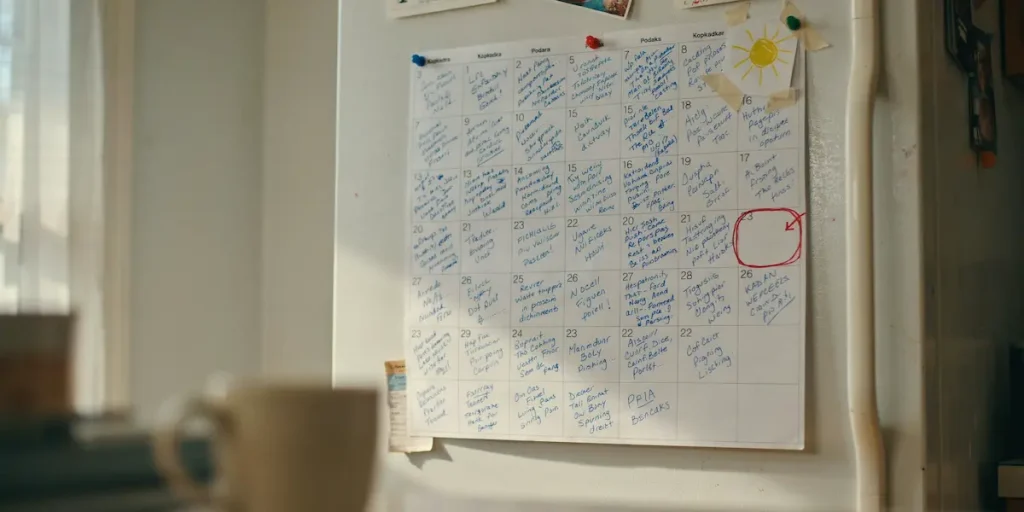
Put your care on the same calendar
When you schedule appointments for the person you care for, schedule your own care too.
Your calendar should include:
- Annual physical or wellness visit
- Blood-pressure monitoring, if recommended
- Dental cleanings
- Eye exams
- Cancer screenings appropriate for your age and health history
- Prescription refills
- Mental-health or grief support when needed
- Vaccines and other preventive care recommended by your clinician
If you have delayed care for a year or more, do not treat that as a personal failure. Treat it as a health priority. Delayed care is a common consequence of sustained caregiving demands.
Track a few meaningful changes
You do not need another complicated app. A notebook, calendar, or index card on the refrigerator can be enough.
Once a week, consider noting:
- Your blood pressure, if you have been advised to monitor it
- Your weight or major unplanned weight changes
- Average hours of sleep
- Mood and stress level
- New symptoms or pain
- Missed medications or appointments
The goal is not perfection. The goal is to notice patterns early enough to act on them.
Ask for help in specific units
“Let me know if you need anything” is kind, but it often leaves an overwhelmed caregiver responsible for figuring out what to request.
Instead, make the ask concrete:
- “Can you stay with Mom on Thursday from 1 to 4?”
- “Can you take Dad to physical therapy next Tuesday?”
- “Can you bring dinner on Wednesdays this month?”
- “Can you handle the pharmacy pickup every Friday?”
- “Can you sit with him while I go to my own medical appointment?”
Specific requests are easier for others to accept, schedule, and follow through on.
Plan for the period after caregiving
If the person you are caring for is nearing the end of life, schedule support for yourself now—not only afterward.
Consider putting these on the calendar:
- A primary-care check-in within the next one to two months
- A grief-support group, counselor, clergy member, or trusted friend
- Help with meals, errands, paperwork, and household tasks
- A regular call or visit from someone who will notice if you are withdrawing or struggling
- A medical appointment sooner if you have concerning symptoms
Seek urgent medical or mental-health help right away for chest pain, shortness of breath, fainting, severe sleep loss, thoughts of harming yourself, inability to manage daily activities, or a sudden and serious change in your physical or emotional health.
The Caregiver Is a Patient Too
Dolly Parton’s last public comments do not tell us exactly how caregiving affected her health. No one outside her medical team can make that claim.
But her words do point to something millions of caregivers know: it is easy to become so focused on someone else’s survival, comfort, medications, appointments, and needs that you stop noticing what is happening to your own body.
You deserve care before you collapse, not after.
You deserve rest before exhaustion becomes illness.
You deserve to be more than the person who holds everything together.
If you are caring for someone today, put one piece of your own health care on the calendar before the day ends. Make the dental appointment. Request the refill. Schedule the physical. Ask someone to sit with your loved one for three hours next week.
That is not abandoning the person you care for.
It is part of caring responsibly, for them and for yourself.
Ready to get your own care back on the calendar? Our Caregiver Self-Care Workbook walks you through fill-in scripts for asking family and neighbors for specific help, a plan for one non-negotiable hour a week with coverage arranged, and a thirty-day tracker for your own sleep, meals, and time off. Get the workbook here.
Sources
- Schulz R, Beach SR. “Caregiving as a Risk Factor for Mortality: The Caregiver Health Effects Study.” JAMA. 1999;282(23):2215–2219.[pubmed.ncbi.nlm.nih]
- Blue Cross Blue Shield Association. “The Impact of Caregiving on Mental and Physical Health.” 2020.[bcbs][bcbs]
- Reporting on Dolly Parton’s August 2026 People interview and her October 2025 public health update.[wsmv][bbc]
- Research on bereavement and mortality following widowhood.[pmc.ncbi.nlm.nih]