A safe, familiar home doesn’t just protect your body, it strengthens your mental and emotional health too. The psychological benefits of home for seniors include a deeper sense of identity, purpose, and calm.
With the right changes, your home can nurture both independence and peace of mind every day.
Quick Rundown: Why Home Is Good for Your Mind
- Sense of control: Familiar surroundings help you feel safe, confident, and capable.
- Continuity of self: Your memories, photos, and routines reinforce who you are.
- Reduced stress: Good lighting, layout, and comfort ease anxiety and confusion.
- Purpose and meaning: Daily tasks at home give structure and pride.
- Connection and belonging: Home can be your social hub, not your isolation.
- Environmental comfort: Ideal temperature (68–75°F) and natural light lift mood and focus.
- Support from services: In-home caregivers, volunteers, and community programs reduce loneliness and boost stability.
These benefits form the foundation for every improvement you make at home, so let’s explore how to bring them to life.
Why Does Home Matter So Much for Seniors’ Mental Well-Being?
Because “home” is more than a place, it’s your anchor of identity, control, and comfort. Research shows that familiar surroundings help older adults stay positive, alert, and connected. When you feel safe and in charge, your stress levels drop and your confidence grows.
If you’re beginning your journey toward aging at home, you might enjoy reading this comprehensive guide on building a plan for aging in place. It helps you look at your home, lifestyle, and support system in a clear, structured way.
I remember working with an older woman in Florida. After a short stay in rehab, she returned home and said something like, “As soon as I saw my kitchen, I felt like myself again.” That moment reminded me that home grounds us emotionally in ways no facility ever can.
Recent studies support this, showing that older adults who live in familiar environments report 30–40% lower anxiety and significantly fewer depressive symptoms than those who relocate frequently.
❓What are the first signs that my home environment might be affecting my mental health?
💬 You might notice feeling restless, withdrawn, or unusually forgetful at home. Clutter, poor lighting, or limited movement space can all contribute to these feelings. Start by improving lighting, adding calming décor, and making small spaces easier to navigate.
How Does Home Support Emotional Stability and Memory?
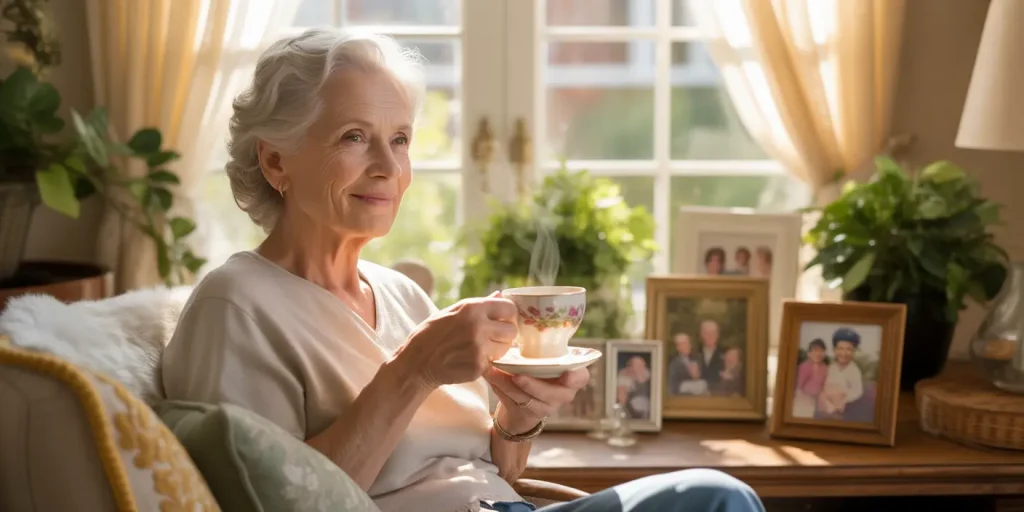
Familiar surroundings provide autobiographical memory cues, photos, furniture, and even scents that help the brain organize thoughts and recall events. These small details can boost confidence for people experiencing mild memory loss or anxiety.
If you’d like to understand this connection more deeply, the article on the emotional side of aging in place explores how comfort, familiarity, and personal meaning all combine to protect emotional health.
Try these tips:
- Keep favorite objects in consistent locations for easy recognition.
- Display photos that spark joy and conversation.
- Use warm lighting instead of harsh overhead bulbs to promote calm.
Every familiar item acts like a mental anchor, helping you feel secure in your story and environment.
What Home Design Choices Improve Mood and Focus?
Certain environmental details directly affect your mental sharpness and emotional state. Small design upgrades can have big psychological payoffs:
- Lighting: Increase natural light by opening curtains daily. Add soft, even LED lighting in hallways to prevent shadows.
- Temperature: Keep rooms between 68–75°F (20–24°C) for optimal comfort and focus.
- Noise: Use rugs and curtains to absorb sound. Minimize background noise from appliances or TVs.
- Color: Calming tones like sage green or sky blue support relaxation and clarity.
- Accessibility: Remove tripping hazards and keep paths clear, safety supports peace of mind.
You can learn more about why seniors choose to remain in their homes, and how their surroundings affect happiness, in this insightful article on motivations behind aging at home.
When your home looks and feels peaceful, your mind follows suit.
Can Technology Help Seniors Feel Less Lonely?
Yes, when it’s used for connection, not just monitoring. Interactive tools like voice assistants, video calls, or online communities can reduce loneliness.
However, avoid overloading your home with devices that track or remind you constantly. Instead, focus on what supports your emotional independence, not just physical safety.
If you’d like ideas for using technology without feeling overwhelmed, read about modern innovations that strengthen independence and well-being in the post on why aging in place matters for quality of life.
I once helped an older couple install a simple smart speaker to call family with one command. They said it made their mornings brighter, knowing they could hear their grandkids’ voices anytime.
I recommend Alexa devices for all homes. With so many capabilities, it’s an excellent smart speaker!
❓What community programs can support seniors who feel lonely while living at home?
💬 Many areas offer senior “village” networks, friendly visitor programs, or daily phone check-ins. Local senior centers, libraries, or churches often host low-cost or free activities that help build social connection without needing to travel far.
How Can Home Care Services Boost Mental Health?
Professional in-home caregivers and support services can do far more than handle daily tasks, they help preserve emotional stability too.
In one large study, seniors receiving consistent home and community-based care reported nearly a 48% reduction in depression scores compared to peers without support. That’s because having reliable, caring contact provides structure, safety, and social interaction.
Consider these options:
- Schedule regular visits with a home health aide or companion caregiver.
- Ask your local senior center about volunteer visitor programs or friendly-caller check-ins.
- Use meal delivery or medication services to reduce stress around daily management.
Knowing help will arrive on time each week helps you feel supported rather than dependent.
How Can Purpose and Routine Improve Mental Health at Home?
Daily purpose gives structure and meaning to life at any age. Studies show that older adults with regular, goal-based routines experience less depression and better cognition.
You can see how this works in practice in the guide to creating a daily structure for successful aging in place, which walks you through setting simple, repeatable habits.
Here are ways to build purpose at home:
- Cook a meal or bake weekly for a neighbor or friend.
- Tend to plants or a small garden for responsibility and calm.
- Volunteer remotely, many programs match seniors with students or callers in need.
- Keep a short daily checklist that includes one “helpful” and one “enjoyable” task.
Your home becomes a living space that supports growth, not just aging.
❓How can caregivers protect their own mental health while helping a loved one age in place?
💬 Caregivers need structure too. Schedule regular breaks, share responsibilities, and create a personal space for rest or hobbies. Joining an online or local caregiver support group can also reduce burnout and provide emotional relief.
How Can Seniors Avoid Isolation When Living Alone?
The key is to make connection part of your home routine. Research shows that scheduled, predictable social contact, even short calls, improves mood and resilience.
For more on how connection links directly to emotional strength, explore the discussion on mental health and the benefits of aging in place.
Try this:
- Create a weekly “porch visit” with neighbors.
- Join a local or online club related to your hobbies.
- Schedule recurring calls or video chats with friends.
- Check if your community offers aging-in-place networks or village programs for social support.
Home plus community gives the strongest protection for your emotional well-being.
What About Living With Family, Can That Help or Hurt Mental Health?
It can do either, depending on boundaries and communication. Multigenerational living boosts companionship and purpose, but without clear roles, it can lead to tension.
To make it work:
- Hold family meetings about chores and finances.
- Respect privacy zones for everyone.
- Design shared spaces that feel welcoming, not crowded.
If you’re navigating family dynamics, you might like reading what truly makes a home feel safe and supportive in this article on what defines a nurturing home for seniors and caregivers.
The healthiest homes balance togetherness and independence.
How Can Seniors Prepare Emotionally After a Hospital Stay or Health Setback?
Returning home after illness is often a fragile time emotionally. Planning the first two weeks can reduce anxiety and prevent depression.
Plan ahead for:
- Who visits and when (consistency builds calm).
- Easy access to meals, medications, and comfort items.
- Gentle physical movement (like short hallway walks).
For additional insight into how home supports recovery and peace of mind, review this guide on core benefits and motivations behind aging in place.
When the environment supports recovery, the mind heals faster too.
❓When should a senior consider moving from home to assisted living for mental well-being?
💬 If safety risks grow, daily routines become overwhelming, or loneliness leads to depression despite support, it may be time to explore assisted living. The goal is not giving up independence but finding the right environment for overall health and peace of mind.
What Common Challenges Should Seniors Expect When Aging at Home?
Even with the best setup, aging in place can bring challenges that affect mental health — but awareness helps you prepare.
Common barriers include:
- Cost of home modifications or hiring help.
- Limited mobility that reduces community participation.
- Safety risks in outdated home layouts.
- Emotional fatigue for family caregivers.
To overcome these:
- Seek local grants or nonprofit programs that help fund accessibility upgrades.
- Break renovation goals into small, affordable phases.
- Rotate caregiving duties among family or hire occasional respite care.
- Join support groups for caregivers and older adults online or in your area.
Facing challenges early keeps them from turning into emotional strain later.
How Does Neighborhood and Community Fit Affect Mental Health?
Feeling connected to your neighborhood environment is as important as the home itself. Seniors who live near parks, sidewalks, or friendly neighbors often have higher life satisfaction scores.
If possible:
- Choose or modify your home for easy access to green spaces or community centers.
- Sit outdoors regularly, sunlight and fresh air regulate mood.
- Join local activities like a walking club or coffee hour.
Even small moments of connection in your neighborhood add stability and joy to your daily life.
❓How can I make small home changes that boost my mood without spending much money?
💬 Start with free or low-cost improvements: open curtains for natural light, clear cluttered spaces, bring in plants, and display meaningful photos. Rearranging furniture for easier flow or adding a cozy reading corner can lift mood immediately without major expense.
What Are the First Steps to Make Your Home a Place of Psychological Strength?
Start small, focus on comfort and connection, and build gradually:
- Declutter one room to create a calm visual space. Here are some great tips on decluttering!
- Adjust lighting for softness and safety.
- Set one daily goal that gives you purpose.
- Invite social contact into your weekly schedule.
- Add personal touches that remind you of who you are.
These simple steps mirror many of the principles shared in our article on the key benefits of aging at home.
Each change reinforces your emotional stability and independence.
Final Thoughts: Your Home Is More Than Shelter, It’s Emotional Medicine
Aging in place isn’t only about grab bars and ramps. It’s about shaping an environment that protects your mental clarity, emotional peace, and sense of self.
If you want to explore the full picture, from emotional well-being to long-term planning, take a look at the foundational series starting with the overview of why aging in place matters. Each article builds on how safety, routine, and emotional design work together to sustain mental health at home.
I’ve seen countless clients, and experienced it myself, rediscover joy in small home improvements that nurture both body and spirit. When your space supports your mind, every day feels lighter, safer, and more you.
So look around your home today. What’s one change you can make to lift your mood or ease your mind? Start there, because home truly is where mental health begins.