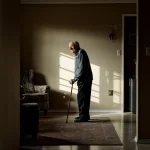
Seniors with vision loss can make their homes safer by using better lighting, high-contrast colors, and smart technology.
The right lighting setup reduces falls, supports daily tasks, and helps older adults with macular degeneration, glaucoma, or dementia stay independent and confident at home.
If you’ve ever worried about your parent tripping in a dark hallway or struggling to read a medicine label, you know how stressful vision loss can be.
Quick Rundown: Optimizing Home Lighting for Seniors With Vision Loss
- Aging Eyes Need More: Older adults require brighter, glare-free lighting since their eyes let in less light and adjust slowly.
- Smart Bulb Choices: Warm white LEDs (2700K–3000K) reduce glare, last longer, and improve depth perception.
- Safe Setup Strategies: Use even lighting, motion-activated nightlights, and under-cabinet task lights for key areas.
- Beyond Light Alone: Contrast, bold labels, tactile cues, and clutter reduction improve safety and independence.
- Therapy and Tech Help: Occupational therapy and smart lighting systems (like circadian lights) provide long-term support.
Now, let’s explore why aging eyes struggle more in dim settings and how to design a home that works with, not against, vision changes.
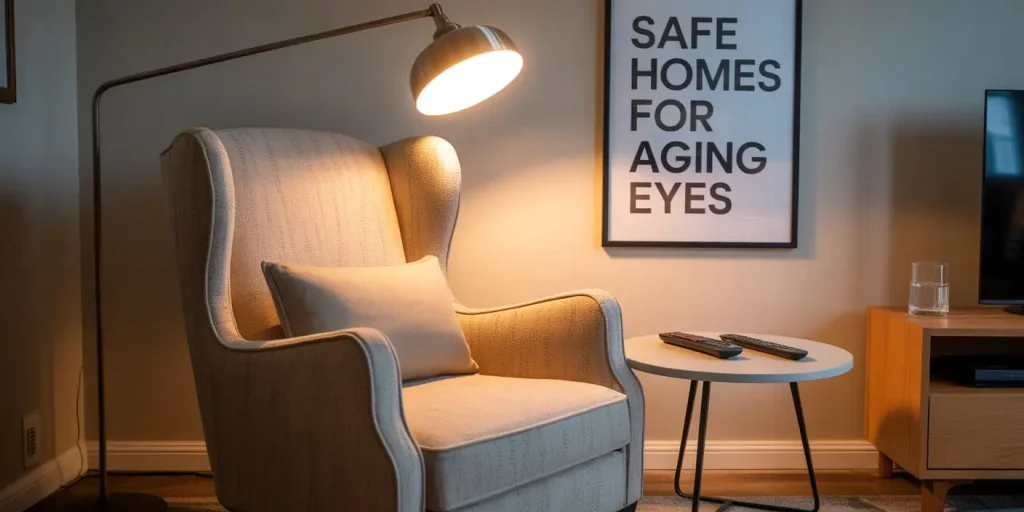
Why Aging Eyes Need More Help
As we get older, several changes often happen to our vision:
- Our eyes let in less light.
- We become more sensitive to glare.
- It gets harder to tell the difference between similar colors.
- We have trouble adjusting from bright light to dim and vice versa.
- Peripheral vision can shrink, and blind spots may develop.
These changes make it harder to:
- Read a medicine label
- Cook meals
- Recognize faces
- Avoid obstacles while walking
- Feel safe moving through the house
For someone with a visual condition like macular degeneration or glaucoma, these difficulties are even more serious.
But the good news is that there are real, simple changes we can make to improve safety and restore confidence.
❓What are the best light bulbs for seniors with low vision?
💬 The best light bulbs for seniors with vision loss are high-lumen, warm white LED bulbs with a color temperature around 2700K to 3000K. These provide bright but soft lighting that reduces glare and helps with depth perception. LEDs also last longer and don’t flicker like some fluorescents, which is important for seniors with light sensitivity or cognitive decline. Dimmable LEDs allow for light adjustment throughout the day based on comfort and needs.
Light Is More Than Brightness – It’s a Lifeline
Older adults need more light to see clearly. In fact, research shows that a 60-year-old needs twice as much light as a 20-year-old to do the same task.
But it’s not just about adding lamps, how you light a home matters just as much as how much light you use.
Here’s what proper lighting can do:
- Prevent falls by reducing shadows and trip hazards
- Help with reading and daily tasks
- Make it easier to recognize faces and find items
- Lower stress and confusion, especially for people with dementia
- Support better sleep and mood
Let’s look at how to set up your lighting so it works with aging eyes, not against them.
Easy Lighting Fixes That Make a Big Difference
These are some of the changes I recommend most often:
Brighten It Up, Evenly
Make sure rooms are well-lit with soft, even lighting. Avoid sharp contrasts between dark and bright spots, that’s hard on aging eyes.
Use warm LED bulbs and place lights to cover all areas, especially hallways, kitchens, and bathrooms.
❓How can I tell if my home has enough light for an older adult?
💬 Many homes are too dim for aging eyes without us realizing it. One way to check is to compare the room to daylight levels, if it feels gloomy even during the day, it likely needs more light. Use a lux meter app on your smartphone to measure brightness (aim for at least 300 lux in most rooms, and up to 500–750 lux for reading areas). If shadows or dark corners are noticeable, add lighting or adjust placement to create even brightness.
Reduce Glare
Glare is painful and dangerous. Use:
- Matte paint and furniture (no shiny surfaces)
- Sheer curtains or blinds to soften sunlight
- Light fixtures with frosted covers
- Tilt blinds upward to bounce light toward the ceiling
Outside, polarized sunglasses can help reduce glare from pavement or water.
Add Task Lighting
Install small lights where they’re needed most:
- Reading lamps near chairs and beds
- Under-cabinet lighting in the kitchen
- Vanity lighting in the bathroom
Aim for lights that can be adjusted and dimmed.
Try Motion-Activated Nightlights
These are one of my favorite tools. Place them:
- In hallways
- Near steps
- In the bathroom
- By the bed
They turn on automatically, which is perfect for people who get up during the night.
Embrace Smart Lighting
Smart devices make lighting easier to control, especially for people with arthritis or memory loss.
- Use voice commands with Alexa or Google Home
- Try touch lamps or preset lighting scenes
- Install automatic timers or dimmers
💡 Tip: Circadian lighting (which changes throughout the day) can reduce “sundowning” in people with dementia and support better sleep patterns.
❓Are there lighting options that also help with memory problems?
💬 Yes, circadian lighting is designed to support natural sleep-wake cycles by changing light color and intensity throughout the day. It’s especially helpful for seniors with dementia or Alzheimer’s, as it can reduce confusion, agitation, and sundowning. These lights mimic sunrise in the morning and gradually dim in the evening, which helps regulate mood and behavior naturally. Many smart lighting systems now offer this feature.
Other Home Safety Tricks for Vision Loss
Lighting isn’t the only tool we can use. Here are other changes that support independence:
- Use contrast: Paint stair edges a different color. Place white dishes on dark placemats. Mark doorways and outlets with contrasting tape.
- Organize with purpose: Keep items in the same place. Declutter walkways. Remove loose rugs.
- Label boldly: Use large print, bold colors, or tactile dots on appliances, remotes, and medicine bottles.
- Add tactile cues: Use bump dots, raised stickers, or textured tape to identify settings on microwaves, ovens, and thermostats.
- Encourage safe routines: Teach clients to always keep items in the same place. For example, always carry a small flashlight to a dim restaurant, or prep ingredients ahead of time to avoid confusion while cooking.
- Try vision techniques: Some people with central vision loss benefit from learning eccentric viewing, a way of using peripheral vision more effectively.
❓What colors are easiest for older adults with vision loss to see?
💬 High-contrast color combinations work best, such as black on white, yellow on blue, or dark objects against light backgrounds. Seniors often lose the ability to see blues and purples clearly, so red, yellow, and orange tend to stand out more. Using color contrast in stair treads, dishes, switches, and furniture edges can help with safety and visibility.
Why Occupational Therapy Is Key
I’m not just an aging-in-place specialist, I’m also a retired occupational therapist.
I can tell you firsthand that occupational therapy (OT) is one of the most powerful supports for seniors dealing with vision loss.
OTs look at the full picture: the person, their environment, and their daily activities. We help with:
- Home assessments using lighting tools like HELA (Home Environment Lighting Assessment)
- Tailored solutions based on a person’s habits, abilities, and preferences
- Training with magnifiers, screen readers, and adaptive devices
- Educating families and caregivers on how to keep environments safe and supportive
- Bridging communication between clients and contractors during home modifications
OTs don’t just fix today’s problems, we help prepare for tomorrow’s needs. Research shows that OT-led home safety visits reduce falls, boost quality of life, and even lower hospital readmission rates.
Tech Tools That Help Seniors With Vision Loss
Technology can be empowering when used well. Here are some useful tools:
- Smartphones and tablets with screen readers, text enlargement, and object-identifying apps
- Wearable magnifiers for reading menus, books, or mail
- Alarms and alerts for falls, wandering, or leaving the stove on
- Voice-controlled devices to turn on lights, set reminders, and call for help
- Telehealth for remote OT visits, especially helpful when in-person services aren’t available
- Support groups to reduce isolation and provide encouragement
❓Can voice-controlled lights really help seniors live independently?
💬 Absolutely. Voice-activated smart home devices like Alexa or Google Home let seniors control lights without needing to fumble for switches, especially helpful for those with arthritis, balance issues, or memory problems. You can program lights to turn on with a simple voice command or on a schedule, reducing fall risks and supporting independent living. Many devices are affordable and easy to set up with basic instructions.
Final Thoughts
Helping seniors with vision loss isn’t just about adding more lights, it’s about creating a home that supports dignity, safety, and confidence.
If you’re caring for an older adult with visual changes, or noticing your own sight isn’t what it used to be, I encourage you to take a close look at your lighting and home setup. Even small changes, like a well-placed nightlight or a voice-activated lamp, can make a big difference.
And remember, you don’t have to do this alone. An occupational therapist can guide you through home modifications, lighting improvements, and daily living strategies that are tailored just for you.
A safer, more comfortable home is within reach, and it starts with seeing things in a new light.