When you think about staying safe and independent as you get older, your home plays a big role. Future-proofing your home means making smart changes now so you can move safely, avoid falls, and adapt to health or mobility changes later.
These updates protect your independence and make life easier for your family too.
Quick Rundown: Future-Proof Your Home for Changing Needs
- Prevents Falls: Simple changes like better lighting and non-slip flooring lower your risk right away.
- Supports Mobility: Wider doorways, no-step entries, and curbless showers help you move safely as your needs change.
- Reduces Stress: Clear layouts, good lighting, and contrast make daily tasks easier on aging eyes and memory.
- Helps Caregivers: Flexible rooms and smarter layouts support family members or helpers if you ever need them.
- Saves Money Later: Planning ahead prevents costly emergency remodels after a fall or injury.
- Improves Daily Comfort: Thoughtful design makes your home easier to live in right now, not just someday.
Let’s walk through the updates that make your home safer, easier to navigate, and ready for whatever tomorrow brings.
Future-proofing your home means creating a space that works for you today and still supports you years from now. It is about keeping your home safe, simple, and comfortable, even if your mobility or health changes.
If you are just starting this process, you may find it helpful to explore the early steps of long-term planning, which you can find here: practical planning for aging in place.
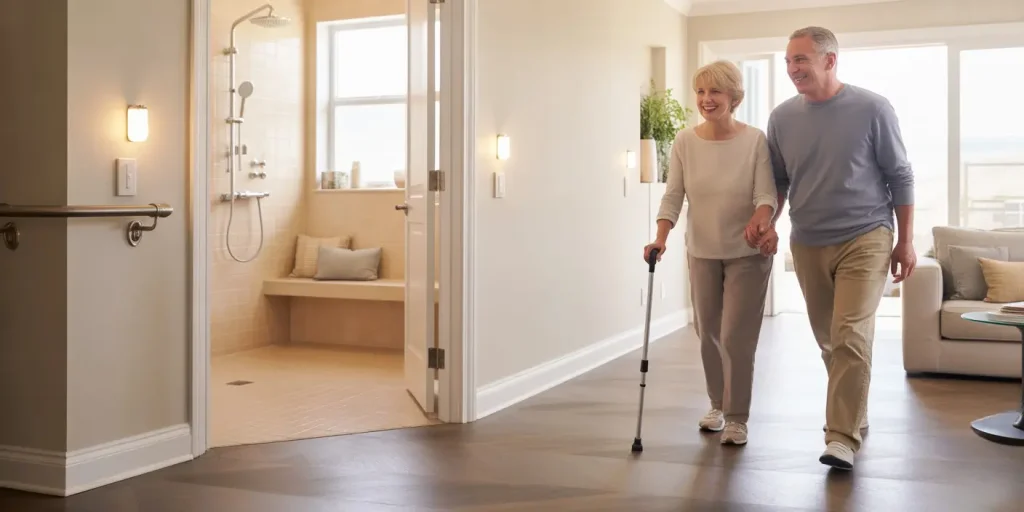
Understanding the Key Areas That Shape a Safe Home Layout
Before you begin making changes, it helps to look at the parts of your home that affect your daily movement the most. These include your flooring, doorways, hallways, and the way rooms connect to each other.
When these areas are easy to navigate, the rest of the home becomes safer and more supportive. The sections that follow will walk you through the updates that matter most.
❓ How do I know if my home is safe enough for aging in place?
💬 Walk through your home and look for steps, narrow spaces, dim lighting, and hard-to-reach storage. If you struggle with balance, stairs, or bending, those are signs your home needs updates. A professional home safety assessment can also help you understand what to improve.
A safe, supportive home helps you stay in control of your daily routine. Future-proofing also fits with what many seniors want most, the ability to stay in a familiar place close to friends and comforts. If you want to explore that idea more, you can read about the benefits of staying in your own home.
Your home is only part of the picture. Your neighborhood also matters. Safe sidewalks, nearby health care, easy access to groceries, and transportation support aging in place. Seniors often feel more confident when basic services are close by.
A simple, open layout makes life easier. Many people do not notice how tight their home feels until mobility changes happen. Planning ahead keeps you from remodeling during a stressful time.
Create a Layout That Lets You Move With Confidence – 13 Simple Tips
A simple, open layout makes life easier. Many people do not notice how tight their home feels until mobility changes happen. Planning ahead keeps you from remodeling during a stressful time.
1) Make Main-Floor Living Possible
Keeping everyday rooms on one level protects your energy and reduces fall risk. If you want examples of home features that support independence, explore this guide on age-friendly design details.
2) Check Doorways and Hallways
Pathways should be at least 36 inches wide. Clear hallways and brighter lighting help prevent falls.
❓ What upgrades should I make first if I’m on a tight budget?
💬 Start with the updates that reduce falls. Improve lighting, add non-slip flooring, use grab bars, and remove loose rugs or clutter. These changes make your home safer right away without spending a lot.
3) Install a Curbless Shower
Bathrooms create the most falls, so this is the first place to focus. A no-step shower makes entering and exiting safer and works with shower chairs.
4) Add Grab Bars Early
Place them next to the toilet, at the shower entrance, and inside the shower. But don’t just add them to bathrooms, they can be useful in bedrooms and hallways and even outdoors too.
5) Use Non-Slip Flooring
Slip-resistant flooring cuts your risk of falling on wet surfaces.
6) Choose Storage That Works With Your Body
Pull-out drawers, waist-height storage, and counter stools make daily tasks easier.
7) Pick Cooking Tools That Prevent Injuries
Induction cooktops reduce burns. Raised and side-opening ovens support safer lifting.
8) Use Layers of Lighting
Include overhead lights, task lighting, hallway nightlights, and automatic lights near entrances.
9) Install a No-Step Entry
You can often create a level entry through the garage or side door.
10) Improve Outdoor Surfaces and Lighting
Add handrails on both sides of steps, non-slip paths, and strong outdoor lighting.
To learn more about what many seniors are adding this year, explore the latest home safety trends.
11) Strengthen Walls and Wiring
Some of the most powerful upgrades are the ones no one sees. Add blocking for grab bars, raise outlets, and create stronger lighting circuits.
12) Plan Plumbing for Easy Remodeling Later
Keeping plumbing near each other saves money and time during future remodels.
If you want a long-term plan, explore our guide, an aging in place roadmap.
❓ How often should I review or update my future-proofing plan?
💬 Review your home at least once a year. Check lighting, flooring, handrails, and pathways. Health and mobility can change quickly, so yearly updates help keep your home safe.
13) Helpful Tools That Reduce Stress
Smart technology supports safety when it is simple and reliable.
Leak sensors, video doorbells, automatic lights, and simple thermostats are good options. Many seniors also use voice assistants or wearables for extra safety.
Future-proofing also supports the people who may help you. Flexible rooms, wider doorways, and clear pathways make it easier for caregivers or friends who use mobility aids.
❓ How do I future-proof my home without making it look like a hospital?
💬 Choose stylish grab bars, warm colors, nice tile, and natural materials. Modern aging-in-place design focuses on comfort and beauty, not medical equipment.
Safety can be beautiful. Many aging-in-place updates add value and make your home more appealing to buyers.
Future-proofing can be affordable when you break it into phases. There are multiple ways to pay for aging in place updates!
❓ Are there programs that help pay for home safety upgrades?
💬 Yes. Some seniors qualify for grants, tax credits, or home modification funds. Certain Medicare Advantage plans may help with safety upgrades, and local aging agencies often have financial support programs.
Plan for lighting updates, replacing worn flooring, checking handrails, and testing smart devices. Don’t overlook the issue of clutter! In my opinion, decluttering is the first step to creating a safe home to grow older in.
Builders today focus on flexible spaces, stylish grab bars, brighter lighting, curbless showers, and layouts that work well with caregiving support.
- Start with bathroom changes
- Improve lighting everywhere
- Widen pathways
- Add grab bars early
- Use non-slip flooring
- Choose simple smart tools
- Improve contrast for aging eyes
- Plan ahead with wiring and plumbing
- Build your long-term plan before a crisis
Future-proofing your home is a loving investment in your safety, independence, and peace of mind.