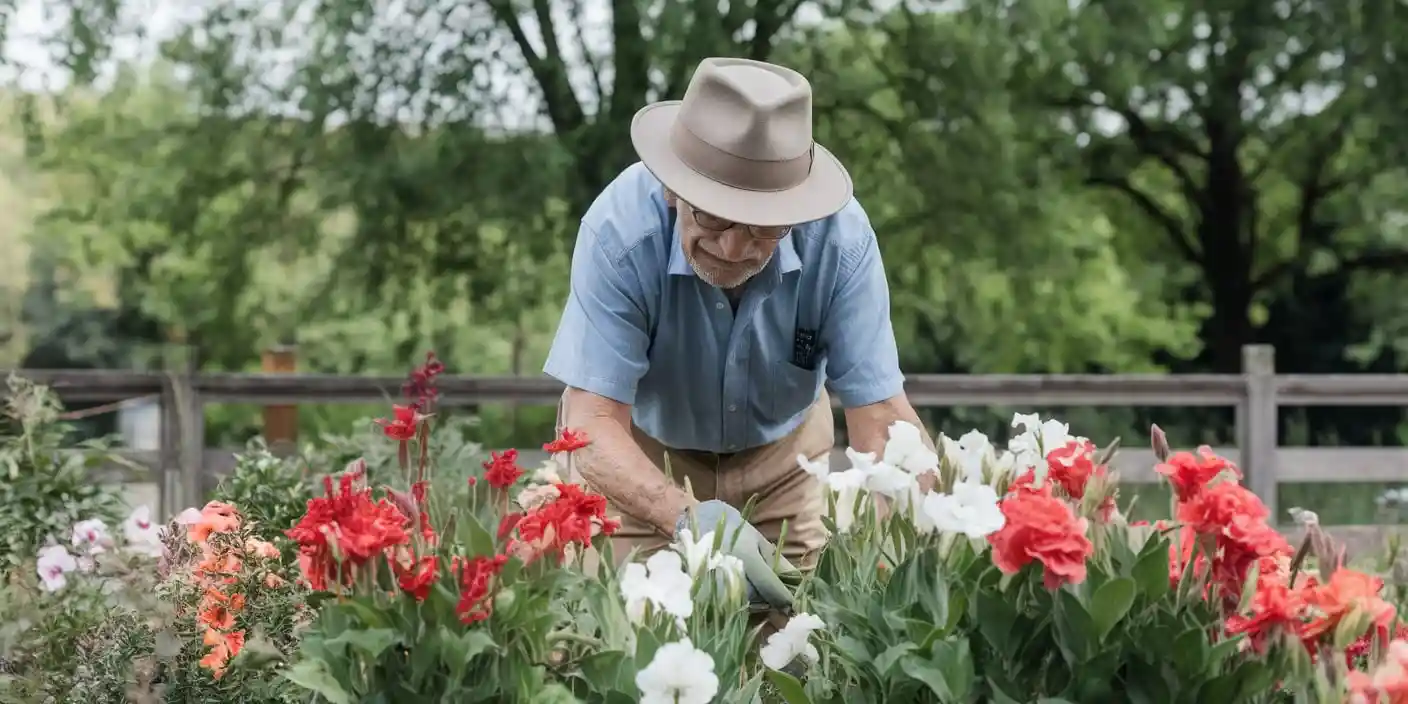
As we step into our senior years, the love for gardening doesn’t diminish, but our ability to spend long hours toiling in the soil might.
This guide is packed with practical advice and innovative tips specifically for senior gardeners.
Whether you’re dealing with mobility challenges or just looking for ways to make gardening less physically demanding, these 14 tips will transform your gardening experience, making it as rewarding and enjoyable as ever.
14 Ways To Make Your Gardening Easier And Safer
Gardening is a hobby that can be practiced all through a senior’s golden years.
Garden activities can be carried out by older people, no matter what their level of expertise or how much time they have available to devote to it.
1. Avoid Overstretching and Overexertion
For seniors, it’s crucial to avoid overstretching or overexerting themselves while gardening, as their bodies are more susceptible to strains and injuries.
Overdoing physical activities can lead to muscle fatigue, joint pain, or more serious health issues, making moderation and self-awareness key for a safe and enjoyable gardening experience.
2. Easy Access
Be sure the garden spaces provide easy access if the senior is in a wheelchair or using a walker or cane.
A solid cement walkway would be the best option, but if that isn’t possible, put down large, square pavers, then cement them together to create a walkway that’s as smooth as possible.
3. Break Up The Tasks
Break gardening tasks into smaller, manageable steps to avoid fatigue and overexertion. A gardening calendar can help with that.
4. Senior Friendly Garden Faucets
Install lever-style faucets for easier water access without needing to twist knobs.
5. Raised Garden Beds
Raise the garden through either a raised garden bed, large pots or container gardening, or vertical gardening via window boxes on a patio wall or deck railings.
An accessible garden layout can also be made from vertical plant “pockets” that you can buy and hang on a fence or a patio wall (see the image to the right).
6. Vertical Gardens
Another way to make a vertical garden is by using a stackable planter. You can make the garden several layers (stacks) high), then simply water the top two levels.
The water will run down to the lower plants.
A basin at the bottom catches and stores any remaining water, so you don’t have to go outside and water every day.
7. Motion Sensor Lights
Place motion-sensor lights around the garden for better visibility in the evening.
8. Be Aware Of The Weather
On hot days, try to tend the garden earlier in the morning or towards the end of the day when it is cooler.
9. Stay Hydrated
Bring a water bottle into the garden (a jug of water is the best option) and be very sure to drink it often to stay hydrated.
10. Protect Your Skin
Limit the time in direct sunlight to about 10 minutes at a time and only garden two to three times per week.
11. Dress Appropriately
Make sure to wear the proper clothing. Put on stable shoes (no sandals or anything that can slip off easily) and wear a large brimmed sun hat to keep the sun off of you.
Also wear gardening gloves and use bug spray.
12. Be Smart – Keep First Aid Nearby
Keep a first aid kit handy for the inevitable splinters or cuts that can happen while gardening.
13. Ergonomic Tools
Look for ergonomic tools if you or your senior loved one have arthritic hands, lack hand strength, or have other dexterity concerns.
You should look for tools with an ergonomic design, such as larger than normal handles that have non-slip grips. You’ll also want to consider the weight of the tool (lighter is better).
Use a garden kneeler bench, garden seat, or something like a gardening trolley to sit on while working in your outdoor area (Stable chairs could also work).
Look for a garden scooter or a garden cart with a storage box so you can carry all your tools and other paraphernalia out all at once.
Weeding tools can help a lot. I use a garden “claw” that you twist to loosen weeds and it has saved me from having back problems.
Consider not weeding if you have poor balance or your upper body strength isn’t good, though. It’s not worth the risk of falling.
Use a gardening apron to keep small tools within reach and out from under your feet.
14. Declutter and Organize
Organize tools like rakes, trowels, and spades by hanging them up on hooks in the garage or carport.
Also, keep them organized while using them in the garden to avoid tripping over them. Be especially careful when using power tools!
If you live alone, I strongly recommend wearing a medical alert device and TAKING IT INTO THE GARDEN WITH YOU!
My 94-year-old aunt often tells me how she gets out into the yard and up on her steep hill to garden while my cousin (who lives with her) is at work. “Do you take your Life Alert out there with you? Or your cell phone, at least?” I ask.
Invariably she responds that she knows she should, but forgets to take it out. What if she falls, though? How long will she lay there before he comes home and finds her?
I shudder to think of the risk she is taking!
You can read more about the gardening products we recommend in this article.