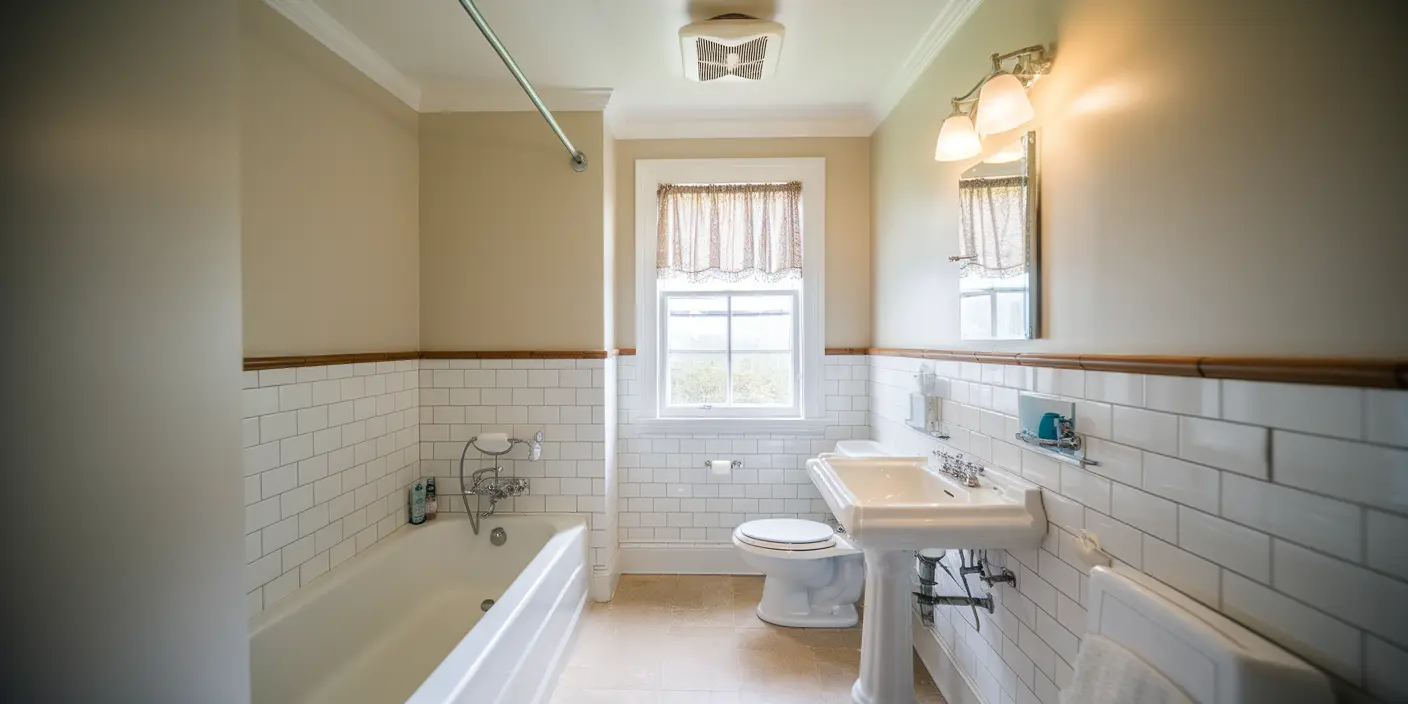
Leaving a bathroom fan on continuously is not recommended. It can lead to increased energy costs, wear out the fan motor faster, and potentially cause issues with excessive moisture removal, impacting the overall indoor air quality. It’s better to use it only as needed.
Experts say it’s best to use the fan for about 20 minutes when you’re taking a bath or shower.
Running it for too long can cause big problems and might even start a fire.
Bathroom fans are great for removing odor and moisture.
Safety, however, should always be the main goal when operating an electrical device, because knowing when and how long to operate one is important for preventing a possible fire.
Continue reading to discover all the reasons you shouldn’t leave your bathroom running continuously (or even for an extended period of time).
Can Leaving A Bathroom Fan On Cause A House Fire?
While you might think it is okay to let a bathroom fan run 24/7, the truth is that doing so is a potential fire risk.
In 2017, the U. S. Consumer Products Safety Commission (CPSC) did an assessment on exhaust fan fires.
They said, “Staff searched the CPSC Injury or Potential Injury Incident (IPII) database for incidents involving exhaust fans for the 20-year period from January 1, 1997 to September 21, 2017.
Staff identified 494 known incidents in that period related to permanently installed exhaust fans. The majority of these incidents occurred in residential bathrooms.“
The results of this assessment pointed strongly toward exhaust fans as the culprit in causing fires.
More than 75 percent (318/423) of the known incidents occurred in a bathroom or restroom. The most likely origin of the incident in these cases was the exhaust fan. The incidents ranged in severity from minor smoke to fire spreading through the structure. Of the 318 incidents that occurred in a bathroom or restroom, almost 80 percent (254/318) occurred in a residence.
Consumer Product Safety Commission
This video about a house fire from a fan motor reported by television station, Fox59, definitely should:
Bathroom exhaust fan fires can end up costing you big time.
The Westerville Division of Fire in Central Ohio has dealt with several bathroom exhaust fan fires over the years.
In fact, between 2008 and 2015, they responded to 10 fires caused by these fans. “In six of those cases, the fire caused more than $30,000 in damage,” according to the Columbus Dispatch.
There are a couple of reasons for why a bath fan could start a fire:
- Failing to clean the fan
- Faulty wiring on electric fans
Failing To Clean The Fan
First, if your fan is in continuous operation or runs for a number of hours, you are sucking in tons of things that can get trapped in the fan’s motor when it’s operating. These include:
- Dust
- Dirt
- Hair
- Tiny insects
Over time, a build-up of this material in the fan’s motor can ultimately combust and lead to a fire.
The material could also stop up the motor or keep the fan blades from turning, which means your fan is useless anyway.

This picture of a dirty computer fan gives you a visual of how dust and dirt can stop a fan:
Similarly, if your fan or wiring is faulty, or if the fan is old and the insulation around the wires has broken down, your bathroom fan could cause a fire.
The Countryside Fire Protection District in Vernon Hills, IL reported that, “These fans are not designed to last forever and many are original installs. Older exhaust fans are not thermally protected. Thermal protection causes the motor to shut off should they seize and overheat.“
They continued, “This safety feature has been available since the late 1970’s, but was not widely used until the early 1990’s. If you have a bathroom exhaust fan in your home, clean it twice a year. If it starts to make noises or smells odd, it’s time to replace it.“
Faulty Wiring
Another danger of a continually running exhaust fan is defective wiring.
When wires begin to short or malfunction, they can melt, leading to trouble inside the wall of your home.

If you smell plastic burning or hear wires sparking when your fan is in operation, turn it off immediately.
Though it seems redundant to say this, the above problems wouldn’t be an issue if the fan wasn’t overused.
Also, if your home is older or is a fixer upper, you might want to contact an electrician if you think there could be trouble with the wiring.
Is a Noisy Bathroom Fan Dangerous?
A noisy bathroom fan isn’t inherently dangerous, but it can potentially indicate underlying issues that could become dangerous if left unaddressed.
Here’s a breakdown of the potential risks:
Fire Risk:
- Overheating: Excessive noise might be caused by a worn-out or clogged fan, which can lead to overheating and increase the risk of fire. Dust and lint buildup can also contribute to this risk.
- Worn-out motor: A grinding or screeching noise can indicate a failing motor, which sparks or electrical issues may worsen if ignored.
Health Risks:
- Mold and mildew: A poorly functioning fan may not properly ventilate moisture, potentially leading to mold and mildew growth which can cause respiratory problems.
- Carbon monoxide poisoning: In the worst case, if the fan doesn’t vent properly, carbon monoxide from gas appliances could build up in the enclosed space, posing a poisoning risk.
Other Issues:
- Reduced efficiency: A noisy fan may not be efficiently expelling moisture and pollutants, reducing its effectiveness.
- Noise pollution: Constant loud noise can be disruptive and negatively impact quality of life.
Therefore, while a noisy bathroom fan isn’t directly dangerous, it’s best to investigate the cause of the noise and address it promptly:
- Clean the fan and ductwork: Dust buildup can often be the culprit for increased noise.
- Check the motor and bearings: Look for signs of wear or tear and consider replacing the fan if necessary.
- Ensure proper ventilation: Make sure the fan vents directly outside, not into the attic or crawl space.
- Invest in a quieter fan: If your current fan is old or outdated, consider replacing it with a quieter model.
By addressing the noise issue, you can prevent potential fire and health risks, improve ventilation, and create a more peaceful bathroom environment.
If you’re unsure about the cause of the noise or how to repair it, consulting a qualified electrician or handyman is always recommended.
Bathroom Fan Timer Switch Can Turn It Off Automatically

Sometimes it’s easy to forget that the bathroom fan is on. We often just walk out of a bathroom when we’re done using it and might not hear it from another room.
An easy solution (and one we recommend) is to have a timer installed.
Plus, installing a timer should help reduce your electricity bill because you’ll get adequate ventilation and remove humid air, but then it will turn off the fan, resulting in less energy use and electricity costs.
I actually have the Enerlites bathroom fan timer installed in my own house.
The nice thing about it is that I have several preset choices (and a reset button) for how long I want the timer to run, plus it has a night-light feature that helps me find the light switch in the dark.