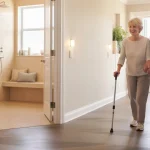
Aging-in-place design means creating a home that changes with you so you can keep living safely, comfortably, and independently. It’s more than just installing grab bars, it’s about thoughtful choices that support your mobility, vision, cognitive needs and quality of life.
I’ve seen too many people wait until after a fall or health change to make these updates. By planning early, you can avoid injuries, protect your independence, and keep living life your way.
Quick Rundown: How Aging-in-Place Design Helps You Stay Independent
- Prevents Falls: Using non-slip flooring, mixed-orientation grab bars, and proper lighting dramatically reduce home hazards.
- Boosts Comfort & Mobility: Accessible layouts, zero-step entries, and waist-height storage support your functional mobility at home.
- Saves Money in the Long Run: Proactive design changes cost far less than emergency home rebuilds or assisted living stays.
- Preserves Dignity & Style: Universal design features built in look like good design, not medical equipment.
- Integrates Smart-Home Support: Voice-controlled lighting, fall-detection sensors and home monitoring add extra peace of mind.
To understand how this fits your full home plan, check out A Comprehensive Guide to Aging in Place for step-by-step support.

What Does Aging-in-Place Design Really Mean?
Aging-in-place design means adapting your home so you can live there safely and independently as your abilities or vision change over time.
It uses universal design principles, whole-home accessibility upgrades, and person-environment fit strategies to ensure your home supports you rather than limits you.
When my neighbor Helen turned 80, she said, “I want to stay in my kitchen and see my garden every morning.”
So, to help her continue doing that, we added pull-down shelves for her spices, lever handles, and better task lighting. Those small changes made her daily tasks easier and safer while keeping the home she loved.
For the latest building and remodeling trends, see Aging in Place Trends.
Who Benefits Most from Aging-in-Place Design?
Anyone who wants to continue living in their own home as they age benefits from these upgrades.
Older adults, adult children caregivers, and families planning ahead can reduce risk, improve independence, and ease transitions when mobility or vision changes.
If you’re between ages 55 and 75, this is the perfect time to start considering these upgrades. For deeper planning steps, visit Planning and Practical Considerations for Aging in Place.
Why Plan Early for Aging at Home?
Planning ahead saves money, prevents rushed remodels, and gives you control over how your life unfolds.
When you design for future mobility or vision changes now, you avoid costly retrofits later.
- Add reinforced wall blocking in bathrooms at 33–36 inches high so you can install grab bars anytime.
- Choose 36-inch doorways and 42-inch hallways so walkers or wheelchairs can move freely.
- Install lever handles on doors and faucets so you don’t have to grip or twist.
Learn more in A Comprehensive Guide to Aging in Place.
How Does Aging-in-Place Design Improve Safety?
Safety upgrades dramatically reduce the risk of falls and injuries in your home environment.
- Bathrooms: Use non-slip tile with a coefficient of friction (COF) ≥ 0.42; install both horizontal and vertical grab bars near toilets and showers.
- Lighting & Vision Support: Place motion-sensor lights in hallways and stairwells; switches at 36-40 inches high; aim for 300–500 lux in living areas, colour temperature 2700–3000 K.
- Stairs & Entryways: Install sturdy handrails on both sides, 34–38 inches high; threshold-free entries reduce tripping.
- Flooring: Choose low-pile carpet or slip-resistant vinyl; avoid rugs that shift or bunch.
My mother had her hallway updated with motion lights and a zero-step entry; it definitely helped her to feel safer!
For a full comparison of staying vs. moving, see Pros and Cons of Aging in Place.
What Are the Key Rooms to Focus On for Aging-in-Place Design?
Bathrooms and kitchens are high-impact areas where design changes deliver major benefit.
Bathroom upgrades:
- Curbless shower with slope of ¼ inch per foot to ensure drainage and easy access.
- Built-in bench or fold-down seat plus a handheld sprayer on a 60-inch hose.
- Consider a walk-in-bathtub if bathing vs showering is a must for you.
- Rear and side grab bars for accessible toilet transfers.
- Anti-glare, layered task lighting and matte finishes to reduce visual glare.
Kitchen upgrades:
- Pull-out drawers and lazy Susans instead of deep cabinets.
- Countertops 34–36 inches high to support seated or standing users.
- Under-cabinet lighting for clear task visibility; front-control appliances with large digital displays.
These updates make everyday tasks much easier, even while you’re still fully mobile.
How Can Smart-Home Technology Support Aging in Place?
Smart-home supports add safety, independence and monitoring with minimal disruption.
- Voice-controlled assistants (Alexa, Google) allow hands-free lighting and calling for help.
- Fall-detection sensors and door/window alerts notify caregivers or emergency contacts.
- Video doorbells and remote monitoring reduce trips to the door, adding security.
Emerging tech: - Sensor-floors that detect falls and alert caregivers.
- Digital twin home models that track mobility patterns and alert to risk changes.
Start simple, one or two devices you’re comfortable with, then expand as you feel ready.
Pair your smart-home rollout with a thoughtful decluttering and spatial design approach in Compassionate Approach to Decluttering.
How Much Does Aging-in-Place Design Cost?
The cost varies depending on your home and the scope of upgrades. Here are 2025 estimates:
- Grab bar installation: $150–$300 each
- Curbless shower conversion: $5,000–$10,000
- Door widening: $700–$1,200 per door
- Smart-lighting system: $200–$600 per room
Compare that to average assisted living costs at $4,500 per month. These updates are a practical investment in your independence.
For financing ideas and grants, see How to Pay for Aging in Place.
Also think about resale value: homes with zero-step entries, wide doorways and accessible design appeal strongly to future buyers.
How Do I Choose the Right Contractor or Specialist for Aging-in-Place Upgrades?
Working with professionals experienced in aging-in-place design ensures better outcomes.
Look for:
- A Certified Aging-in-Place Specialist (CAPS) or experienced home-modification contractor
- Evidence of previous aging-in-place projects
- A scope of work with product specs, warranties and timeline
- Willingness to coordinate with occupational therapists (OTs) if needed
Get at least two bids, ask questions about accessibility specs, and keep communication clear.
How Does Aging-in-Place Design Support Caregivers & Family?
Good design doesn’t just benefit older adults, it also reduces caregiver burden and stress.
Wider doorways and layouts make transfers easier; adjustable counters reduce bending and lifting; smart sensors let family members monitor safely from a distance.
By involving caregivers and family in planning, you build a shared understanding of the space and its function. This strengthens your support network and enhances your home’s person-environment fit.
How Can Homes Adapt Over Time as You Age?
Aging happens in phases, and your home can grow with you through them.
Stage 1: Active Independence (ages 50s-60s)
- Add lighting upgrades, wider hallways, lever handles, open layout design
Stage 2: Changing Mobility (ages 70s)
- Add curbless showers, raised toilets, reachable storage, smooth flooring
Stage 3: Support & Care (ages 80s+)
- Integrate monitoring tech, design caregiver-ready spaces, track mobility via digital twin analytics
By planning in stages, you avoid rushed remodeling and ensure your home continues to support you.
What About Transportation, Community & Support Services Beyond the Home?
Aging-in-place isn’t just about your house, it’s about staying connected to your neighbourhood and services.
Think about:
- Transport access: ride programs, paratransit or community shuttles
- Home services: meals-on-wheels, grocery delivery, home health support
- Social supports: senior centres, hobby groups, local volunteering
A strong community network supports your physical and emotional well-being and complements your home design.
What About Equity & Affordability for Aging-in-Place Design?
Not every household has a large budget, but many low-cost upgrades still make a big difference.
- Add non-slip adhesive strips to stairs
- Use plug-in motion sensor lights in hallways
- Replace door and faucet knobs with lever handles
- Apply for local home-mod grants aimed at older adults
Many communities run programs that help cover part of the cost of home safety upgrades.
When Is It Better to Move Instead of Modify Your Home?
Sometimes, moving may be a better long-term decision than constant retrofit costs.
If your current home has steep stairs, narrow hallways or major structural issues, ask:
- Can I safely live here for 10 more years with specific upgrades?
- Will I still be connected to transportation, health care and social supports?
If the answer is no, moving to a one-level home might be a smarter, safer choice.
How Does Aging-in-Place Design Support Emotional Well-Being?
Your home is more than a building, it’s part of your identity, comfort and dignity.
A home that fits your changing needs helps you feel secure and valued.
When I helped my client Robert redesign his home after a mild stroke, we used colour-contrast edges on counters, matching grab bars to his décor, and clearly labelled drawers. He told me, “It feels like my old house, just easier to live in.” That kind of result is what this design is all about.
What Are the First Steps to Start Your Aging-in-Place Design Plan?
Here’s your action list:
- Walk through your home and note hazards (loose rugs, dim lighting, narrow doors).
- Prioritize upgrades: focus on high-impact rooms and features.
- Involve your family, a contractor or home-modification specialist.
Even small changes today, better lighting, slip-safe flooring, a zero-step entry, can make a huge difference tomorrow.
For detailed checklists and planning tools, revisit A Comprehensive Guide to Aging in Place or Planning and Practical Considerations for Aging in Place.
Final Thoughts
Aging-in-place design is about protecting your independence and creating a home that adapts to you. Every improvement, big or small, makes daily life easier, safer and more fulfilling.
If you start early, think strategically and build your design around your lifestyle and physical changes, your home can remain your sanctuary for many years to come.
Call to Action:
Set aside ten minutes today to walk through your house with fresh eyes. Ask yourself: “Can I do everything here safely, comfortably, and without help?”
If the answer is anything less than “yes,” it’s time to begin your aging-in-place plan, your future self will thank you.