Caring for someone with dementia often means looking for gentle ways to bring comfort and connection into their world. It can be heartbreaking to see agitation, restlessness, or sadness you wish you could ease.
That’s where therapy dolls come in. At first, the idea may seem unusual, even unsettling, but many families and caregivers discover these dolls can calm, soothe, and spark joy for loved ones with memory loss.
The reassuring truth is that therapy dolls aren’t about “tricking” someone. Instead, they offer a sense of purpose, companionship, and comfort that taps into deep emotional needs.
This article explores how and why therapy dolls help, the research behind them, and what to consider if you’re thinking of introducing one to your loved one’s care.
Quick Rundown: How Therapy Dolls Calm and Comfort Dementia Patients
- Ease Anxiety & Agitation: Therapy dolls reduce restlessness, wandering, and frustration without medication.
- Provide Purpose: Holding or caring for a doll taps into nurturing instincts and long-term memories.
- Support Social Connection: Encourages conversation, engagement, and interaction with caregivers and loved ones.
- Backed by Research: Studies show doll therapy lowers behavioral symptoms and improves quality of life.
- Respect & Dignity: Introduce gently, observe reactions, and honor personal preferences, never force use.
- Complementary Options: Weighted blankets, fidget items, and music therapy also provide comfort and relaxation.
Let’s begin by looking at why therapy dolls can be so effective in reaching parts of the heart and mind that dementia often leaves untouched.
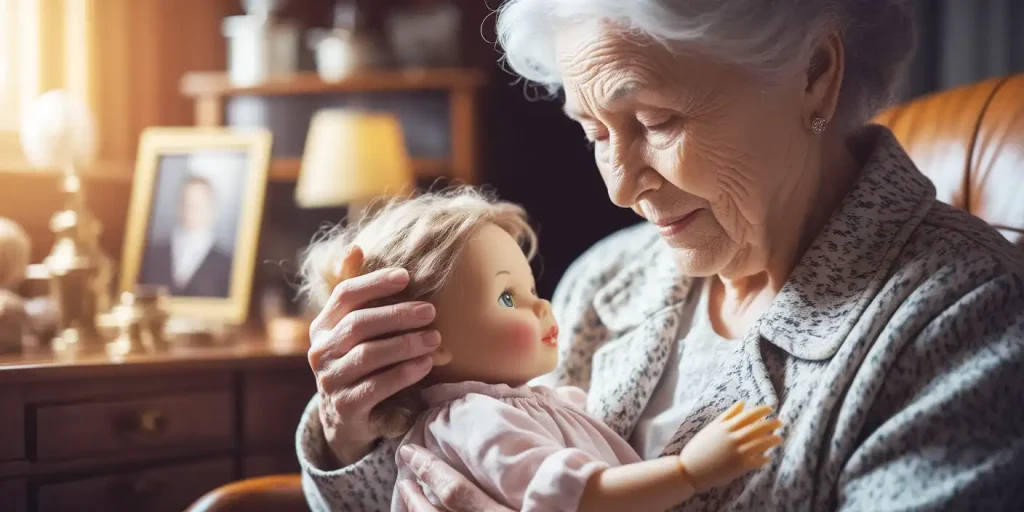
Understanding the Emotional Needs of Alzheimer’s Patients
Alzheimer’s disease affects more than just memory; it impacts emotions, behavior, and a person’s ability to connect with the world.
Many individuals with dementia experience:
- Behavioral and psychological symptoms of dementia (BPSD) such as agitation and restlessness.
- Anxiety alleviation challenges that require sensory stimulation.
- Social withdrawal and loneliness, leading to increased caregiver burden.
- Difficulty expressing emotions, affecting their overall quality of life.
Therapeutic dolls address these emotional challenges by offering a comforting presence that helps individuals feel safe and engaged.
How Therapy Dolls Provide Comfort and Calmness
Emotional Benefits
- Provides companionship, reducing feelings of loneliness.
- Evokes positive memories of parenting or caregiving roles.
- Offers a sense of security and routine, easing emotional distress.
- Supports emotional well-being by reducing feelings of fear and frustration.
Behavioral Benefits
- Reduces agitation, restlessness, and wandering behaviors.
- Helps regulate emotions, minimizing aggression or frustration.
- Encourages relaxation, leading to better sleep and calmness.
- Enhances mood and decreases anxiety without medication.
Cognitive and Social Benefits
- Encourages verbal and non-verbal communication.
- Stimulates cognitive function through interaction with the doll.
- Promotes engagement and connection with caregivers and loved ones.
- Supports social interaction, reducing withdrawal from activities.
Best Practices for Introducing a Therapy Doll
- Selecting the Right Doll: Choose a soft, realistic empathy doll that feels comfortable to hold.
- Introducing Gradually: Allow the individual to discover and interact with the doll naturally.
- Observing Reactions: Monitor whether the doll brings comfort or distress.
- Respecting Personal Preferences: Not every patient will respond positively to doll therapy, and it should never be forced.
Addressing Ethical Considerations
Some caregivers worry that doll therapy infantilizes individuals with Alzheimer’s. However, when used appropriately, empathy dolls provide therapeutic benefits and a sense of purpose without diminishing dignity.
Caregivers should be sensitive to individual reactions and communicate openly with family members about the benefits and intentions behind using this non-pharmacological intervention.
Research Findings on Doll Therapy
Several studies support the use of doll therapy in dementia care. Research has shown that:
- Doll therapy can significantly reduce agitation and anxiety in individuals with Alzheimer’s.
- Non-pharmacological interventions like doll therapy can improve quality of life and reduce reliance on medication.
- Some clinical trials suggest that doll therapy enhances social interaction and fosters a sense of security. By incorporating empathy dolls into dementia care, caregivers can offer an evidence-based approach to emotional and behavioral support.
In an extensive study published on the National Library of Medicine, the conclusion was…
“The evidence suggests that doll therapy can be an effective non-pharmacological intervention for reducing behavioral and psychological symptoms of dementia (BPSD), improving communication skills, and potentially reducing caregiver distress.”
Potential Risks and Negative Reactions
While many individuals benefit from comfort therapy, some may have negative reactions. Potential concerns include:
- Overattachment: Some individuals may become overly reliant on the doll, leading to distress if it is lost or damaged.
- Confusion: In some cases, a therapy doll may increase cognitive disorientation rather than provide comfort.
- Rejection: Not all individuals will respond positively to empathy dolls, and their preferences should always be respected.
Caregivers should monitor the individual’s response and adjust their approach if needed.
Cost and Accessibility of Therapy Dolls
Therapy dolls are available at a range of price points, from affordable options under $30 to high-quality, lifelike empathy dolls costing $100 or more.
Some dementia care organizations provide resources for obtaining therapy dolls at a reduced cost.
When selecting a doll, caregivers should consider:
- Softness and weight for realistic comfort.
- Facial features that evoke positive emotions.
- Durability for long-term use. By understanding the cost and availability of therapy dolls, caregivers can make informed decisions about integrating them into dementia care.
Additional Comfort Strategies Beyond Doll Therapy
While doll therapy is highly effective, other non-pharmacological interventions can also help:
- Weighted blankets for deep pressure relaxation.
- Fidget blankets and sensory objects to ease restlessness.
- Music therapy to trigger positive memories and emotions.
- A structured daily routine to minimize confusion and anxiety.
- Person-centered care approaches that focus on individualized needs.
Some Therapy Dolls You Can Buy
No products found.

- INTERACTIVE COMPANION CAT: The JOY FOR ALL Orange Tabby Cat is a lifelike companion pet designed to bring comfort, joy, and companionship to older adults, seniors, families, and caregivers — especially when a live pet is not practical.


- JOY FOR ALL PUP: Bring comfort, companionship, and playful fun to aging loved ones! The Joy For All Golden Pup evokes the joys and excitement of furry friendship with a realistic look, sound, and feel and state-of-the-art interactive technology to create a calming and enriching experience, helping to ease loneliness, improve care, and forge meaningful connections for older adults living with Alzheimer’s disease and related dementia (ADRD).
Additional Comfort Strategies Beyond Doll Therapy
While doll therapy is highly effective, other non-pharmacological interventions can also help:
- Weighted blankets for deep pressure relaxation.
- Fidget blankets and sensory objects to ease restlessness.
- Music therapy to trigger positive memories and emotions.
- A structured daily routine to minimize confusion and anxiety.
- Person-centered care approaches that focus on individualized needs.
Conclusion
Doll therapy offers a compassionate, non-medical way to comfort and calm individuals with Alzheimer’s. It provides emotional, behavioral, and cognitive benefits that improve their quality of life.
While not every individual will respond to doll therapy, it is a valuable option for many caregivers seeking ways to ease distress and bring comfort to their loved ones.
If you are caring for someone with Alzheimer’s, consider exploring empathy dolls as a potential source of support and reassurance.