When conducting a caregiver background check, it’s important to understand the legal responsibilities involved, especially if you use a third-party background screening company.
These checks are regulated by the Fair Credit Reporting Act (FCRA), a federal law designed to protect the privacy and rights of job applicants.
What Is the Fair Credit Reporting Act (FCRA)?
The Fair Credit Reporting Act (FCRA) governs how consumer reports, including employment background checks, are obtained and used. If you hire a company to perform a caregiver background check, you must follow specific steps to remain compliant with this law.
When Does the FCRA Apply?
The FCRA applies when:
- You use a third-party background screening company to obtain information about a caregiver.
- The information gathered is used to make an employment or hiring decision.
If you conduct your own research—such as personally calling references or searching public records—the FCRA generally does not apply. However, other state and local laws may still be relevant.
Key FCRA Requirements for Families and Agencies
If you are using a background screening company, you must follow these essential steps:
1. Provide a Clear Written Disclosure
Before ordering a background check, you must give the caregiver a standalone written disclosure stating that a background report may be obtained for employment purposes. This disclosure must be separate from the job application and written in clear, simple language.
2. Obtain Written Authorization
You must receive written permission from the caregiver before requesting the background report. Without this authorization, the background check cannot legally be conducted.
3. Follow the Pre-Adverse Action Process
If information in the background report may lead you to not hire the caregiver, you must first provide:
- A copy of the background report.
- A copy of the document titled “A Summary of Your Rights Under the Fair Credit Reporting Act.”
This step allows the applicant an opportunity to review and dispute any inaccurate information.
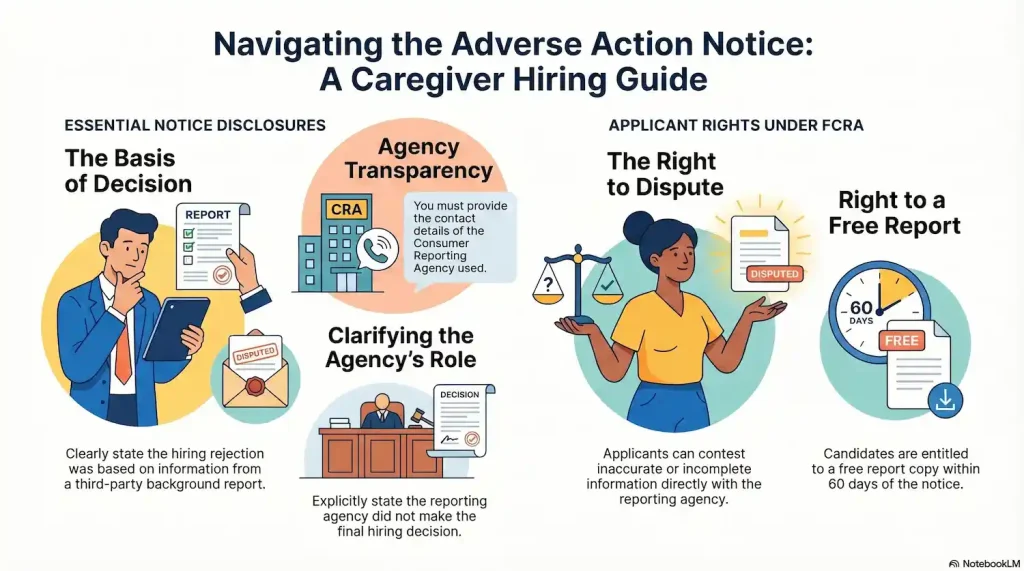
4. Send an Adverse Action Notice
If you ultimately decide not to hire the caregiver based on the report, you must send an adverse action notice. This notice should include:
- The name, address, and phone number of the background screening company.
- A statement that the company did not make the hiring decision.
- Notice of the applicant’s right to dispute the accuracy of the report.
- Information about the applicant’s right to obtain an additional free copy of the report within 60 days.
Download a PDF copy of a Sample Adverse Action Notice for Caregiver Hiring
Why FCRA Compliance Matters
Failing to follow FCRA requirements can lead to legal liability, including fines and potential lawsuits. More importantly, compliance demonstrates fairness, transparency, and respect for the caregiver’s rights, values that are essential when building a trustworthy care relationship.
Additional State and Local Laws
While the FCRA is a federal law, state and local regulations may impose additional requirements.
For example:
- Some states require fingerprint-based background checks for certain caregiving roles.
- “Ban-the-box” laws in many jurisdictions limit when employers can ask about criminal history.
- State caregiver registries or certification systems may also need to be consulted.
Because these rules vary, it’s wise to check with your state’s health or human services department before hiring a caregiver.
Quick FCRA Compliance Checklist
To make the process easier, use this simple checklist:
- ✅ Provide a standalone written disclosure.
- ✅ Obtain written authorization from the applicant.
- ✅ Order the background report through a reputable screening company.
- ✅ Provide a copy of the report and the FCRA Summary of Rights if considering adverse action.
- ✅ Send a final adverse action notice if you decide not to hire.
- ✅ Review any applicable state or local regulations.
Final Thoughts
Understanding and following FCRA requirements helps ensure that your caregiver hiring process is both legal and ethical. While the process may seem complex, these steps protect everyone involved and contribute to a safer environment for the older adult receiving care.
FAQ
Do caregiver background checks require consent?
Yes. When a third-party screening company is used, the Fair Credit Reporting Act requires employers or families to provide a clear written disclosure and obtain the caregiver’s written permission before conducting the background check.