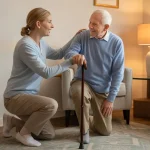
Few moments feel more frightening than when a loved one takes a sudden fall. Knowing the right steps to take if an elderly person falls can make all the difference in preventing further injury and calming an overwhelming situation.
Acting quickly but carefully protects both their safety and your peace of mind.
The struggle is that many people freeze in panic or try to help in unsafe ways, which can actually make things worse. The reassuring part is that with a clear plan, checking for injuries, calling for help if needed, and assisting them up safely, you’ll feel prepared to respond with confidence.
Quick Rundown
- Stay calm and assess for injuries before moving the person.
- If there’s pain, bleeding, or possible fractures, call emergency services right away.
- Help them up only if you’re sure it’s safe, using proper techniques or assistive devices.
- Monitor for signs of dizziness, confusion, or delayed pain after the fall.
- Follow up with a doctor to rule out hidden injuries and prevent future falls.
With those first steps in mind, let’s walk through exactly what to do if an elderly person falls so you can handle the situation safely and effectively.

A Personal Experience
Mr. and Mrs. Bernstein were in their late 70s when I started working with them. Mrs. Bernstein had recently had a minor fall, and while she wasn’t seriously injured, it shook their confidence.
Mr. Bernstein, who had arthritis, was worried he wouldn’t be able to help his wife if she fell again.
We started by practicing fall recovery techniques together. I taught them how to assess for injuries and when to call for help.
We also worked on strategies for Mr. Bernstein to assist his wife up from the floor safely, taking into account his physical limitations.
But more importantly, we focused on fall prevention and building their confidence.
I did a home safety assessment, started gentle exercise routines to improve their balance and strength, and had them practice using assistive devices. Over time, their fear decreased, and they felt more in control of their situation.
Now, let’s get into the topic of this article which is what to do into the steps everyone should know when dealing with a fall.
Immediate Action and Emergency Response
When an elderly person falls, your first priority is to stay calm and assess the situation. Don’t try to help them up immediately, as this could cause further injury if they’re seriously hurt.
- Check for consciousness: Speak to the person and gently touch their shoulder to see if they respond.
- Look for visible injuries: Check for any obvious cuts, bruises, or signs of broken bones.
- Ask about pain: If they’re conscious, ask if they’re experiencing any pain and where.
Injury Assessment
It’s important to thoroughly check for injuries, even if they’re not immediately visible:
- Check the head and neck for bumps or cuts
- Look for bruising or swelling on the arms and legs
- Ask about any numbness or tingling sensations
- Observe their breathing – is it labored or irregular?
Remember, some injuries may not be apparent right away, so it’s crucial to monitor the person closely in the hours and days following a fall.
Be particularly aware of fracture risk, especially in areas like the hip or spine.
When to Call Emergency Services
Please call 911 if:
- The person is unconscious or confused
- There’s visible bleeding or signs of a head injury
- They’re complaining of severe pain
- You suspect a broken bone, especially in the hip or spine
- They can’t move or get up, even with assistance
- There are changes in vision or speech
Remember, it’s always better to err on the side of caution when it comes to elderly falls. In fact, about 3 million emergency department visits due to older adult falls occur each year.
Safely Helping Them Up
If the person isn’t seriously injured and feels able to get up, follow these steps:
- Bring a chair close to them
- Help them roll onto their side and then to a kneeling position
- Place the chair in front of them and ask them to place their hands on the seat
- Support them as they push themselves up and pivot to sit in the chair
Take it slow and steady. If at any point they feel pain or dizzy, stop and call 911 for help.
Fall Prevention Strategies and Safety Measures
Preventing falls is just as important as knowing how to respond to them. Here are some strategies I implemented with the Bernsteins and other clients:
- Remove tripping hazards like loose rugs and clutter
- Improve lighting throughout the home
- Install grab bars in the bathroom and handrails on stairs
- Encourage regular balance exercises and strength training
- Review medications that might cause dizziness or affect balance
- Consider using mobility aids like canes or walkers
- Ensure proper nutrition, including calcium and vitamin D for bone health
Home Modifications for Senior Safety
Making simple changes to the home environment can significantly reduce fall risk:
- Install non-slip mats in the bathroom and kitchen
- Secure loose carpets and remove throw rugs
- Improve lighting, especially on staircases and in hallways
- Rearrange furniture to create clear pathways
- Consider installing a stairlift if stairs are challenging
The Growing Concern of Elderly Falls
The issue of falls among older adults is becoming increasingly serious. Consider these statistics:
| Statistic | Value |
|---|---|
| Increase in fall deaths over past 10 years | 60% |
| Increase in emergency department visits over past 10 years | 43% |
This data underscores the importance of fall prevention and proper emergency response strategies.
Long-Term Considerations and Rehabilitation Plan
After a fall, it’s important to:
- Schedule a check-up with their doctor to discuss the fall and any underlying causes
- Consider a medical alert system for quick access to help
- Evaluate if additional support or care is needed at home
- Monitor for delayed symptoms or changes in behavior
- Discuss any fears or anxieties about falling again
- Develop a comprehensive rehabilitation plan to improve strength and balance
Remember, falls can be a sign that your loved one needs more assistance. Don’t ignore this important warning sign.
Gait Assessment and Fall History
A thorough gait assessment by a healthcare professional can identify potential risk factors for falls.
They’ll look at:
- Walking pattern and speed
- Balance and coordination
- Muscle strength and flexibility
It’s also crucial to keep a detailed fall history. This can help identify patterns or specific risk factors that need to be addressed.
Emotional Impact of Falls
Falls can have a significant psychological impact on both the elderly person and their caregiver.
It’s common for seniors to develop a fear of falling, which can lead to decreased activity and, ironically, increase the risk of future falls.
As a caregiver, you might feel guilty or anxious about leaving your loved one alone.
It’s important to address these emotional concerns:
- Encourage open communication about fears and concerns
- Consider counseling or support groups for both the elderly person and caregiver
- Focus on positive steps to prevent future falls rather than dwelling on past incidents
Dealing with Dementia and Falls
If your elderly loved one has dementia, falls can be even more complicated. I would suggest that you use “therapeutic fibbing” to keep them calm after a fall.
For instance, if they’re insisting on getting up when it’s not safe, you might say, “The doctor said you need to rest for a bit before getting up.”
While it’s not entirely truthful, it can prevent further injury and distress.
Caregiver Assistance and Self-Care
Caring for an elderly person who’s at risk of falling can be stressful. Don’t forget to take care of yourself too.
Consider reading books on caregiving or joining a support group. Remember, you can’t pour from an empty cup.
If you’re feeling overwhelmed or anxious about your caregiving responsibilities, it’s important to take care of your mental health.
Consider taking a free online mental health screening or booking a consultation with a mental health professional. Your well-being is just as important as that of your loved one.
Living Arrangements and Elderly Care
If falls become frequent, you might consider whether living with your elderly parent is the best option. This decision can have significant impacts on everyone involved.
Weigh the pros and cons carefully, considering factors like home safety modifications, your ability to provide care, and the emotional impact on all family members.
By being prepared and taking proactive steps, you can help ensure the safety and well-being of your elderly loved ones.
Always prioritize their dignity and independence while providing the necessary support and care.
Remember, it’s okay to seek help when you need it – caring for an elderly person is a challenging but rewarding task.
As I learned from working with the Bernsteins and many other clients, the key is not just in knowing how to respond to falls, but in building confidence and implementing strategies to prevent them.
With the right approach, we can help our elderly loved ones maintain their independence and quality of life.
Take Action Today
Don’t wait for a fall to happen before taking steps to prevent it.
Download our free “Elderly Fall Prevention Checklist” to assess and improve safety in your loved one’s home. This comprehensive guide will help you identify potential hazards and provide practical solutions to create a safer living environment.
Remember, prevention is always better than cure. By taking action today, you can significantly reduce the risk of falls and provide peace of mind for both you and your elderly loved ones.
Download the checklist now and take the first step towards a safer, more confident future for your family.