If this is your first time searching through a list of facilities for a nursing home, we urge you to “interview” several of them before you make your final decision as to which one is best suited for your aging parent.
With so many elderly people living in facilities such as nursing homes – it’s important for family caregivers to be the best advocate that you can be for their elderly loved one.
Here are a list of questions to ask and here is a PDF version that you can print and take with you.
Is the nursing home certified?
There are many nursing homes that claim to be certified, but not all of them actually are. And it can be hard to tell the difference between a real certification and one that’s just made up.
I recommend to contact your state’s health department to find out who to call to find out if the nursing home on your list is certified or not.
Does the nursing home have experience with the health problems that your parents have?
The experience level of the medical professionals in the nursing home is very important. If the nurses have had little to no experience working with someone with memory loss, dementia or Parkinson’s (as examples) it will make life a bit difficult for your senior parent.
Who are the physicians on staff at this nursing home?
You can ask for a list of the physicians, physician assistants and nurse practitioners who are on call and on staff at this nursing home. Then you can use Healthgrades and Yelp to check their ratings and reviews.
How close is the nursing home to a local hospital?
The proximity of the facility to a local hospital can literally mean the difference between life and death for your aging parent. The closer they are to a hospital, the quicker they can get medical attention if and when it’s needed.
Does the nursing home offer various therapies that your parents need?
Is there a full staff of physical, occupational and speech therapists available 6 days of the week? Are there respiratory therapists available? What about recreational therapists? All of these therapy services help to make the lives of the residents richer and fuller.
In addition to the therapies, you will also want to know what types of activities are available that can provide some social interaction?
Is there a separate or special unit for special needs such as Alzheimer’s disease or dementia?
There are some nursing home facilities that offer what is often called a “memory unit” where residents with moderate to severe dementia or Alzheimer’s disease are housed. These units are locked to help protect their residents from wandering away from the facility.
How much does it cost to stay in a nursing home?
According to Senior Living.org, in 2020, a semi-private nursing home room may cost $245 a day. That’s $7,441 a month and $89,297 a year. A private room would be $275 a day, $8,365 a month and $100,375 a year.
Please know that rates do vary greatly from state to state.
So, you’re looking for a way to pay for care? One option are government programs. Medicare and Medicaid are two alternatives that can provide financial support in the event of need. If these don’t work out or your eligibility falls short, there’s always VA benefits which may cover other costs like home-help!
Is the staff certified and licensed?
The Centers for Medicare and Medicaid have a list of standards that nursing homes must meet. This includes having qualified employees, maintaining certification status with the CMMDA, keeping up to date records on any changes in patients’ condition or health information so they can be taken care of properly by these licensed professionals who work hard every day!
Is the staff certified and licensed?
The Centers for Medicare and Medicaid have a list of standards that nursing homes must meet. This includes having qualified employees, maintaining certification status with the CMMDA, keeping up to date records on any changes in patients’ condition or health information so they can be taken care of properly by these licensed professionals who work hard every day!
What is the staff-to-resident ratio?
Federal regulations state…
The facility must have sufficient nursing staff with the appropriate competencies and skills sets to provide nursing and related services to assure resident safety and attain or maintain the highest practicable level of physical, mental, and psychosocial well-being of each resident, as determined by resident assessments and individual plans of care and considering the number, acuity and diagnoses of the facility’s resident population in accordance with the facility assessment . . . (see 42 C.F.R. § 483.70(e)).
Centers for Medicare and Medicaid Services
These guidelines are vague and leave the exact ratio number to the discretion of the facility. But some states, like California have implemented their own stricter laws. In California, the law is at least 3.5 nursing hours per resident day with some waivers allowed.
When the nurses and staff have little time for the residents because they are trying to care for too many residents – well – the level of care will definitely go down.
Does the nursing home offer an abuse prevention training program for employees?
Not all nursing homes offer abuse prevention training programs, believe it or not.
More nursing homes are investing in abuse and neglect training to combat harmful situations. The training is usually provided by certified professionals who specialize in the prevention of cases like this as well as other related issues such as mental health or substance use disorders.
Abuse and neglect training aims to prevent senior mistreatment, which can be a difficult issue for many people due to lack of knowledge on how it happens – but that’s why trained experts exist!
What are the average ratings of the nursing home?
Nursing homes are rated on a 1-5 star system. Nursing Homes with 5 stars provide high level care whereas nursing homes that only get one star have below average care and conditions.
You can find the rating of a nursing home at the Nursing Home Compare Website.
Are there any inspection citations or lawsuits filed against the facility?
The nursing home is the place where people go to be safe and taken care of, not to be treated badly or to be injured in any way. But when they do end up getting badly hurt or killed on their stay there due to negligence by staff, then it’s time for an attorney!
You can consult with an elder law attorney to find out if the nursing homes(s) that you are looking into have had lawsuits and/or citations in the past.
Can residents in a nursing home make choices about their daily routine?
It’s true, that generally speaking residents in nursing homes do not have many choices but most facilities do try to make every resident as happy as they can be.
For example, you may want to eat dinner at 3 pm every day but all the other residents eat dinner between 4:30 and 6:30. The kitchen staff and the nursing staff would have to change their schedules to accommodate your dinner time request.
So, you can see how having this type of choice could cause a difficult time and is probably not realistic.
But on the other hand, nursing home residents do generally have a choice of how much social engagement they want to participate in, if they want to be inside or outside, where to sit in the dining room or if they want to eat in their own room.
What kind of amenities does the facility offer?
Many facilities have different offerings that can vary depending on where they’re located, how busy it gets during certain times, as well as other factors such as type of ownership or whether it’s privately owned versus publically-funded with government money.
General amenities that a nursing home offers include:
- 3 meals a day
- housekeeping staff for cleaning and laundry service
- rehabilitation services by physical therapy, occupational, speech and respiratory therapies
- recreational therapists are sometimes on staff as well
- 24 hour nursing care
- assistance with personal care such as showering, feeding and toileting
Some additional amenities that you can ask about include:
- pet friendly
- wifi access
- beauty salon / barber shop on site
- transportation services
- arts and crafts room
- active common areas
Is there an outdoor area for activities?
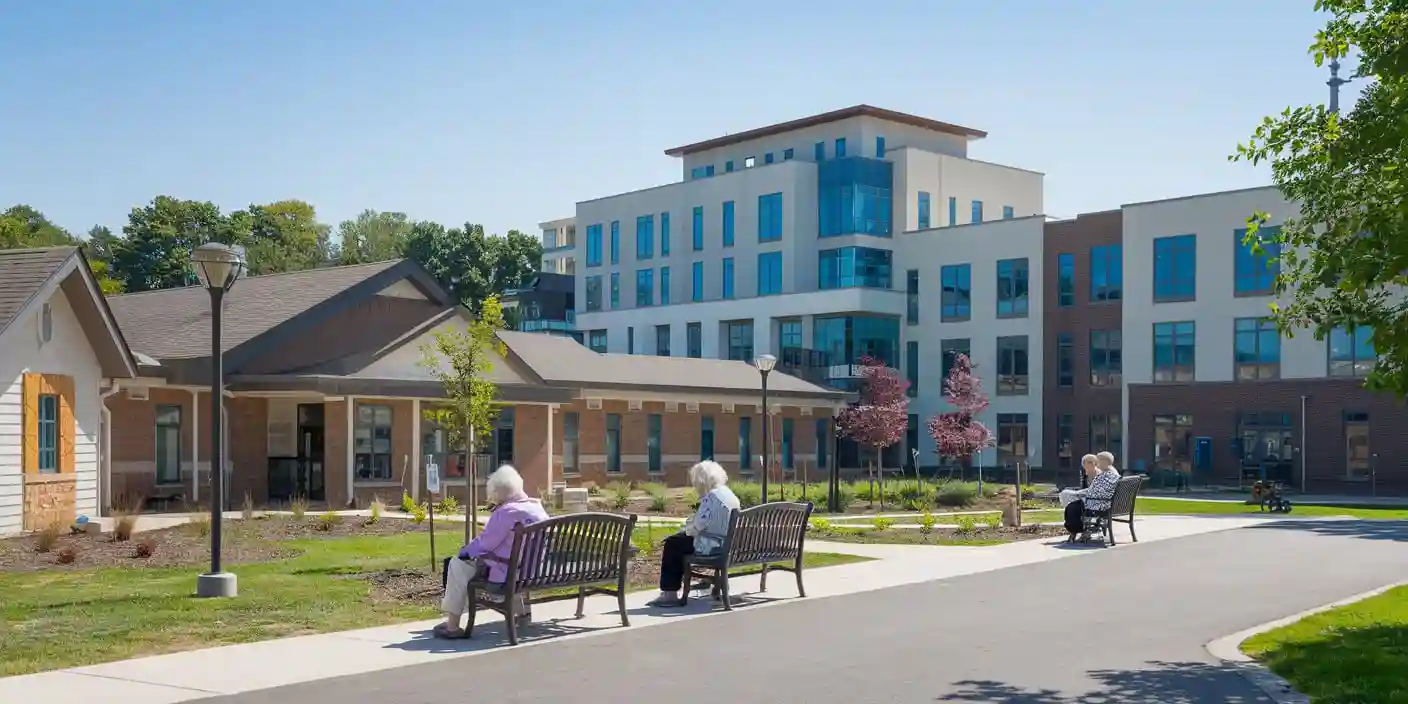
In your tour of the nursing home you will also want to see if there is an outdoor area for social activities (there usually is) but you want to see how big it is and is it being taken care of? No one likes to sit in an outdoor garden area where the plants look as if they are dying.
What menu options are available?
What types of foods are offered and can special diets be accommodated?
You may want to ask if you can sit down for a meal in the main dining room so that you can sample the food and the environment.
Can people continue to see their personal doctors while living at the nursing home?
Patients are still able to see their doctor despite being confined in a nursing home, and they also have the same rights as outpatients. If patients need mental, legal or financial counseling related to treatment provided by the facility then it must be given before any refusal can happen.
Is the facility fully staffed at night?
What is the staff to resident ratio during the night time?
How does the nursing home handle issues?
What happens if you have an issue with the nursing home? What are their policies and who do you contact?
It won’t hurt for you to take a stroll through the nursing home and interact with the visiting family members and ask them if they have had any complaints and how have they managed?
Are corridors well-lit and free of clutter?
As you go through your visit of the nursing home you’ll want to take notice of the hallways and rooms.
There most normally is enough light (but you should check it, especially in the evening) but the most common clutter problems that I’ve seen in nursing homes are an accumulation of chairs and wheelchairs, medication carts and medical equipment.
I’ve even worked in some nursing homes where the amount of space is so limited that the staff started storing medical carts and equipment in the patients’ rooms.
Are smoke and carbon monoxide detectors installed throughout the facility?
Believe it or not, not every state in the USA mandates that nursing homes have smoke detectors or carbon monoxide detectors. At least not in the older nursing homes.
So I would strongly recommend that you ask if they have both installed and how many.