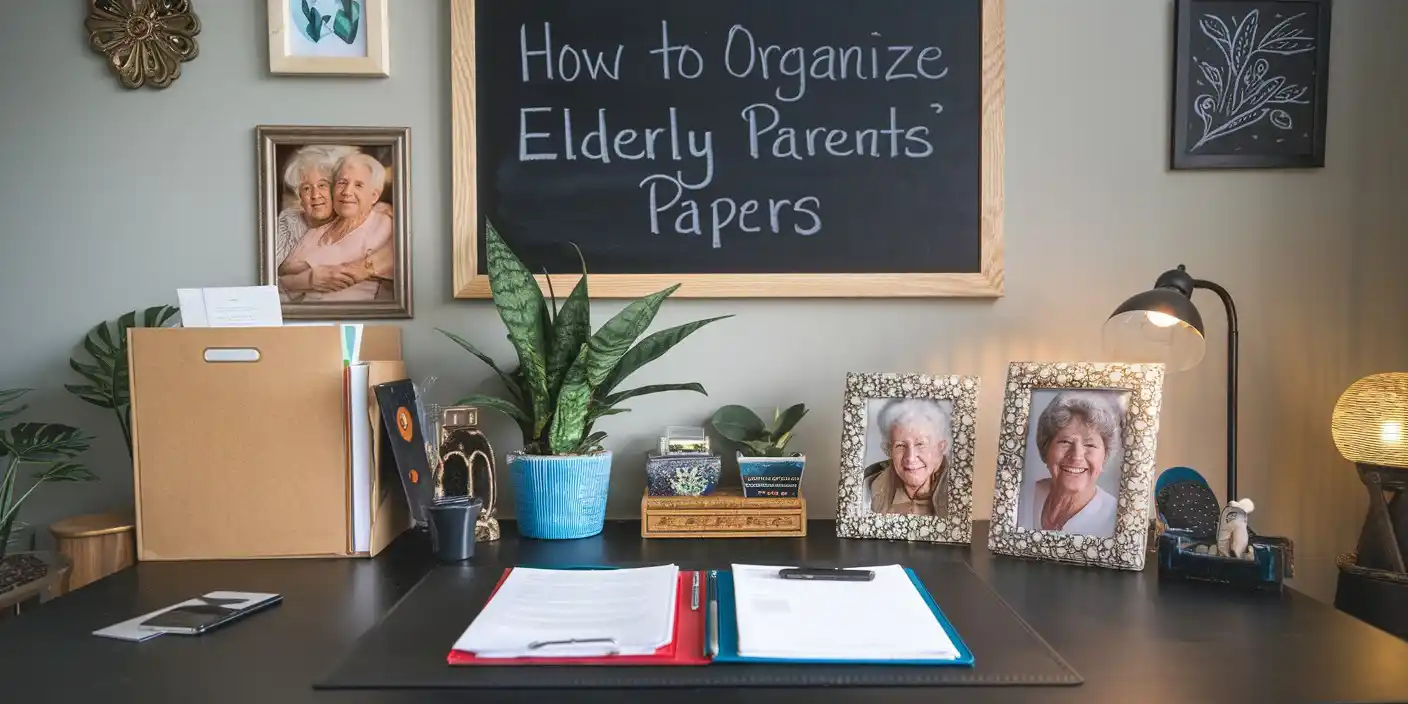
If your senior parent doesn’t have an organization system for their files at home, important notifications could be missed and bills might be ignored due to the disorganization.
Here are some paperwork organization tips to help caregivers of elderly parents:
- Get access to everything
- Sort by category
- Make necessary copies
- Organize chronologically
- Put in folders with label dividers
- Store the documents for safekeeping
- Keep updated records
If you are helping your senior parents clean out their home and trying to organize their disorganized papers, this informative guide will help.
Keep reading for tips and pointers.
How Do You Organize Family Papers?
Here are some pointers for stashing and organizing your senior parents’ paperwork.
Ensure You Have Access
It’s easy to access to some accounts, as you might only have to request a username and password from your parents.
However, if power of attorney is required to see some documents, you might have an uphill battle.
Find The Paperwork
Today, not everything comes in the mail.
Companies will send emails to reduce paper waste, so ensure you can log into each parent’s email account to track down insurance policy information, receipts, bonds, stock certificates, deeds and titles, tax returns, bills due, and bank statements.
You should also search for physical paperwork throughout the house.
Set Aside A Closet Or Cabinet
Once you’ve found everything you need to organize, the question becomes, where will it all go? That depends on the sheer volume of paperwork.
If your elderly parents don’t have the lengthiest paper trail (perhaps because they take care of most payments online), you can designate a cabinet for storing their files.
However, you will need something more substantial for mountains of paperwork, such as a closet.
Buy Organizing Tools
Binders, folders, labels, and dividers are a must when organizing substantial amounts of paperwork.
These products don’t cost much and will make a huge difference in how well you can organize your parents’ paperwork.
Create An Organization System
First, sort items by personal versus financial. The organization system that makes the most sense from there is to store files chronologically for easy reference.
Keep Documents Current
Organizing your elderly parents’ papers is not a one-and-done process.
Save yourself the annoyance of having to do this again years from now by adding to your parents’ records as new bills, tax information, insurance policies, warranties, and other paperwork come in.
What Documents Should I Have For My Elderly Parents?
You can’t organize your elderly parents’ documents without knowing what you should have in front of you. Here’s an exhaustive list of the paperwork you need.
Personal Loan Information
What loan agreements have your senior parents signed? Create a record of the amount paid toward the loan, the amount due, and the contact information of the party/parties receiving the payments.
Life Insurance Policy Information
Many elderly people have life insurance, which can make paying for medical, life, and final expenses more reasonable.
You need records of the active insurance policy for both parents, including which company issued it, how much each parent has received, and the total amount of money in the policy.
Mortgage Paperwork
Even if your elderly parents paid off their home years ago, the property still has a paper trail.
You should keep records of the mortgage, including payments made. That goes double if your parents are still paying for the home.
The documents you need to keep are the loan servicer information, payoff date, balloon payment dates, monthly payment due dates, and the mortgage sale date.
Beneficiary Designations
One or both of your elderly parents might have beneficiary designations, typically for their financial accounts. If so, you need a record of this paperwork.
Loan Paperwork
If your parents are still paying off loans, track the loan holder name and customer service number.
You’ll also need to keep your parent’s login for the loan (as applicable), the amount due, what they’ve paid off, what they owe, what day per month they make payments (such as the 10th of every month), and the loan number.
Legal Documents
All legal documents should go together, whether a trust, a living will, or any attorney-involved affair.
Keep the attorney’s contact information handy and track any ongoing legal fees and those your parents have paid.
Powers Of Attorney Paperwork
Have you become a power of attorney for one of both of your elderly parents? Manage all the paperwork as the system generates it to reduce headaches later.
Warranties
Products like electronics, windows and doors, new appliances, and medical equipment might have active warranties.
Your parents might have products where the warranties have expired. Don’t throw away this paperwork, but keep it separate from the active warranties.
Property Taxes
Make a record of local and state property taxes for both parents, including the contact information for the property tax bureau, the amount owed, the amount they pay per month, and how they pay (check, credit card, etc.).
Bills
Bills are one of those unavoidable parts of life.
You must have full records of all the bills your parents pay, including subscriptions, memberships, credit card bills, cable, water, electricity, and internet. If your parents make any charitable donations, note it here.
Healthcare Paperwork
One of the most important areas of paperwork for the elderly is healthcare documents.
Keep HIPAA releases, healthcare-related power of attorney documents, health insurance information, Medicaid or Medicare paperwork, medication history, current medication lists, and the contact information for your parents’ primary care doctor(s) and other medical providers.
Bank Account Statements
Divide bank account statements into savings and checking for each parent (unless your parents share a bank account).
Track the local branch bank’s contact information and the account numbers for each bank account.
IRA And 401(k) Statements
Manage your parents’ IRA and 401(k) statements by keeping all paperwork and creating documentation of financial advisors and institutions used and their contact information.
Save all statements that come in the mail.
Medical History
Create a medical history document for each parent that details all known health issues.
Social Security Payments
Do your elderly parents receive Social Security? You must have ongoing records of the payments they’ve received, including copies of checks or bank statements evidencing direct deposits.
Credit Card Statements
Record credit card statements by the month and keep the credit card provider’s information handy if you need to contact them over payment disputes or a stolen or lost card.
Insurance Policies
Insurance policies like long-term care, vehicle, home, and life insurance should be added separately. Include the contact information for each insurance provider if it differs.
Investment Information
If your parents make any investments, keep track of the active investments, past investments, the amount of money invested, and what the investment is worth.
Pension Statements
Manage pension statements for elderly parents by including the union or job that issued the pension, the amount the pension is valued, when the payment is received, who manages the account, and who distributes it.
Car Information
If your elderly parents still drive, hold onto their vehicle registration and title.
You also need their car insurance information, including the name and contact information of the insurance provider, the amount they pay, and when the payments are due.
Tax Returns
Build a tax record for each parent (unless they file together), including copies of taxes paid, what they paid, who their tax person is, and how much they receive in tax returns.
How Do You Declutter Years Of Paperwork?
Perhaps you get started organizing your elderly parents’ files only to realize how bad it is.
You had assumed they kept a good record of their documents, but the paperwork dates back years, and it’s terribly cluttered.
You can easily feel in over your head in a scenario like this, so how do you handle it? Here are some strategies to utilize.
Start Slow
Everyone knows the saying that Rome wasn’t built in a day. You must remember that as you begin putting a dent in your parents’ paperwork.
It will be impossible to finish this project in an afternoon or a weekend.
You might realistically have to expect to set aside chunks of your time for weeks or months.
In the meantime, you must use an organization system to prevent incoming paperwork from adding to the pile and complicating your cleanup efforts.
Enlist Help
There’s no reason you have to work alone. Call on other adult siblings to tackle the job with you. You still won’t get it done in a day, but the entire process might take weeks rather than months.
What if you’re an only child? Contact other family members, friends, and neighbors to help. The more hands on deck, the better.
However, ensure everyone is well-versed in your organization methods. If someone does things wrong, that will only further slow you down and drag out the cleanup process.
Regularly Declutter
The paperwork doesn’t stop coming in during a senior’s lifetime, so you can’t get lax after an exhaustive cleanup. Stay diligent and keep decluttering.
How Do You Store Important Documents At Home?
Earlier, we recommended a closet or filing cabinet for storing documents, but those aren’t your only options for decluttering and keeping important paperwork at home. Here are some others to consider.
Fireproof Lockbox
A lockbox is the best storage method for sensitive documents.
Ensure it’s fireproof so that even if the worst happened and your parents’ home was engulfed in a fire, the documents within the lockbox would survive.
Safety Deposit Box
Another alternative to explore is a safety deposit box.
These boxes are known to keep valuables, usually cash, gold, or jewelry. However, you can also store important financial and sensitive data in a safe deposit box.
They’re made of metal and require the user to know the combination of a dial to access them. Only give this information to trusted members of the family.
Cloud-Based Storage
A more modern storage option for large quantities of data is cloud storage. The cloud is a series of remote servers that store information.
Uploading files to the cloud is advantageous for fast and easy storage and scalability.
You might choose cloud storage as the exclusive storage method for your senior parents’ documents or use the cloud as a backup.
Digital Filing Cabinet
If you don’t have the space for a physical filing cabinet, you can always explore a digital alternative.
A digital filing cabinet keeps records of all files online. It’s not quite the cloud but it works similarly.
You’re allotted X amount of space you can use as you like. Uploading to a digital filing cabinet saves on physical document storage and is another viable method for backing up your data.
Bottom Line
Organizing elderly parents’ papers isn’t easy or fast, but necessary for ensuring they don’t fall behind on their bills or miss important mailed notifications.
Now that you know how to sort paperwork, you’re ready to create a plan of action and get that pile of papers manageable.