Cold weather affects balance and joint pain by increasing stiffness, slowing movement, reducing sensation in the feet, and raising fall risk, especially for older adults aging in place.
Each winter, I see people feel shakier, joints ache more, and everyday movement quietly becomes harder.
Quick Rundown: Why winter feels harder on your body
- Joint stiffness increases: Cold thickens joint fluid and tightens muscles, making movement harder.
- Balance quietly changes: Cold reduces sensation and reaction time, especially in the feet and ankles.
- Falls become more likely: Even small balance changes raise fall risk in winter.
- Pain and fear work together: Pain causes guarded walking, which can increase falls.
- Simple steps make a big difference: Warmth, movement, hydration, and home safety reduce risk.
Understanding why cold weather affects balance and joint pain helps explain what your body is signaling and what you can do next.
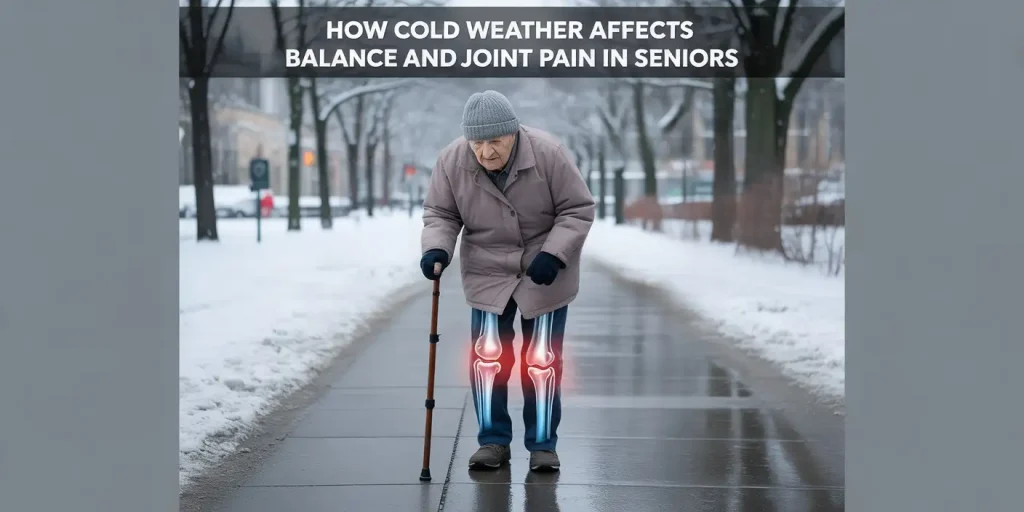
Why does cold weather make the body feel stiffer and weaker?
Cold weather makes joints stiffer because muscles tighten, circulation slows, and joint fluid thickens.
Inside every joint is synovial fluid, which works like oil in an engine. When it gets cold, this fluid becomes thicker and less slippery. That makes joints feel tight, slow, and harder to move.
Cold also narrows blood vessels. Less blood reaches hands, feet, knees, and hips, which leads to:
- Joint stiffness, especially with arthritis
- Muscle tightness, limiting range of motion
- Slower movement, even indoors
Many older adults also notice they feel colder overall. If this feels extreme or new, it may relate to feeling cold in older adults and circulation or health changes.
❓ Can cold weather make arthritis progress faster, or does it just increase pain?
💬 Cold weather does not make arthritis progress faster, but it can increase pain, stiffness, and inflammation symptoms, which can make arthritis feel worse and limit movement during winter months.
How does cold weather affect balance in older adults?
Cold weather affects balance by reducing sensation in the feet and slowing reaction time.
Balance depends on clear messages from the feet, ankles, eyes, and inner ear. Cold temperatures reduce nerve signals from the feet. When the brain gets less information from the ground, balance becomes less steady.
This is why people often say, “I just feel off balance in winter,” even when walking inside the house.
❓ Why do balance problems seem worse first thing in the morning during winter?
💬 Balance often feels worse in the morning because joints and muscles are stiffer after resting, circulation is slower in cold temperatures, and the body needs time to warm up before nerves and muscles respond normally.
Why do joints hurt more in cold or rainy weather?
Joint pain often increases because of temperature changes, humidity, and barometric pressure shifts.
When air pressure drops before storms, tissues around joints can expand slightly. In sensitive or inflamed joints, this can increase pain signals.
Cold weather also causes muscles to tighten to protect joints. This guarding response may reduce pain at first, but it often leads to stiffness and soreness later.
Many health conditions that worsen in winter, including arthritis and circulation problems, can make this pain feel worse.
It is important to say this clearly, research shows mixed results. Not everyone feels weather changes the same way. But for many older adults, the experience is very real.
❓ Can cold weather affect dizziness or lightheadedness in seniors?
💬 Yes, cold weather can contribute to dizziness by affecting blood pressure, circulation, hydration levels, and inner ear function, especially in older adults with heart conditions or who take blood pressure medications.
How are joint pain and balance problems connected?
Joint pain affects balance because pain changes how the body moves.
When joints hurt, people naturally:
- Walk slower
- Take shorter steps
- Avoid bending knees or ankles
- Hold onto furniture
These changes feel protective, but they disrupt natural walking patterns. Over time, this increases fall risk, especially on cold or smooth floors.
I saw this often in therapy. People did not fall because they were careless. They fell because pain quietly changed how they moved.
Why do seniors feel more unsteady in winter even indoors?
Winter increases fall risk indoors because cold affects the body, not just sidewalks.
Indoor winter risks include:
- Cold floors, especially tile or vinyl
- Less daily movement, leading to weakness
- Lower lighting, due to shorter days
- Bulky clothing, which restricts motion
This is why winter fall prevention tips for seniors focus on indoor safety as much as outdoor ice.
One winter, I noticed my own mother started holding the counter while walking. She had not fallen, but her balance had clearly changed.
How does winter inactivity increase fall risk?
Cold weather reduces daily movement, and strength declines faster than many people realize.
When walking and activity drop, muscles weaken and joints stiffen. Balance reactions slow. Even missing 2,000 to 3,000 steps a day for several weeks can make a noticeable difference.
Staying consistent with safe ways seniors can stay active during the winter helps protect balance and confidence.
What role does hydration play in winter joint pain and stiffness?
Hydration helps keep joints lubricated and muscles flexible, even in winter.
Many people drink less water when it is cold. Dehydration can make joint fluid thicker and muscles more prone to cramping.
A simple goal is to sip water throughout the day, even if you do not feel thirsty.
❓ Do space heaters or heated floors help with joint pain and balance?
💬 Gentle, consistent warmth can help reduce joint stiffness and improve comfort, but space heaters should be used carefully, kept out of walkways, and never placed near water or used as a substitute for safe home heating.
Why keeping joints warm improves balance and movement
Warm joints move more easily and react faster.
Helpful strategies include:
- Wearing layered clothing that keeps the core warm
- Using thermal socks or lined slippers
- Warming joints before activity with a warm shower or heating pad
- Stretching gently before walking or transfers
Keeping feet warm improves sensation and balance more than many people expect.
What are warning signs that winter balance changes are becoming unsafe?
Small changes often appear before a fall happens.
Watch for:
- Holding furniture while walking
- Slower sit-to-stand movements
- Avoiding showers or stairs
- Saying “I’m just stiff today” every day
- Fear of smooth or cold floors
These signs suggest it may be time to review winter safety tips for older adults and make small adjustments.
❓ When should joint pain or balance changes prompt a medical checkup?
💬 A medical checkup is important if joint pain or balance problems appear suddenly, worsen quickly, cause frequent near-falls, or interfere with daily activities like bathing, walking, or getting out of a chair.
How can seniors reduce joint pain and balance problems in cold weather?
Simple daily habits can reduce pain and protect balance.
Helpful strategies include:
- Warming joints before movement
- Wearing supportive indoor footwear
- Gentle daily movement, even for 10 minutes
- Improving lighting and grab support
- Keeping floors warm, dry, and clutter-free
As a retired Occupational Therapist, I focused on changes people would actually use, especially during winter routines.
When does winter joint pain signal a bigger safety concern?
Joint pain becomes a safety issue when it changes daily habits.
If pain causes rushed movement, skipped showers, or fear during nighttime bathroom trips, fall risk increases.
Addressing these early is part of good winter planning and overall winter health tips for seniors.
What is the most important takeaway about cold weather, balance, and joint pain?
Cold weather does not cause weakness. It reveals hidden risks.
The positive side is that winter-related balance and joint problems are often preventable. With warmth, hydration, movement, and simple home safety steps, many falls can be avoided.
If winter feels harder on your body, it is not your imagination. Your body is giving you information. Listening early can prevent a fall later.