Understanding the significance of this question is crucial, especially for older adults and family caregivers.
Memory lapses can be common as we age, but when do these forgetful moments indicate something more serious, like dementia?
This article aims to shed light on this concern, guiding you through the importance of recognizing early signs of cognitive decline and how to approach them effectively.
Creating A Safe Environment For Older Adults
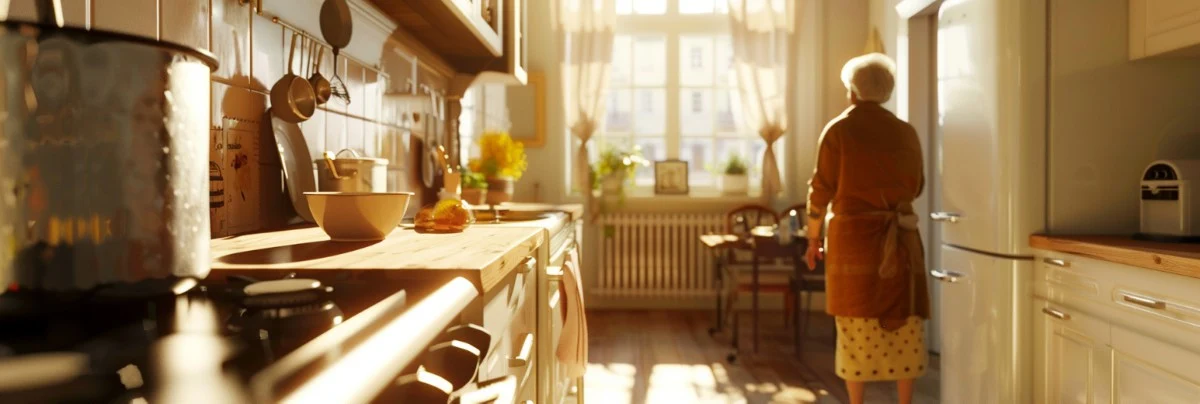
First and foremost, I want to tell you about how to make the kitchen a safer area for your aging mother, whether or not she may have dementia.
Consider the following strategies:
Use Technology
Install automatic shut-off devices for stoves and other appliances.
Smart Stove Guards and Timers
Smart stove guards and automatic timers can be lifesavers.
These devices are designed to detect when a stove has been left on for an unusually long time or if there’s no activity in the kitchen, automatically turning off the stove to prevent potential hazards.
Some models even come with smartphone connectivity, allowing you to monitor and control the stove remotely.
Motion Sensors and Smart Home Systems
Incorporating motion sensors connected to a smart home system can provide an additional layer of safety.
These systems can be programmed to alert you if there’s movement in the kitchen at unusual times or if the stove has been left on for too long without any detected activity.
IoT-Enabled Kitchen Appliances
Consider upgrading to Internet of Things (IoT)-enabled kitchen appliances.
These smart devices offer features like remote monitoring and control through mobile apps.
Some smart stoves are equipped with automatic shut-off capabilities and can send notifications to your phone if left unattended for a certain period, offering peace of mind regarding your mother’s safety in the kitchen.
Routine Checks
Establish a routine for checking appliances before bedtime or leaving the house.
Use Visual Reminders
Place visual reminders in strategic locations, such as on the refrigerator, near the stove, or on the exit doors.
These can include checklists or simple prompts like “Have you turned off the stove?” to catch her attention and reinforce the habit of checking the stove before leaving the kitchen.
Implement a Buddy System
This may not be viable for everyone but if you can coordinate with family members, friends, or neighbors to establish a buddy system, that may be helpful.
This system involves having someone check in on your mother at predetermined times, especially after meal preparation, to ensure the stove is not left unattended.
Create an Emergency Plan
Ensure that your mother and all family members know what to do in case of a kitchen fire or if the stove is left on accidentally.
Having a clear, practiced emergency plan can prevent panic and minimize damage in such situations.
Why Is This Important For Older Adults And Caregivers?
If your mother keeps leaving the stove on, there’s certainly cause for concern.
Forgetting to turn off the stove is not just a minor oversight; it can be a safety hazard that poses significant risks.
More importantly, it may hint at underlying cognitive issues such as dementia.
Recognizing these early signs is vital for several reasons:
- Early Diagnosis: Identifying dementia early can open up more options for treatment and management, potentially slowing the progression of the disease.
- Safety Measures: Understanding the risks allows families to implement safety measures to protect their loved ones and prevent accidents.
- Caregiving Planning: Early signs prompt families to plan for future caregiving needs, ensuring that the individual affected by dementia receives the appropriate support.
Recognizing Early Signs of Dementia
Dementia encompasses a range of symptoms affecting memory, thinking, and social abilities severely enough to interfere with daily functioning.
While forgetting to turn the stove off once might not be alarming, consistent patterns of forgetfulness or confusion warrant attention.
Here are some related signs to watch for:
- Difficulty completing familiar tasks
- Memory loss that disrupts daily life
- Challenges in planning or solving problems
- Confusion with time or place
- Trouble understanding visual images and spatial relationships
The Role of Forgetfulness in Dementia Diagnosis
Forgetfulness, such as failing to remember to turn off the stove, can indeed be an early sign of dementia.
However, it’s important to differentiate between age-related memory changes and those indicative of a more serious condition.
Occasional forgetfulness is a normal part of aging. In contrast, dementia-related memory loss is persistent and affects the ability to carry out daily activities.
When to Seek Professional Help
If you notice a pattern of forgetfulness or other cognitive changes in yourself or a loved one, it’s important to consult with your mother’s doctor as soon as possible.
He may do a rudimentary exam and based on that, may recommend a neurological examination to determine if these signs are related to dementia or another condition.
Early intervention is key to managing symptoms and maintaining quality of life.