Working with older adults who suffered from dementia, I’ve seen firsthand how engaging in creative activities can bring moments of joy, purpose, and connection for seniors living with dementia.
Crafting isn’t just a way to pass the time – it can stimulate cognitive function, improve mood, and provide a sense of accomplishment.
Let’s explore some wonderful craft ideas tailored specifically for seniors with dementia, along with tips to set them up for success.
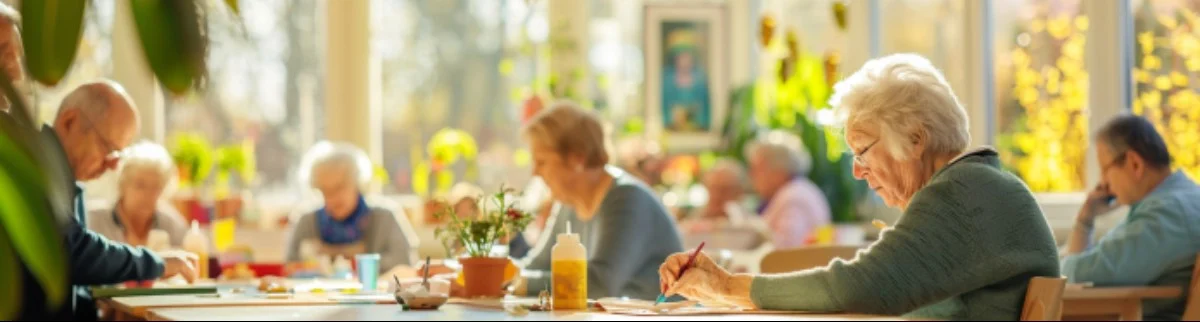
Benefits Of Crafting For Seniors With Dementia
Crafting isn’t just a fun pastime; it has numerous benefits for seniors with dementia.
These activities can help improve cognitive function, reduce anxiety, and provide a sense of purpose. Here are some key benefits:
- Cognitive Stimulation: Crafts can help maintain and improve cognitive abilities.
- Emotional Well-being: Engaging in creative activities can elevate mood and reduce feelings of depression.
- Social Interaction: Group craft activities promote socialization, reducing feelings of isolation.
- Motor Skills: Fine motor skills are enhanced through tasks like cutting, painting, and assembling.
Setting Up For Success
To help your loved one have an enjoyable crafting experience:
- Choose simple projects with just a few steps
- Break tasks down into manageable parts
- Provide clear, step-by-step instructions
- Offer gentle guidance and encouragement
- Focus on the process rather than the end result
- Create a calm, distraction-free environment
- Have all supplies ready and easily accessible
- Be patient and allow plenty of time
Remember that abilities can fluctuate day to day. What works well one day may be challenging the next. Stay flexible and adjust as needed.
8 Easy Craft Ideas To Try
1. Painting Rocks
Rock painting is a simple yet satisfying craft. Gather smooth rocks from outside or purchase them from a craft store.
Provide acrylic paints in bright, contrasting colors along with large paintbrushes.
Encourage your loved one to paint patterns, shapes, or even just solid colors on the rocks. These can then be used as paperweights or garden decorations.
2. Making Greeting Cards
Creating handmade cards is a wonderful way for seniors to stay connected with loved ones. Provide blank cards, colorful paper, stickers, and markers.
Pre-cut shapes or use simple templates to make it easier. Focus on holidays, birthdays, or just “thinking of you” cards.
3. Stringing Beads
Beading improves fine motor skills and hand-eye coordination. Use large wooden beads and thick string or yarn to make it easier to manipulate.
Create necklaces, bracelets, or even decorative garlands. Sort beads by color first as a warm-up activity.
4. Arranging Artificial Flowers
Flower arranging is a sensory-rich activity that connects to nature. Use silk flowers and foam blocks as a base.
Guide your loved one in selecting flowers and placing them in pleasing arrangements. Display the finished creations to brighten up their living space.
5. Decorating Picture Frames
This craft allows seniors to personalize their space with cherished photos.
Provide unfinished wooden frames and various decorating supplies like paint, stickers, buttons, or fabric scraps. Once decorated, add meaningful family photos to the frames.
6. Creating Collages
Collage-making is adaptable to different ability levels. Gather old magazines, greeting cards, or photos.
Help your loved one cut out images they like (or pre-cut a selection). Then assist them in arranging and gluing the pictures onto paper or cardstock to create a personalized collage.
7. Sculpting With Clay
Working with clay provides wonderful tactile stimulation. Use soft modeling clay that doesn’t require baking.
Encourage your loved one to roll, pinch, and shape the clay into simple forms like pinch pots, coil pots, or free-form sculptures.
8. Memory Boxes
Memory boxes are a wonderful way to help seniors with dementia recall special moments and people from their past. These can be filled with photographs, trinkets, and other memorabilia.
Adapting Crafts For Different Stages
As dementia progresses, you may need to modify activities:
Early Stage
- Offer more complex multi-step projects
- Provide written instructions
- Allow for more independence
Middle Stage
- Simplify projects into 2-3 steps
- Give verbal cues and demonstrations
- Offer more hands-on assistance
Late Stage
- Focus on sensory experiences
- Guide hands to manipulate materials
- Emphasize the process over the product
Safety Considerations
While crafting can be therapeutic, always prioritize safety:
- Use non-toxic, washable art supplies
- Avoid small items that could be a choking hazard
- Supervise use of scissors or other sharp tools
- Clean up spills promptly to prevent falls
- Store potentially harmful supplies out of reach
Creating A Dementia-Friendly Craft Space
Set up a dedicated area for crafting that’s:
- Well-lit with natural light if possible
- Free of clutter and distractions
- Equipped with comfortable seating
- Stocked with easy-to-reach supplies
- Decorated with examples of finished projects
Having a consistent crafting spot can help cue your loved one that it’s time for a creative activity.
Encouraging Social Connection Through Crafts
Crafting doesn’t have to be a solitary activity. Consider:
- Inviting family members or friends to craft together
- Joining a senior center craft group
- Sharing creations with others as gifts
- Displaying artwork in common areas
- Photographing projects to share with distant loved ones
These social aspects can make crafting even more meaningful and enjoyable.
| Craft Idea | Materials Needed | Difficulty Level |
|---|---|---|
| Rock Painting | Smooth rocks, acrylic paint, brushes | Easy |
| Greeting Cards | Blank cards, decorative paper, stickers | Easy-Moderate |
| Beading | Large beads, thick string or yarn | Easy |
| Flower Arranging | Silk flowers, foam blocks | Easy-Moderate |
| Picture Frames | Unfinished frames, paint, embellishments | Moderate |
| Collage Making | Magazines, glue, paper | Easy |
| Clay Sculpting | Soft modeling clay | Easy-Moderate |
| Memory Boxes | Sturdy box, paint and stickers and memorabilia | Easy-Moderate |
Remember, the goal isn’t perfection – it’s providing an opportunity for creative expression, sensory stimulation, and moments of joy.
Be patient, offer plenty of encouragement, and celebrate every effort. With the right approach, crafting can be a rewarding activity for seniors with dementia at any stage.