When someone you love has dementia, securing a door becomes one of the most important safety steps you can take.
Using the right strategies can prevent wandering, reduce risks, and give you more peace of mind. In this guide, I’ll explain how to secure a door for dementia and Alzheimer’s patients safely, legally, and with dignity.
Quick Rundown: Securing Doors for Dementia Patients Safely
- Layered Safety: Combine camouflage, locks, and door alarms for the best protection.
- Camouflage Options: Paint doors to match walls, add murals, or use curtains.
- Safe Locks: Install high-mounted latches or thumb-turn deadbolts that meet fire code.
- Alarms and Sensors: Use caregiver pagers, contact sensors, and motion lights that work even offline.
- Sundowning Plan: Evening is the highest-risk time, so adjust routines and lighting.
- Emergency Backup: Keep a rapid-search checklist, GPS wearable, and ID bracelet ready.
Securing doors for dementia patients is about creating safety without removing dignity. By layering simple tools with thoughtful routines, you can lower risks and feel more confident at home.
Let’s begin with why door security matters and how to build a safer space step by step.
Why Does Door Security Matter in Dementia Care?
Door security matters because wandering and exit-seeking behaviors are common in dementia. A person can leave within seconds, putting themselves at risk of falls, traffic, or exposure.
I once helped a neighbor whose father slipped out the front door at night. He was found safe, but it showed my neighbor how fast things can happen and how much stress families feel. Acting early can help to prevent emergencies.
Wandering is often connected to changes in memory, confusion, or sundowning behavior. If you want a deeper look at why evenings are especially risky, see our guide on why dementia symptoms often worsen at the end of the weekend.
What Is the Best Way to Secure a Door for Dementia Patients?
The best way to secure a door is to use a layered approach. This means combining camouflage strategies, out-of-sight locks, and door contact sensors or alarms.
No single method works every time. When you stack different tools, you create reliable safety without removing freedom.
- Camouflage the door which can help to reduce temptation.
- Door locks add resistance while staying safe and legal.
- Door alarms notify you before harm happens.
For more ways to combine strategies, check our detailed overview on how to stop dementia patients from wandering at night (includes non-door solutions too).
How Can Camouflage Reduce Door-Wandering?
Camouflage works by lowering the visual focus on the door, so it does not stand out as an exit.
Here are some ideas on how you can camouflage your doors:
- Paint the door and trim the same color as the wall (and don’t forget the knob and hinges!)
- Cover the door with a curtain or tapestry.
- Add bookshelf decals or wall murals that “erase” the door.
- For interior doors, you can go the extra mile and replace the door with a Murphy Door!
In one care center, staff covered exit doors with bookshelf murals. Wandering attempts dropped almost overnight.
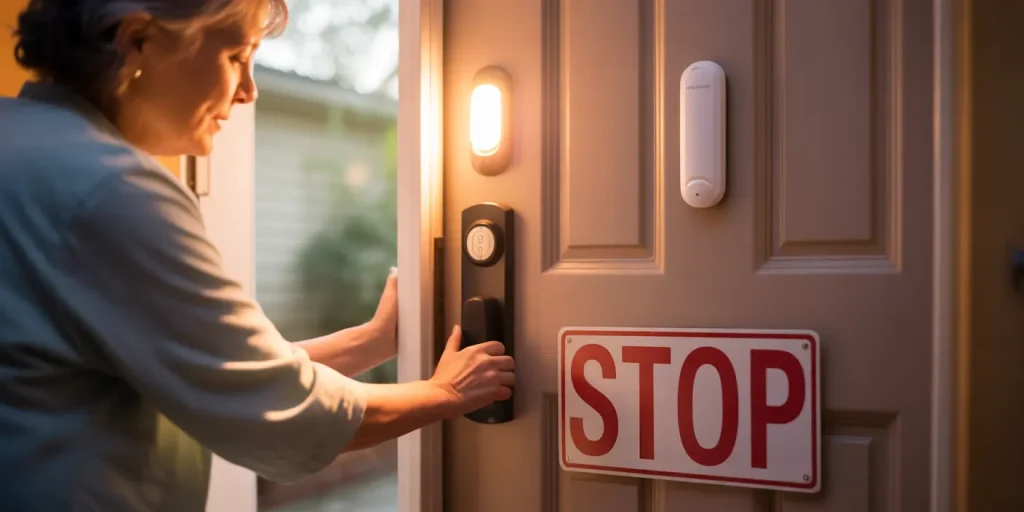
Extra options: caregivers often add STOP or DO NOT ENTER signs or place a dark rug in front of the door. Many people with dementia interpret dark flooring as a hole, which makes them pause.
If you’re interested in using home design as part of your caregiving plan, our article on dementia-friendly bathroom design shows how small design changes can make a big difference in safety.
What Door Locks Are Safe and Legal to Use?
The safest locks are ones that slow exit but still follow egress rules, which require at least one door to open freely without a key.
Options include:
- High-mounted latches or low-mounted slide bolts out of normal line of sight.
- Smart lock keypads
- Childproof lever covers for doorknobs.
Avoid: double-cylinder deadbolts that need a key on both sides. They block escape during emergencies and violate code.
Product guide:
- Kwikset SmartCode 955 keypad deadbolt, about $70, battery-powered.
- Lockey 2835 Mechanical Keyless, about $140, works without batteries and resists weather.
- Simple surface bolts, $10–$20, installed high or low.
❓ Can I put a chain lock on the door for someone with dementia?
💬 Chain locks are not safe. They can break easily and still allow the door to open partway. Use a high-mounted latch or keypad lock instead, which is sturdier and safer.
For more on safe hardware in tricky areas, see our article on should grab bars be angled to learn how small placement choices affect safety.
What Technology Helps Secure Doors?
Technology helps by alerting caregivers the moment an exit is attempted.
Strong options include:
- Door contact sensors paired with caregiver pagers or local chimes.
- Motion sensors or smart speakers that turn on lights or play voice prompts.
- GPS wearables or trackers for backup safety.
- Geofenced locks that recognize caregiver phones or smartwatches.
When my aunt cared for her husband, a small battery-powered door alarm made the difference. It chimed the second the door opened, even when she was in another room.
Maintenance tip: replace batteries monthly and test sensors on a schedule. A dead battery can mean a missed alert.
❓ How much does it cost to secure a door for dementia patients?
💬 Costs range from $20 for a slide bolt or door chime to $200+ for keypad locks or GPS devices. A layered setup usually combines one or two affordable items with a more advanced option.
If you’re comparing options, our guide on motion sensors vs night lights for fall prevention explains which products perform best in real homes.
How Do Routines and Environment Reduce Wandering?
Routines and environmental changes calm the urge to leave, especially in the evening.
- Keep a predictable daily schedule.
- Add meaningful activities before sundown.
- Use bright light during the day and dim evening light to ease sleep.
- Place nightlights on the path to the bathroom so exits aren’t confused with toileting.
Most wandering happens during sundowning hours. Planning for that time reduces attempts.
For more ways to balance routines and safety, read our article on how aging in place supports mental health.
How Do I Prevent Stress When Securing Doors?
Sometimes locks or barriers increase anxiety if they are too obvious. People may feel trapped.
To reduce stress:
- Use camouflage instead of heavy locks.
- Add silent alarms instead of loud buzzers.
- Use redirection cues like “let’s get a snack” to distract.
The goal is least-restrictive safety: protecting your loved one while respecting their dignity.
❓ Can locking doors make dementia symptoms worse?
💬 Yes, locks can cause distress if they feel restrictive. Choose subtle tools like murals, rugs, or silent alarms, and always monitor how your loved one responds.
Stress also affects caregivers. If you’re feeling burned out, our piece on when caring becomes too much may help you step back and protect your own health too.
Should I Secure Other Exits Too?
Yes, wandering is not limited to front doors. Windows, sliding glass doors, and side gates need attention too.
- Sliding glass doors: use a rod or track bar, or a slide bolt at the top or bottom.
- Windows: add window limiters or simple alarms.
- Patio gates: install slide bolts or padlocks on the outside.
- Exterior: add motion lights to alert you and deter exits.
❓ What is the safest way to secure a sliding glass door?
💬 Place a slide bolt at the top or bottom of the frame or use a sturdy rod in the track. Adding a door alarm gives you an extra alert when it moves.
You can also review our guide on bathroom adaptations for the elderly since windows and bathrooms often overlap as high-risk escape or fall zones.
What Are the Legal and Ethical Rules for Securing Doors?
Fire and building codes require at least one egress door to open from the inside without a key, tool, or special knowledge.
In licensed memory care, delayed-egress locks may be used, but only with an emergency override and trained staff nearby. At home, the focus should stay on compassionate, least-restrictive safety strategies.
If you’re planning long-term, our article on how to pay for aging in place offers guidance for budgeting safety upgrades like locks and monitoring devices.
What Should Caregivers Do If Someone Still Gets Out?
Even with precautions, wandering can happen. Having a rapid-search checklist and tools ready is critical.
- Make sure your loved one wears an ID bracelet or GPS wearable.
- Keep a recent photo and medical info handy.
- Alert trusted neighbors and give them your contact info.
- Enroll in MedicAlert Safe Return or Safe & Found, which connect directly to first responders.
❓ Should I tell neighbors if my loved one wanders?
💬 Yes, informing neighbors is one of the fastest ways to get help. A quick phone call from a neighbor can save precious time in an emergency.
You may also want to review our article on caring for elderly parents for more family strategies on building a wider support system.
Final Thoughts
Securing a door for dementia and Alzheimer’s patients is not about locking someone away. It’s about layering strategies that prevent unsafe exits while respecting dignity.
Use camouflage murals, high-mounted latches, and door contact sensors. Add routines and lighting to lower wandering. Don’t forget windows and gates. Maintain your locks and alarms, and always prepare for emergencies with ID and GPS.
With this balance of safety and compassion, you can protect your loved one, ease your own stress, and create a secure home.