When a loved one is living with Alzheimer’s, it’s natural to search for ways to ease their challenges and bring comfort to daily life.
You may have heard about service dogs helping people with vision or mobility issues and wondered, could they also support someone with memory loss? It’s a thoughtful question, often rooted in the desire to find gentle, dignified solutions for care.
The good news is yes, specially trained service dogs can play a meaningful role for Alzheimer’s patients. From providing reminders to reducing anxiety and even offering safety support, these loyal companions can make life more manageable and less frightening.
This article explores how service dogs help, what to consider before getting one, and the difference they can make for both patients and caregivers.
Quick Rundown: How Service Dogs Help Alzheimer’s Patients Stay Safe and Connected
- Trained Support: Service dogs guide patients home, respond to alarms, fetch medications, and help maintain daily routines.
- Boost Safety: They reduce wandering, prevent unsafe exits, and can alert caregivers in emergencies.
- Emotional Comfort: Constant companionship lowers anxiety, eases depression, and creates calming routines.
- Rigorous Training: Dogs undergo 6 months–2 years of specialized training to work with both patients and caregivers.
- Best Fit: Early to mid-stage Alzheimer’s patients benefit most, with caregivers assisting in dog care.
- Next Steps: Families can apply through nonprofits like Canine Companions, Paws With A Cause, or Dogs for Better Lives.
Let’s begin by looking at the unique ways service dogs can be trained to support individuals with Alzheimer’s disease.
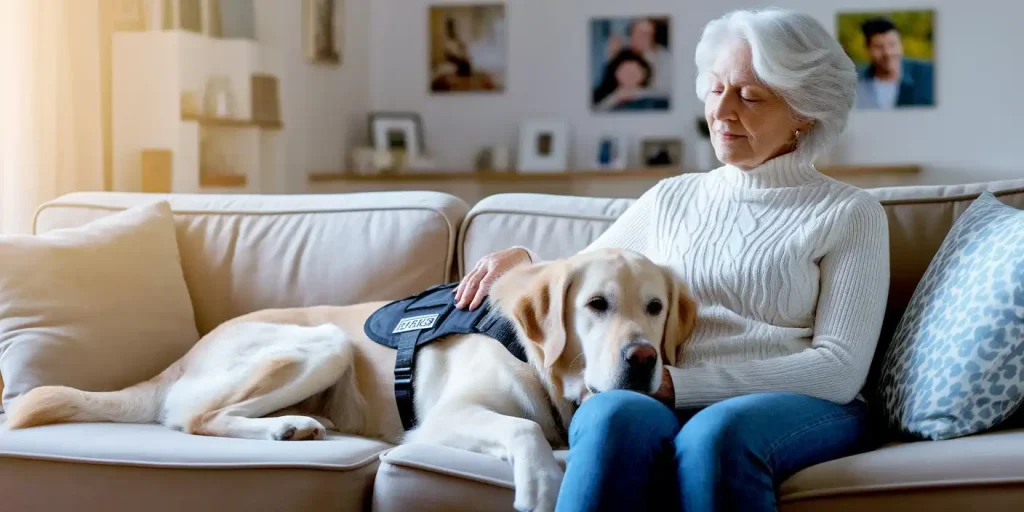
Service dogs provide more than just companionship. They help improve patient safety, assist with daily tasks, and give caregivers much-needed peace of mind.
If you’re wondering whether a service dog could be the right solution for your loved one, let’s explore how they can help.
Understanding the Role of Service Dogs for Alzheimer’s Patients
A service dog is specially trained to assist people with disabilities by performing specific tasks. While emotional support animals provide comfort, service dogs are trained to take action when their owner needs help.
For dementia care, service dogs can:
- Guide patients away from danger.
- Help prevent wandering and alert caregivers.
- Provide companionship benefits and reduce social isolation.
- Assist with structured routines and task-specific training.
- Offer cognitive stimulation and improve memory recall assistance.
These dogs aren’t just pets – they are trained partners who can help make life safer and more manageable for both the patient and the caregiver.
What Do Dementia Service Dogs Do?
Under the Americans with Disabilities Act (ADA), a dog must be trained to perform specific tasks to assist a person with a disability to be classified as a service dog.
Dementia service dogs are trained to provide specialized assistance, including:
- Guiding the person home if they become lost. If the individual issues the command “home,” the dog leads them back. If the person is too confused to issue the command, caregivers can activate a GPS device on the dog’s collar to locate them.
- Leading the person through their daily routine. The dog can be trained to direct the senior to essential locations, such as a cupboard containing dog food with a note from the family caregiver, helping them stay on schedule.
- Responding to sound triggers. The dog can be trained to react to alarms or specific noises, such as bringing a bag containing medicine when it’s time for the patient to take their medication.
These skills provide a structured system of support, making daily life easier and safer for both the individual and their caregiver.
How Service Dogs Assist in Daily Life
Companionship and Emotional Support
Dementia can be a lonely disease. Patients often feel disconnected from the world around them. A service dog provides constant companionship, reducing anxiety and fear.
For many patients, having a therapy dog creates a predictable routine, which can be comforting in the face of cognitive decline. Studies show that animal-assisted therapy improves social interaction and reduces depression.
Safety and Prevention
Wandering is one of the most dangerous symptoms of Alzheimer’s. Patients may leave home without realizing where they are going, putting themselves at risk.
A trained service dog can:
- Prevent the person from leaving the house alone.
- Guide them home if they get lost.
- Alert a caregiver if the patient is attempting to leave.
- Wear a GPS tracker to help caregivers locate them in an emergency.
Some service dogs are even trained to gently block a patient from stepping into traffic or open water.
Helping with Daily Tasks
A service dog can assist in simple but important ways, such as:
- Bringing medications to the patient.
- Fetching important items like glasses or a phone.
- Providing psychiatric support through nonverbal communication.
- Assisting in structured routines that help reduce confusion.
For caregivers, these small assists can make a big difference in managing daily responsibilities and promoting independence.
If caring for a dog (or other pet) is financially difficult, consider signing up for the Meals on Wheels for pets program!
How Service Dogs Are Trained for Alzheimer’s Assistance
Service dogs undergo rigorous training to meet the needs of Alzheimer’s patients.
Training Process:
- Basic Obedience & Socialization: Puppies start training by learning basic commands and adapting to various environments.
- Task-Specific Training: Dogs are trained for cognitive rehabilitation tasks, such as guiding, alerting, and retrieving items.
- Caregiver Interaction: Service dogs are introduced to caregivers to ensure they work as a team with the patient.
- Adaptability Testing: Dogs must remain calm under stress and adjust to unpredictable behaviors common in dementia patients.
Training can take anywhere from 6 months to 2 years, depending on the complexity of the tasks required.
Who Can Benefit from a Service Dog?
Not every Alzheimer’s patient will be a good match for a service dog.
The ideal candidate:
- Is in the early to mid-stages of Alzheimer’s.
- Can interact positively with a therapy dog.
- Has a caregiver who can help oversee the dog’s care.
For caregivers, having a service dog can bring relief, but it’s important to consider the responsibility of caring for both the patient and the dog.
How to Get a Service Dog for an Alzheimer’s Patient
If you think a service dog could help your loved one, here’s how to start the process:
- Find a reputable organization. Some well-known groups that train service dogs for dementia care include:
- Apply for a dog. Many organizations have waitlists, so applying early is key.
- Consider the costs. Some programs offer service dogs for free, while others require payment. Grants and nonprofit programs can sometimes help with expenses.
- Prepare for transition. Families must adapt to the new responsibility of having a service dog.
While it may take time to get a trained dog, the benefits for both the patient and caregiver can be life-changing.
Addressing Caregiver Concerns
Caregivers often have questions, like:
- Will a service dog be too much work? While they do require care, many caregivers find the help they provide outweighs the effort.
- Can the patient bond with the dog? Most Alzheimer’s patients respond positively to the presence of a therapy dog.
- What if the patient’s condition worsens? Some families choose to keep the service dog as a source of comfort, even in later stages.
Additionally, some service dogs are trained to interact with caregivers, helping them recognize when the patient needs assistance.
Conclusion
Caring for a loved one with Alzheimer’s is a challenging journey, but you don’t have to do it alone. A service dog can be a source of companionship, task assistance, and patient safety.
If you think a service dog might be right for your loved one, take the first step by reaching out to an organization that trains them.
I know from experience that the right support can make all the difference. You’re doing an incredible job caring for your loved one, and there are resources out there to help. Whether it’s a therapy dog or another form of assistance, you are not alone in this journey.