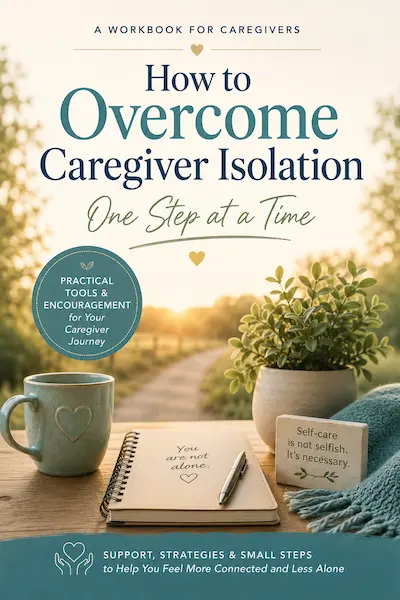
Family caregivers can become isolated as their responsibilities gradually crowd out friendships, personal activities, and regular contact with others.
This workbook helps caregivers recognize how isolated they feel, rebuild existing connections, ask for practical help, and create a manageable support system one small step at a time.
Inside the workbook, readers will find:
- A personal caregiver-isolation assessment
- Reflection questions about connection and self-care
- A three-circle support-network mapping exercise
- Guidance for identifying trusted and occasional contacts
- A four-week connection commitment
- A neighbor-partnership planning worksheet
- A ready-to-use neighbor introduction script
- Options for creating a daily check-in system
- Guidance for making specific requests for help
- A ready-to-use help-request script
- A medical, household, and personal contact list
- Space to identify backup care and emotional support
- Ideas for finding one regular social activity
- Guidance for locating caregiver support groups
- A practical nine-step action plan
- Weekly reminders for maintaining connection
- A four-week self-check for sleep, nutrition, personal time, and social contact
- Space to record reflections and next steps
Secure checkout powered by Stripe.
You’ll see our parent company, Couch Cats, LLC on your statement!
Sample Preview
Important Disclaimer: This workbook is provided for general educational, personal reflection, and organizational purposes only. It is not mental health treatment, counseling, medical advice, or a substitute for professional caregiver support or respite care. The exercises and suggested activities may help readers recognize isolation and strengthen social connections, but individual needs and results will vary. If you are experiencing persistent depression, severe anxiety, caregiver burnout, hopelessness, or difficulty functioning, contact a qualified healthcare or mental health professional. If you are in immediate danger or having thoughts of harming yourself or someone else, contact emergency services or a crisis hotline immediately. In the United States, call or text 988 for the Suicide & Crisis Lifeline.