The benefits of aging in place vs moving to assisted living depend on safety needs, support, and how much help is required day to day. Aging in place often protects independence and emotional comfort early on, while assisted living can become safer and more sustainable as care needs increase.
Quick Rundown: how to make a safer decision before a crisis
- Aging in place works best early: It supports independence when needs are low to moderate.
- Assisted living reduces daily risk: Built-in supervision lowers medication and fall-related emergencies.
- Costs shift over time: Home care can quietly become more expensive than assisted living.
- Dementia changes everything: Supervision needs often outgrow what home care can safely provide.
- Planning early protects choice: Decisions made before a crisis preserve dignity and control.
Below, I’ll walk you through how to weigh these choices clearly, starting with why this decision feels so hard.
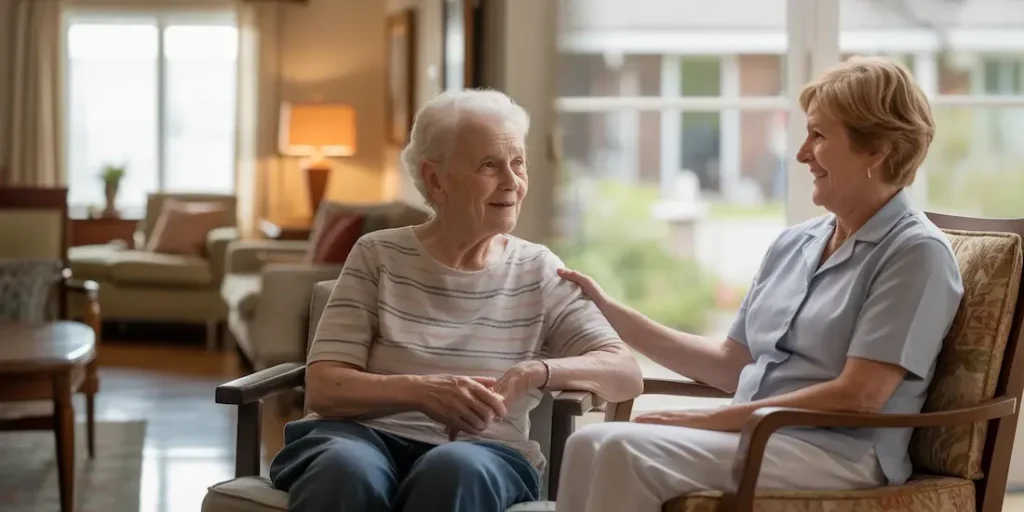
Why does choosing between aging in place and assisted living feel overwhelming?
This decision feels overwhelming because it blends safety, finances, emotions, and family responsibility into one high-pressure moment. Most families start searching after a fall, diagnosis, or caregiver burnout, not before.
I’ve seen this many times in my work. As a retired Occupational Therapist, I once met a daughter who said, “I just want to do the right thing, but everything feels risky.” That feeling is incredibly common and completely understandable.
What does aging in place really mean?
Aging in place means living safely in your own home with the right supports, not just staying put and hoping nothing goes wrong. True aging in place requires planning, home adjustments, and reliable help.
In well-designed aging-in-place homes, I typically see:
- Clear walkways, at least 36 inches wide
- Bathroom safety upgrades, like grab bars anchored into wall studs
- Improved lighting, especially motion lights for nighttime bathroom trips
- Support systems, such as family check-ins or paid caregivers
The deeper concept behind this is explored in what truly makes a place feel like home for seniors and caregivers.
❓Can I age in place if I live alone and don’t have family nearby?
💬 Yes, but only with intentional support systems like scheduled caregiver visits, medical alert devices, wellness check-ins, and a home designed to reduce fall risk. Aging in place alone without backup support becomes unsafe as needs increase.
What are the main benefits of aging in place?
The strongest benefit of aging in place is emotional and cognitive stability. Familiar spaces support memory, confidence, and identity.
Additional benefits include:
- Greater independence in daily decisions
- Lower costs early on, before daily care is needed
- Less disruption, which matters for memory and mood
- A sense of control over routines, meals, and schedules
These advantages are explored more deeply in the core benefits of aging in place here.
I once worked with a man in his late 70s who told me, “I know every crack in this floor.” That familiarity kept him confident and steady for years.
Many families also discover that resistance to moving is rooted in identity and meaning, which is explained in why seniors want to stay in their homes.
The emotional side of this choice is significant and often overlooked, especially the emotional benefits of aging in place
When does aging in place start to break down?
Aging in place begins to break down when care needs increase faster than support systems. This usually happens gradually, not all at once.
Common warning signs include:
- Falls happening more than once a year
- Missed or doubled medications
- Difficulty bathing or using the toilet safely
- Caregiver exhaustion or resentment
- Long periods of being alone
At this stage, the issue is no longer the house itself, it’s the lack of supervision and support.
❓What home modifications make the biggest difference for aging in place safety?
💬 Bathroom safety changes have the highest impact, including grab bars secured into studs, non-slip flooring, raised toilet seats, and walk-in showers. Improved lighting and removal of trip hazards are also critical.
What does assisted living actually provide?
Assisted living provides daily structure, supervision, and social connection in an environment designed for safety. It is not medical care, but it fills many daily support gaps.
Most assisted living communities offer:
- 24-hour staff availability
- Medication management
- Regular meals and hydration
- Scheduled activities
- Emergency response systems
❓Does Medicare pay for aging in place or assisted living?
💬 Medicare does not pay for assisted living rent or long-term home care. It may cover short-term skilled services, such as therapy after hospitalization, but ongoing daily care is usually paid out of pocket or through long-term care insurance.
What are the real benefits of assisted living?
The biggest benefit is consistent support without relying on family every day. This often reduces stress for both seniors and caregivers.
Other benefits include:
- Fewer emergency room visits
- Built-in social interaction, which supports mental health
- Predictable routines, helpful for memory and cognition
- Relief from constant decision-making
Families often tell me, “I finally slept through the night again.”
What are the downsides families don’t expect with assisted living?
Assisted living is not a cure-all. Many families are surprised to learn how care levels and costs change over time.
Common challenges include:
- Rising fees as care needs increase
- Limited one-on-one supervision
- Medical care still handled off-site
- Adjustment challenges after rushed moves
❓How do I know if assisted living is too much help too soon?
💬 Assisted living may be more support than needed if a person can manage medications, bathe safely, prepare meals, and respond to emergencies independently. In those cases, aging in place with light support may be the better fit.
How does dementia change the aging in place vs assisted living decision?
Dementia increases safety risk, wandering risk, and supervision needs, even in well-designed homes. This is often the tipping point.
At home, dementia may require:
- Locked or alarmed exits
- Constant supervision
- Structured daily routines
- Caregiver presence most of the day
This is why cognitive health matters so much. You can read more about the mental health benefits of aging in place and how familiarity supports well-being.
How do costs really compare over time?
Early on, aging in place is often less expensive. Over time, paid home care can exceed assisted living costs, especially beyond 6 to 8 hours per day.
Many families are surprised to learn:
- 8 hours of daily home care can exceed assisted living monthly fees
- 24-hour home care often costs significantly more
- Assisted living costs rise more predictably
This is why short-term cost comparisons can be misleading.
What signs mean it’s time to rethink the plan?
It’s time to reassess when safety or caregiver health is slipping, not just when things feel inconvenient.
Key signs include:
- Repeated falls or ER visits
- Medication confusion
- Weight loss or dehydration
- Caregiver burnout
- Increased confusion or wandering
Ignoring these signs often leads to crisis-driven decisions.
How can families make this decision without waiting for a crisis?
The safest path is planning early, while choices still exist.
Helpful steps include:
- A home safety assessment
- An honest care needs review
- A financial projection for the next 2 to 5 years
- Open family conversations
If you’re weighing the bigger picture, this article explains why aging in place is important from both a safety and quality-of-life standpoint.
❓Can someone move from assisted living back to aging in place?
💬 Yes, if health stabilizes and adequate support is available. Successful transitions require careful planning, home safety upgrades, and reliable help.
What is the bottom line on aging in place vs assisted living?
This decision is not about home vs facility, it’s about fit, safety, and sustainability. Aging in place often works beautifully at first, assisted living may become safer later, and the best plans adapt over time.
What I’ve found encouraging, both as an OT and as an aging-in-place specialist, is this, families who plan early make calmer, kinder decisions, and those decisions protect dignity, safety, and peace of mind for everyone involved.