Budget-friendly bathroom safety fixes for aging in place can greatly reduce fall risk without remodeling or spending thousands. With the right low-cost changes, you can make the bathroom safer, calmer, and easier to use, even in an older home or rental.
If you’re new to the concept, this article fits within the broader principles of aging in place design, which focuses on helping people live safely and independently at home for as long as possible.
Quick Rundown: Simple changes that reduce falls fast
- Bold, stable supports: Properly installed grab bars matter more than any other upgrade.
- Slip control that works: Not all non-slip mats are safe, some increase risk.
- Better lighting: Motion-sensor lights reduce night-time falls.
- Seating and height help: Chairs and raised toilets reduce strain and fear.
- Emergency readiness: A simple alert plan adds safety when accidents happen.
- Smart spending: Most safety gains happen under $500.
This article walks you through what actually works, what to skip, and how to prioritize fixes that protect independence and dignity, starting with the highest-risk areas first.
Why do bathrooms become dangerous as we age?
Bathrooms become dangerous because wet floors, tight spaces, and rushed movements come together in one small room.
Most falls happen when someone is:
- Sitting down or standing up
- Stepping into or out of a tub or shower
- Reaching for balance on something unstable
As a retired occupational therapist, I saw this pattern over and over. The bathroom itself is not the problem, the movements required inside it are.
Who are budget-friendly bathroom safety fixes really for?
These fixes are for older adults who want to stay at home and family caregivers who want real solutions, not gimmicks.
Many families start thinking about bathroom safety as part of preparing your home for aging in place, especially after a near-fall or health change.
You may be here because:
- Your parent had a near-fall
- Bathing now feels stressful or rushed
- You cannot remodel right now
- You want to reduce risk without taking away independence
If that sounds familiar, you are not alone.
❓ Can bathroom safety upgrades be installed in a rental without damaging walls?
💬 Yes, many safety upgrades work well in rentals, such as tension-mounted floor-to-ceiling poles, clamp-on toilet safety rails, shower chairs, and motion-sensor plug-in lights. For grab bars, always check with the landlord, as some allow professional installation if done correctly.
What is the biggest safety risk in the bathroom?
The biggest risk is transfers, not standing still.
Transfers include:
- Sitting on or standing up from the toilet
- Stepping over a tub edge
- Lowering onto a shower chair
I remember one client who was steady on her feet but fell every time she tried to stand from the toilet because there was nothing solid to hold. Once we added the right supports, her fear disappeared almost overnight.
What are the most effective budget-friendly bathroom safety fixes for aging in place?
The most effective fixes focus on stability, visibility, and reducing effort, all core principles of aging in place home modifications.
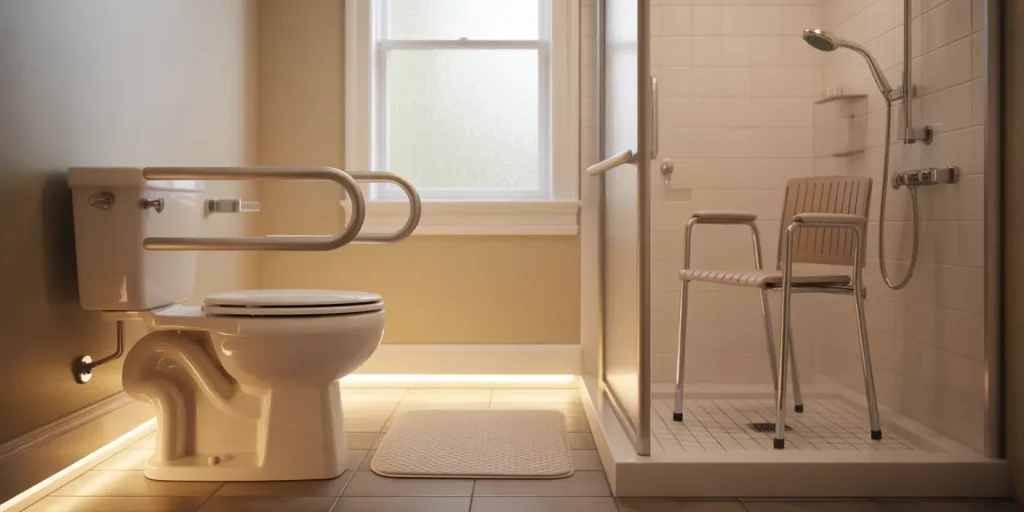
Properly installed grab bars
Grab bars should:
- Support 250–300 pounds
- Be anchored into studs or proper wall anchors
- Be placed near the toilet and inside the shower
Avoid suction grab bars for daily use. Many feel solid at first, then detach under sudden weight.
❓ How often should bathroom safety equipment be checked or replaced?
💬 Bathroom safety equipment should be checked every 3 to 6 months for looseness, rust, slipping, or wear. Non-slip mats and adhesive strips often need replacement sooner, especially if edges curl or traction feels reduced.
Slip-resistant flooring where it matters
Use:
- Non-slip bath mats with full rubber backing
- Adhesive traction strips rated for wet areas
Avoid:
- Lightweight mats that curl or slide
- Loose rugs near the toilet or sink
Are non-slip bath mats always safe for seniors?
No, some non-slip mats increase fall risk.
Safe mats should:
- Lay completely flat
- Have full rubber backing
- Be replaced when edges curl or suction weakens
Unsafe mats often:
- Curl at the edges
- Slide on smooth surfaces
- Create visual confusion for someone with dementia
I once worked with a gentleman who tripped repeatedly on the edge of his bath mat. Removing it and adding traction strips reduced his falls immediately.
Why are suction grab bars risky for daily use?
Suction grab bars can fail without warning.
They are risky because:
- Suction weakens with humidity
- Small air leaks cause sudden release
- They are not designed for full body weight
If used at all, they should only be temporary balance cues, not primary safety supports.
How does lighting reduce bathroom fall risk?
Lighting reduces falls by improving depth perception and reaction time.
Poor lighting causes:
- Missed steps
- Misjudged distances
- Increased fear
Motion lights are especially helpful for night-time bathroom trips, when balance is already affected by sleepiness or blood pressure changes. Lighting choices also relate to overall home layout and aging in place, especially in older homes.
❓ What bathroom safety changes help reduce fear, not just falls?
💬 Improving lighting, adding stable handholds, and allowing seated bathing often reduce fear more than physical strength alone. When someone feels safer, they move more calmly, which lowers fall risk.
Is sitting safer than standing in the shower?
Yes, sitting is usually safer than standing.
A shower chair or transfer bench:
- Reduces fatigue
- Limits single-leg balance
- Makes bathing less rushed
Look for chairs that:
- Have rubber feet
- Support at least 250 pounds
- Include armrests for leverage
Do raised toilet seats really help?
Yes, raised toilet seats reduce knee strain and loss of balance.
Helpful features include:
- 2–4 inches of added height
- Arm supports
- Non-slip locking mechanisms
Standing from a low toilet is one of the most common fall triggers I saw in practice.
❓ Are there bathroom safety fixes that help with arthritis or weak grip?
💬 Yes, lever-style faucet handles, textured grab bars, handheld shower heads with large grips, and soap dispensers that press easily can reduce strain on painful hands and joints.
What bathroom changes help someone with dementia?
For dementia, simplicity matters more than quantity.
Helpful strategies include:
- Keeping layouts consistent
- Avoiding too many colors or patterns
- Using contrast for toilet edges and grab bars
Too many new devices can increase confusion, even if they are well intended.
How can emergency preparedness improve bathroom safety?
Emergency readiness reduces risk when falls or dizziness happen despite precautions.
Simple steps include:
- Keeping a waterproof phone within reach
- Using a medical alert button in the bathroom
- Ensuring doors can be unlocked from the outside
❓ When should a family consider a professional home safety assessment?
💬 A professional assessment is helpful after a fall, repeated near-falls, or when multiple health changes affect balance or strength. An occupational therapist or aging-in-place specialist can identify risks families often miss.
How does water temperature affect bathroom safety?
Hot water that is too hot increases burn risk, especially for older adults with slower reaction time.
Safety tips include:
- Setting water heater temperature to 120°F
- Installing anti-scald valves in showers and tubs
- Using single-handle controls when possible
Burn prevention is an often-missed part of bathroom safety.
How does storage and organization reduce fall risk?
Good organization prevents overreaching and bending, which cause loss of balance.
Helpful ideas:
- Keep soap, shampoo, and towels at chest height
- Use wall-mounted dispensers or caddies
- Avoid placing items behind or below the body
These small changes fit naturally into broader home modifications for aging in place and do not require remodeling.
How much do effective bathroom safety fixes really cost?
Most meaningful fixes fall into three ranges:
$0–$25
- Remove loose rugs
- Add non-slip rug tape
- Install night lights
$25–$120
- Quality non-slip mat
- Motion-sensor lighting
- Handheld shower head
$120–$500
- Professionally installed grab bars
- Shower chair or transfer bench
- Raised toilet seat with arms
You do not need to do everything at once. Start where the risk is highest.
How do you know if a safety product is truly safe?
Ask three questions:
- Is it weight-bearing
- Can it move, slip, or detach
- Is it installed according to manufacturer instructions
If the answer raises doubt, it is not a safety device.
Why does bathroom safety protect caregivers too?
Unsafe bathrooms increase caregiver injury and burnout.
When transfers are unsafe:
- Caregivers lift more
- Strain injuries increase
- Stress rises for everyone
Safer bathrooms protect both the person aging in place and the person helping.
What I want you to remember most
Bathroom safety does not require a remodel or luxury upgrades. The right small changes reduce fear, prevent falls, and restore confidence.
I have seen people go from avoiding the shower to bathing calmly again just by adding stable supports and better lighting. Progress matters more than perfection.
If you take one step today, make it a smart one.