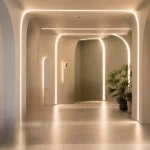
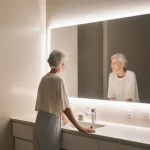
When comparing motion sensors vs. night lights for fall prevention, the best solution ultimately depends on personal needs and home layout.
Motion sensors provide targeted light only when needed, better preserving sleep, while night lights offer simple, constant illumination for navigating dark rooms and hallways.
Quick Rundown: Motion Sensors vs Night Lights for Fall Prevention
- Shared goal: Both aim to prevent nighttime falls by lighting safe pathways without disturbing sleep.
- Night lights: Provide constant glow for orientation but risk poor sleep if too bright or blue-toned.
- Motion sensors: Offer targeted light only when needed, but delays or sudden brightness can startle seniors.
- Hidden risks: Blue light disrupts circadian rhythm, while motion sensors may cause a “startle and stumble” effect.
- Best setup: Use warm amber lights (<2700K), install low to the floor, and choose soft-on technology for comfort.
- Practical tips: Consider pets, plug-in vs. battery models, and outdoor-rated lights for safe walkways.
The fear of a fall during a nighttime trip to the bathroom can cause significant anxiety for both seniors and their families.
We understand this concern deeply, which is why we’ve analyzed these options to provide clear, actionable advice you can trust to quickly help you decide on the perfect, safest setup for your home.
To help you make the best choice, let’s first explore the fundamental importance of nighttime lighting for seniors.
The Great Debate: Are Motion Sensors or Night Lights Better for Fall Prevention?
Let’s talk about something that I know is a real concern for so many of us, navigating in the dark. That nighttime trip to the bathroom can feel like a challenge, and the desire to reduce the risk of falling is completely valid.
You’re trying to find the best way to light the way, and you’re wondering, “motion sensor lights vs. night lights, which is better?”
It’s a smart question, and the answer is more important than most people realize. Together, we are going to walk through this.
My is to give you a simple way to know which lighting strategy is exactly right for you, so you and your loved ones can have true peace of mind.
What is the Real Job of Nighttime Lighting?
Before we choose, let’s understand what these two types of lights actually do.
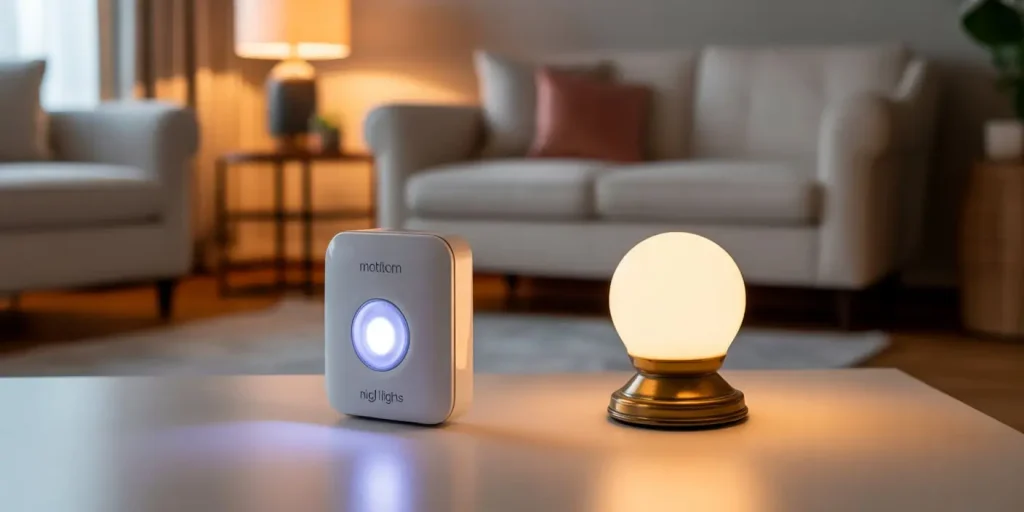
Think of one as your personal lighthouse, providing ambient lighting, and the other as your personal spotlight, providing focused task lighting.
- Traditional Night Lights: Your Lighthouse
Their main job is to provide a constant, low-level glow for general orientation. This helps you know where you are in a room the second you open your eyes. Their biggest win is preventing that dangerous first step in total darkness. - Motion-Sensing Lights: Your Spotlight
Their main job is to deliver bright, clear light exactly where you are walking. They are experts at obstacle detection, illuminating trip hazards like a shoe or a wrinkle in a rug, and creating a clear path of travel.
Motion Sensor Lights vs. Night Lights: Which Prevents More Falls?
Now for the most important part. Both of these lights come with hidden dangers that the packaging won’t tell you about.
Understanding these risks is the key to making the safest choice and achieving true nighttime safety.
The Hidden Danger of Most Night Lights
A few years ago, my mom-in-law was having trouble with her sleep quality. She bought a multi-pack of classic plug-in night lights, but they used a very bright, cool-white light. While they lit up the hallway, her sleep got worse.
Here’s why:
- Blue Light Tricks Your Brain: That bright, cool light is a form of blue light exposure. This signals to your brain that it’s daytime, which can disrupt your natural circadian rhythm and suppress melatonin production, the hormone you need for deep sleep.
- The Fall Risk Connection: Poor sleep leads to next-day grogginess and disorientation. This is a major, independent risk factor for falls. The very thing he thought was helping was creating a different kind of danger.
The Hidden Danger of Motion Sensors
On the other hand, motion-activated lights have their own set of problems we need to be honest about.
- The “Startle and Stumble” Effect: A sudden blast of bright light can be very jarring. This jolt can cause a moment of surprise or panic, leading to a quick, unstable movement.
- The Split-Second Delay: There is always a small delay before the light turns on. A fall can happen in that “dead zone” before you have light to see any trip hazards.
How to Create the Perfect, Safe Lighting Plan
So, what is the best cost-effective solution? It’s about building a smart system using the best ideas from both. These are the key environmental modifications you can make.
- Follow the “Amber Rule.” This is critical. The color temperature of the light matters immensely. Always choose lights that have a warm, soft white glow (amber or red is even better). On the box, look for a color temperature under 2700 Kelvin (K). This warm light won’t disrupt your sleep.
- Create a “Runway,” Not a Flood. The goal is pathway lighting, not lighting the whole room. Install your lights low to the ground. This provides excellent glare reduction and points the light right at your feet.
- Choose “Soft-On” Technology. The best modern motion sensors don’t just “blast” on. They have a gradual “soft-on” feature. Many also come with adjustable brightness and timers, so you can customize them perfectly for your needs.
❓ How high off the floor should I install pathway lights?
💬 We recommend installing them about 6 to 18 inches from the floor. This is the perfect height to keep the bright light out of your direct line of sight, which prevents glare, while pointing it directly at the floor to illuminate your feet and any obstacles. Placing them right on the baseboards is often the ideal spot.
Answering Your Practical Questions: Cost, Batteries, and More
Beyond safety, I know there are practical questions on your mind. Let’s tackle those head-on.
❓ Will my cat or small dog constantly set off the motion sensor lights?
💬 This is a great question, and yes, it’s possible! Many standard motion sensors can be triggered by a curious pet. To solve this, you have two great options. First, look for models that have “adjustable sensitivity” settings. Second, placement is key. If you place the light a little higher, say 3 feet off the ground instead of on the baseboard, it will be more likely to pick up a walking adult and ignore a small pet on the floor.
❓Can I use these same lights for outdoor paths, like my front walkway?
💬 Generally, no. You should not use indoor-rated lights outside. Indoor lights are not built to handle rain, snow, humidity, or extreme temperatures and will fail quickly. For outdoor areas, you must look for products specifically labeled as “outdoor-rated” or “weatherproof.” This ensures they are sealed and durable enough to keep you safe both inside and out.
❓What about cost and energy consumption?
💬Upfront, a simple plug-in night light is very cheap. A good set of motion-sensing lights might cost more initially. However, think about the long-term. A night light uses electricity all night, every night. A motion sensor only uses power when it’s needed, saving you money on your electricity bill and making it a great long-term safety investment.
❓What are the battery vs. plug-in pros and cons?
This depends on your home.
- Plug-in lights are great because you never have to worry about them dying. They are perfect for a hallway or bathroom where you have a free outlet in the right spot.
- Battery-operated lights, often called stick-on lights, are wonderful because you can put them literally anywhere. They are the best choice for stairs, inside a dark closet, or in a hallway that doesn’t have a convenient outlet. Just remember to check the batteries every few months!
What is the Best Choice for ME? Your Personal Lighting Guide
The best choice is the one that fits your unique needs. This is key for maintaining independence and aging in place safely.
What if I or my loved one experiences cognitive impairment or dementia?
Your best bet is a constant, simple amber night light. The predictable, steady glow is calming and helps with nighttime disorientation. A surprising motion sensor can cause anxiety.
What if I have vision impairment, neuropathy, or poor balance?
Your best bet is a bright motion sensor system with a “soft-on” feature. My neighbor, Helen, has neuropathy and can’t feel the floor well. She needs that bright, clear “spotlight” for obstacle detection. The bright light gives her the feedback her nerves can’t.
What if I am a very light sleeper or have limited mobility?
Your best bet is likely a “soft-on” motion sensor system. If any constant light bothers you, a system that stays completely dark until you move is ideal. For those with limited mobility, having the light turn on automatically means one less thing to worry about.
Your Action Plan: A Home Safety Checklist for Fall Prevention
The big takeaway is this, to truly fall-proof your home, you need a smart lighting strategy. Here is your final checklist.
- Assess Your Needs: Use the guide above to identify your personal profile (e.g., light sleeper, poor balance).
- Always Go Amber: No matter what system you choose, make sure the light is a warm color (under 2700K) to protect your sleep.
- Light the Path: Install lights 6-18 inches from the floor to create a clear runway. For stairs, place one light at the top and another at the bottom.
- Choose Your Power: Use plug-in models where convenient and battery-operated ones for stairs and areas without outlets.
- Buy for the Location: Use durable, “outdoor-rated” lights for any paths outside your home.
- Test Your System: Once it’s set up, walk the path at night. Make sure there are no dark spots or harsh glares.
By taking these simple, powerful steps, you are ensuring your nights are not only safer but also more restful. Wishing you safety and sleep-filled nights.