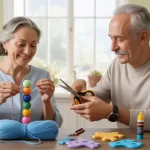
Adaptive craft tools for seniors are specially designed implements that make creative hobbies accessible for those with dexterity challenges like arthritis or tremors.
These tools, featuring ergonomic grips and spring-loaded actions, allow older adults to continue enjoying activities like knitting, sewing, and painting with greater comfort and ease.
Quick Rundown: Adaptive Craft Tools and Supplies for Seniors With Dexterity Issues
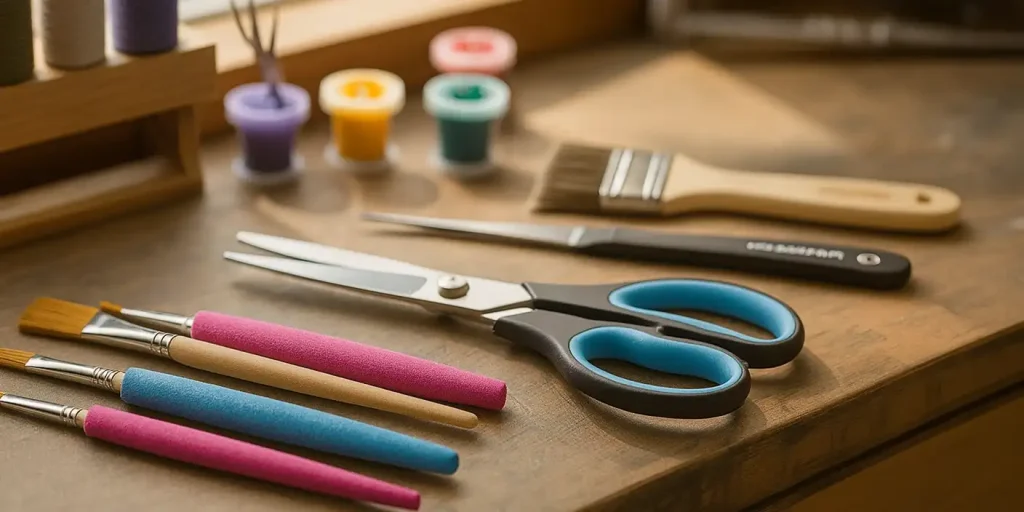
- Ergonomic Scissors: Soft-grip, spring-action scissors reduce hand strain and make cutting easier.
- Large-Grip Brushes & Pens: Thicker handles help seniors maintain control without tiring their hands.
- Non-Slip Mats & Clips: These keep materials steady, so projects don’t slide while working.
- Foam Tubing & Grips: Slip over pencils, crochet hooks, or tools to improve comfort and stability.
- Pre-Cut & Ready-to-Use Supplies: Kits with pre-cut shapes or adhesive pieces simplify projects and prevent frustration.
- Lightweight Magnifiers & Task Lights: Better visibility reduces eye strain and supports confident crafting.
The frustration of seeing your favorite craft supplies collect dust because of hand pain or a weak grip is disheartening.
We understand these challenges and are dedicated to finding practical solutions that help you reclaim the joy and therapeutic benefits of your creative passions.
Let’s begin by looking at why continuing these cherished hobbies is so important for overall well-being.
1. Meet Your Challenge, Not Your Limit
My fingers stiffened with arthritis, and even favorite knitting needles felt like bricks. When I wrapped them in foam tubing grips, the joy of making things came right back.
If your hands shake or hurt, the right gear can bring that same spark to you.
2. Why Crafting Still Matters After Dexterity Declines
Crafting is more than a hobby, it:
- Boosts mood 😊
- Keeps the brain active, great for dementia care
- Strengthens hand muscles gently
- Builds self-esteem when projects finish
I think of my neighbor June, who lives with tremors and is an artist, painting on canvases. A weighted paint cup and foam-handled brush let her paint wildflowers again. “I feel like myself,” she said through tears.
❓ Can adaptive craft tools help someone recovering from a stroke?
💬 Yes, absolutely. Many adaptive craft tools are perfect for one-handed use or limited coordination. Items like universal cuffs, push-down scissors, and non-slip mats allow stroke survivors to regain fine motor skills and stay creative. Start with simple crafts like coloring, stamping, or using a bead spinner.
3. Must-Have Features in Adaptive Craft Tools 🛠️
| Feature | Why It Helps | Easy Spec to Check |
|---|---|---|
| Ergonomic grip | Easier to hold | Diameter 1.25–1.5 in |
| Lightweight | Less hand fatigue | Under 4 oz pens |
| Safety locks / guards | Prevent cuts | Built-in spring return |
| One-hand use | Helps weak side | Push or tilt action |
| Non-slip surface | Stops sliding | Rubber pads or mats |
Below, I’ll list some of my favorite adaptive products for specific craft projects.
4. Tool Showcase: Find Your Perfect Match
4.1 Painting, Coloring, and Jumbo Chalk 🖌️🖍️
- Thick-handled brushes with foam grips
- Triangular crayons for low vision
- Weighted paint cup with suction base
❓ What’s the best craft for someone with arthritis in their hands?
💬 Choose crafts with large, easy-to-grasp tools and minimal fine motor demand. Some great options include collage-making with textured materials, clay sculpting using loop-handled tools, and painting with wide-handled brushes. These activities allow creative expression without painful finger movements.
❓ How do I keep paint steady if my hands shake?
💬 Use a foam-wrapped brush, brace elbows on the table, and rest the cup on a non-slip mat.
4.2 Cutting & Trimming ✂️
Budget pick: Westcott spring scissors
4.3 Needlework & Sewing 🧵
One of my patients, Betty, a stroke survivor, used a clamp-on hoop and universal cuff to finish a baby blanket for her first grandchild. I will never forget her!😊
4.4 Gluing & Assembly 🧹
- Low-temp glue gun with stand
- Soft-squeeze glue bottles
- Foam tape strips for quick sticking
4.5 Printmaking and Stamping Made Easy 🖨️
- Six-inch foam rollers with grip rings
- Push-down stamp pad needs under 2 lb pressure
- Raised rubber stamps for a clear image every time
❓ Can printmaking be safe with weak wrists?
💬 Yes, use light rollers, mount paper on a non-slip mat, and press with forearm weight, not grip force.
4.6 Handwriting & Drawing Helpers ✏️
- Slant board set at 20°
- Universal cuff straps pens to the hand
- Weighted pen (3–4 oz) for smoother flow
4.7 Jewelry & Beading 💍
- Tabletop bead spinner
- Loop-handle pliers with padded grip
- Sorting tray with raised edges
- Here are some ideas on bead jewelry projects for seniors!
4.8 Pottery & Clay 🍽️
- Clay loop tools with oversize handles
- Silicone non-stick mat keeps clay steady
- Small turntable with foot pedal
❓ Are there any crafts that also double as hand therapy?
💬 Yes, crafts that involve squeezing, pinching, or shaping materials help improve grip strength and finger flexibility. Try using air-dry clay, foam stickers, or loop-handled beading tools. These activities engage the hands gently and encourage repetitive movements that support recovery.
4.9 Digital Art for Big Buttons Lovers 📱
- Free drawing app Sketchbook with icons at 150 %
- 1-inch barrel tablet stylus
- Adjustable tablet stand tilted at 30°
5. Set Up a Safe, Accessible Craft Space 🧼
A safe crafting area can help to make every craft project much more enjoyable!
| Item | Ideal Size / Spec |
|---|---|
| Lighting | Daylight LED, 1,500–2,000 lumens |
| Chair height | 18–20 in, armrests help |
| Table height | Hip to waist, 28–34 in for wheelchair |
| Knee clearance | 27 in minimum |
| Wheelchair easel | Tilt-top, lockable |
| Non-slip shelf liner | Under cups and tools |
Use a grabber tool or lazy Susan to cut down on reaching. Adding labeled bins can really help you to organize your craft supplies.
❓ What’s the best lighting setup for crafting with low vision?
💬 Choose a gooseneck daylight LED lamp with 1,500–2,000 lumens. Position it on the side of the dominant hand to avoid shadows. Pair it with high-contrast tools and materials (like black on white) to make details easier to see and safer to work with.
6. Dementia-Friendly Sensory Crafts
People with memory loss often enjoy bright color and texture. Try:
- Felt, sandpaper, and foil collage
- High-contrast color sorting with jumbo buttons
- Large-print coloring books with bold outlines
⚠️ Safety tip: Choose non-toxic adhesives and keep hot glue guns out of reach.
Easy crafts for seniors for more accessible project ideas spanning multiple craft types.
❓ How can I organize craft tools for someone with memory issues?
💬 Use clear labeled bins, color-coded tool handles, and non-slip trays to create a predictable and calm craft setup. Lay out only the materials needed for one task at a time. This helps reduce overwhelm and supports safe independence for seniors with dementia or memory decline.
7. DIY Grip Hacks and One-Hand Tricks
- Slide foam tubing or a tennis ball over thin handles
- Fill a sock with rice for a quick weighted glove
- Wrap PVC pipe around crochet hooks for wider grip
- Add a spray-can handle to craft paint for one-hand use
8. Stay Motivated and Have Fun
- Work 15–20 minutes, stretch, then start again
- Join free online senior crafting groups on Facebook
- Snap photos of finished pieces and make a brag book 📸
9. Where to Buy & How to Save
| Source | What to Look For | Money Tip |
|---|---|---|
| Amazon | Tool bundles | Filter under $25 |
| Medical supply stores | OT-approved scissors | Ask if insurance pays |
| Thrift shops | Yarn, fabric, beads | Craft bins under $5 |
| Library makerspace | 3-D pens, sewing machines | Use gear free after sign-up |
10. FAQ Corner
❓ Can I adapt tools I already own?
💬 Yes. Foam grips, Velcro straps, and rubber jar grippers all work.
❓ Where can I watch someone use these tools?
💬 Search “adaptive craft tools demo” on YouTube or check my playlist linked below.
Final Thoughts: Still Creative, Just Differently Equipped
Losing grip strength does not erase creativity. With ergonomic handles, wheelchair-friendly tables, and colorful sensory projects, you can craft safely and joyfully.
If this guide helped, please share it, comment with your favorite hack, and visit more safety tips on SeniorSafetyAdvice.com. Let’s keep making art together! 🎉