Planning to age in place can feel overwhelming, but you don’t have to figure it out alone. Aging in place specialists are professionals trained to help older adults stay safe, independent, and comfortable in their own homes.
They understand how to match living spaces with changing needs, offering solutions that make daily life easier and safer.
The challenge is that many families don’t know these specialists exist, or they assume home safety is only about grab bars and ramps. In reality, aging in place specialists look at the whole picture, from design and accessibility to long-term planning.
The encouraging part is that their expertise can turn a house into a supportive home for years to come.
Quick Rundown
- Aging in place specialists are trained to make homes safer and more accessible.
- They recommend modifications like wider doorways, safer bathrooms, and better lighting.
- Specialists may include contractors, designers, occupational therapists, and other pros.
- They help families plan for both current needs and future changes.
- Working with a specialist ensures safety without sacrificing comfort or style.
Now, let’s take a closer look at what aging in place specialists do and how they can support you or your loved one in staying at home longer.

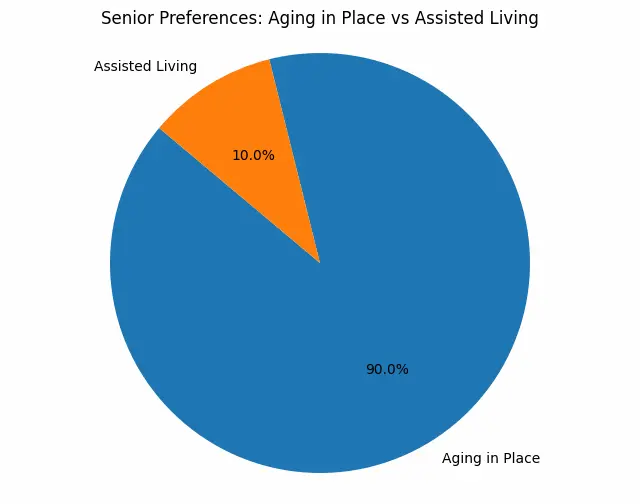
Senior Preferences: Aging in Place vs Assisted Living
This pie chart illustrates that 90% of seniors prefer aging in place over assisted living, highlighting the importance of creating safe home environments. Actually, according to Forbes.com, it’s 92 percent!
What is an Aging in Place Specialist?
An Aging in Place Specialist is a professional who specializes in evaluating and modifying homes to meet the changing needs of older adults.
These experts possess a unique blend of knowledge in areas such as gerontology, universal design, and home modification techniques.
They are typically certified through programs like the Certified Aging-in-Place Specialist (CAPS) offered by the National Association of Home Builders (NAHB), Age Safe America and more.
CAPS Certification Process
The CAPS certification involves coursework that covers the technical, business, and customer service skills essential for designing and modifying homes for aging in place.
The program emphasizes universal design principles and includes training on how to collaborate effectively with other professionals.
Key Skills of Aging in Place Specialists
Aging in Place Specialists possess a range of skills that enable them to create safe and accessible environments for seniors:
- Knowledge of building codes and regulations: Ensuring all modifications comply with local laws.
- Understanding of universal design principles: Designing spaces that are accessible to all, regardless of age or ability.
- Project management: Coordinating various aspects of home modifications efficiently.
- Collaboration with healthcare professionals: Working with occupational and physical therapists to tailor solutions to individual needs.
Services Provided by Aging in Place Specialists
Aging in Place Specialists offer a comprehensive range of services to ensure elderly individuals can live safely and comfortably in their own homes.
These services include:
- Home safety assessments: Specialists conduct thorough evaluations of the home environment to identify potential hazards and areas for improvement.
- Recommendations for home modifications: Based on their assessments, specialists provide tailored suggestions for modifications that can enhance safety and accessibility.
- Implementation of accessibility features: They oversee the installation of various features such as grab bars, ramps, and stairlifts to improve mobility and reduce fall risks.
- Coordination with healthcare professionals: Aging in Place Specialists often work in collaboration with occupational therapists and other healthcare providers to ensure modifications align with the individual’s specific health needs.
Technology and Aging in Place
Incorporating technology is an essential part of modern aging in place strategies.
Specialists may recommend:
- Smart home technology: Devices like smart lights, thermostats, and security systems to enhance safety and convenience.
- Medical alert systems: Wearable devices that allow seniors to call for help in emergencies.
- Remote monitoring: Systems that enable family members or caregivers to monitor seniors’ well-being from a distance.
Benefits of Working with an Aging in Place Specialist
Engaging the services of an Aging in Place Specialist offers numerous advantages:
- Enhanced safety and independence: By implementing targeted modifications, specialists help reduce the risk of accidents and injuries, allowing seniors to maintain their independence. Notably, 9 in 10 older adults prefer to live at home in their later years rather than in an assisted living facility.
- Customized solutions: Each home and individual is unique, and specialists provide personalized recommendations based on specific needs and preferences.
- Cost-effective alternatives: Home modifications can often be more economical in the long run compared to the costs associated with assisted living facilities or nursing homes, which average about $54,000 per year as of 2024.
- Peace of mind: Family members and caregivers can feel reassured knowing that their loved ones are living in a safer environment.
The Process of Working with an Aging in Place Specialist
The typical process of working with an Aging in Place Specialist involves several key steps:
- Initial consultation and home assessment
- Development of a personalized plan
- Implementation of modifications
- Follow-up and adjustments
Aging in Place Process
This diagram outlines the stages of the aging in place process, from home assessment to follow-up, showing the comprehensive approach taken by specialists.

During the initial consultation, the specialist will evaluate the home and discuss the individual’s needs and concerns.
Based on this assessment, they will develop a comprehensive plan outlining recommended modifications.
Once approved, the specialist will oversee the implementation of these changes, often coordinating with contractors and suppliers.
After the modifications are complete, they will conduct follow-up visits to ensure everything is working as intended and make any necessary adjustments.
Common Home Modifications for Aging in Place
Common Home Modifications for Aging in Place and Their Costs
This bar chart provides a visual breakdown of typical home modifications like grab bars, ramps, and stairlifts, along with their estimated costs, emphasizing the financial considerations involved.

Aging in Place Specialists frequently recommend and implement a variety of home modifications to enhance safety and accessibility:
- Bathroom safety features: Installation of grab bars, walk-in showers, and raised toilet seats.
- Kitchen accessibility improvements: Lowering countertops, installing pull-out shelves, and improving lighting.
- Mobility enhancements: Adding ramps, stairlifts, or widening doorways to accommodate wheelchairs or walkers.
- Lighting and flooring adjustments: Improving overall lighting and replacing slippery flooring with non-slip alternatives.
Challenges and Considerations
While aging in place offers many benefits, it is not without challenges.
Some potential issues include:
- Cost of modifications: While often cheaper than assisted living, modifications can still be expensive.
- Home suitability: Not all homes are easily adaptable for aging in place.
- Health changes: As health needs evolve, additional modifications may be necessary.
Future Trends in Aging in Place
The field of aging in place is continually evolving, with new trends emerging:
- Increased use of technology: As technology advances, more solutions will become available to support aging in place.
- Focus on sustainability: Eco-friendly modifications and materials are becoming more popular.
- Community-based solutions: More communities are developing programs to support seniors aging in place.
Choosing the Right Aging in Place Specialist
When selecting an Aging in Place Specialist, consider the following factors:
- Experience and credentials in the field
- Knowledge of local building codes and regulations
- Ability to work collaboratively with other professionals
- Communication skills and willingness to listen to your needs
It’s important to ask potential specialists about their qualifications, past projects, and approach to aging in place modifications. Don’t hesitate to request references or examples of their previous work.
Conclusion
Aging in Place Specialists play a vital role in empowering elderly home safety.
By leveraging their expertise in home modifications and understanding of the aging process, these professionals help create environments that support independence, safety, and quality of life for seniors.
As the population continues to age, the importance of these specialists in facilitating successful aging in place cannot be overstated.
If you or a loved one are considering aging in place, consulting with an Aging in Place Specialist can be a crucial step towards ensuring a safe and comfortable home environment for the years to come.
Take the time to research local specialists and schedule a consultation to explore how they can help transform your home into a safer, more accessible space for aging in place.