Yes, stair climbing is an excellent and accessible form of exercise, provided it’s done safely.
This powerful activity boosts cardiovascular health, builds crucial lower-body strength, and improves balance, making stair climbing for seniors a highly beneficial routine for maintaining independence and overall well-being.
Quick Rundown: Is Stair Climbing Good for Seniors?
- Builds Strength: Climbing stairs works leg muscles, hips, and core, helping maintain mobility and balance.
- Improves Heart Health: Regular stair climbing is an effective low-cost cardio exercise that boosts endurance.
- Supports Bone Health: Weight-bearing activity strengthens bones and lowers the risk of osteoporosis.
- Aids Weight Management: Even short daily stair sessions help burn calories and increase metabolism.
- Boosts Independence: Staying confident on stairs reduces fear of falling and helps seniors remain self-reliant.
- Safety Comes First: Handrails, good lighting, and non-slip treads are essential for safe stair use.
You might see the stairs in your home as a daily chore or even a source of anxiety.
But with the right approach and safety measures in place, you can transform that climb into a powerful tool for your health and vitality.
Let’s first explore the many ways that embracing the stairs can benefit your body and mind.
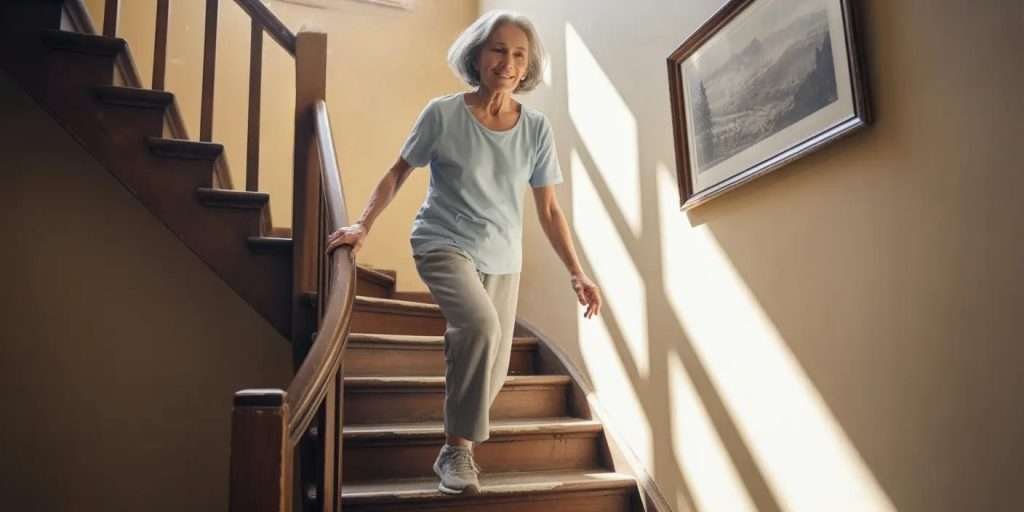
Why Stair Climbing Is a Hidden Gem for Seniors
Stair climbing is more than just walking up steps. It’s a functional mobility exercise that strengthens your legs, heart, balance, and coordination, all at the same time.
For older adults, this kind of movement supports everyday independence like getting out of a chair or walking without fear of falling.
You don’t need fancy gym equipment or a personal trainer. Stairs give you a full-body, low-impact workout that supports healthy aging and improves quality of life. It’s affordable, accessible, and effective.
❓Can stair climbing help reduce fall risk?
💬 Yes, stair climbing strengthens leg muscles and improves balance, which helps lower the risk of falling at home or outdoors.
Is Stair Climbing a Good Exercise for Seniors?
Yes, stair climbing is one of the most effective functional fitness exercises for older adults.
Research from 2025 shows that climbing 5 or more flights of stairs each day can lower the risk of cardiovascular disease by up to 39%.
It also improves blood pressure, VO₂ max, balance, and even mood.
Evidence-Based Benefits:
- Builds leg strength and core stability
- Enhances balance and coordination
- Supports heart and lung health ❤️
- Boosts mental clarity and energy
- Strengthens bones and prevents osteoporosis
- Burns significantly more calories than walking
Stair climbing qualifies as cardiorespiratory fitness training. Just a few minutes of climbing burns around 8 to 11 calories per minute and increases VO₂ max (oxygen usage) by 8 to 33 ml/kg/min.
It also boosts bone density, especially in post-menopausal women. Regular step-based activity strengthens your skeletal system and reduces the risk of fractures.
I once worked with a patient, Mary, in her late 70s. She began climbing just one flight each morning while holding the handrail. After six weeks, she smiled and said, “I can carry my laundry again without needing help.”
Who Should Try Stair Climbing (and Who Shouldn’t)
Great Option For:
- Seniors with steady mobility
- Adults looking for home-based exercise
- Individuals with mild balance or strength concerns
Use Caution If:
- You have chronic joint pain or arthritis
- You struggle with unsteadiness or poor balance
- You have vision problems that affect depth perception
If you’re unsure, check with your doctor or physical therapist before starting. Safety comes first.
❓What’s the best time of day to climb stairs?
💬 The best time is when you feel most alert and energized, often mid-morning or after breakfast. Avoid when you’re tired or rushed.
How to Start Stair Climbing Safely at Home
Beginner Routine:
- Warm up: March in place for 2 minutes
- Climb 1 flight (10–12 steps) slowly
- Rest at the top, then descend carefully
- Repeat once or twice per day
This activity is joint-friendly compared to running, but it still builds muscle power and aerobic capacity. Go slow, listen to your body, and stop if you feel pain.
Smart Safety Tips:
- Use the handrail for stability
- Wear non-slip shoes 👟
- Keep stairs well-lit and dry
- Take breaks as needed
When I started stair climbing again after a knee injury, I used just 3 steps and held onto the railing. I did 2 sets of step-ups every other day. After 4 weeks, I could go up a full flight without pain.
❓Should I stretch before or after stair climbing?
💬 Light stretching after climbing is best. It helps reduce soreness and improves flexibility. Warm up with easy movement instead of stretching beforehand.
Try This: “Exercise Snack” Routine
Short bursts of movement, known as exercise snacks, offer powerful benefits for your heart and lungs. Try this mini HIIT-style (High Intensity Interval Training) workout:
Quick Routine:
- Climb 2 flights (about 20 steps) at a safe pace
- Rest 1 minute
- Repeat 3 to 4 times
- Do this twice a day
This method boosts cardiovascular fitness, increases muscle endurance, and only takes 10 minutes! ⏱️
How Stair Climbing Supports Daily Independence
Stair climbing improves functional movement, helping with tasks like:
- Standing up from chairs
- Carrying groceries
- Walking with better posture
- Preventing falls at home 🛋️
One woman I worked with told me, “I was afraid of stairs for years, but now I feel like I took my life back.” That kind of confidence is life-changing.
❓Can stair climbing improve my mood or focus?
💬 Yes, even short stair sessions increase blood flow to the brain and release endorphins. Many people report feeling happier and more alert.
What If You Don’t Have Stairs?
You can still get similar benefits with alternatives:
- Use a 6–8 inch aerobic step platform
- Perform 3 sets of 15 step-ups per day
- Try a stair climber machine at the gym
- Walk up ramps, gentle hills, or stadium steps
These substitute activities train the same lower body muscles and support balance and bone strength.
Research Snapshot: Real-Life Results
In a 2025 Belgian study, adults aged 65 to 80 climbed stairs twice a week for 35 minutes. After 12 weeks, they showed:
- Improved walking speed 🚶♀️
- Greater leg strength
- Better overall balance
These changes were similar to using weight machines at the gym, without needing to leave the house.
Common Questions
How many stairs should a senior climb per day?
💬 Start with 1 to 5 flights a day. Even one flight makes a difference.
Is stair climbing hard on your knees?
💬 Not if you go slow and use the handrail. It’s easier on your knees than running.
Can stair climbing count as cardio exercise?
💬 Yes! Climbing stairs gets your heart rate up and builds endurance.
Should I climb stairs every day?
💬 If it’s safe for you, yes. Consistent routines offer the best results.
Is stair climbing better than walking?
💬 Climbing stairs burns up to 20x more calories than walking on flat ground.
Final Thoughts: One Step at a Time
You don’t need a gym membership or fancy plan to get stronger. Stair climbing is a practical, science-backed way to improve your strength, balance, and confidence.
Start small. Go at your own pace. Celebrate every step.
Because sometimes, the key to staying independent and feeling good in your body… is just a few steps away.