Browse All Workbooks & Checklists
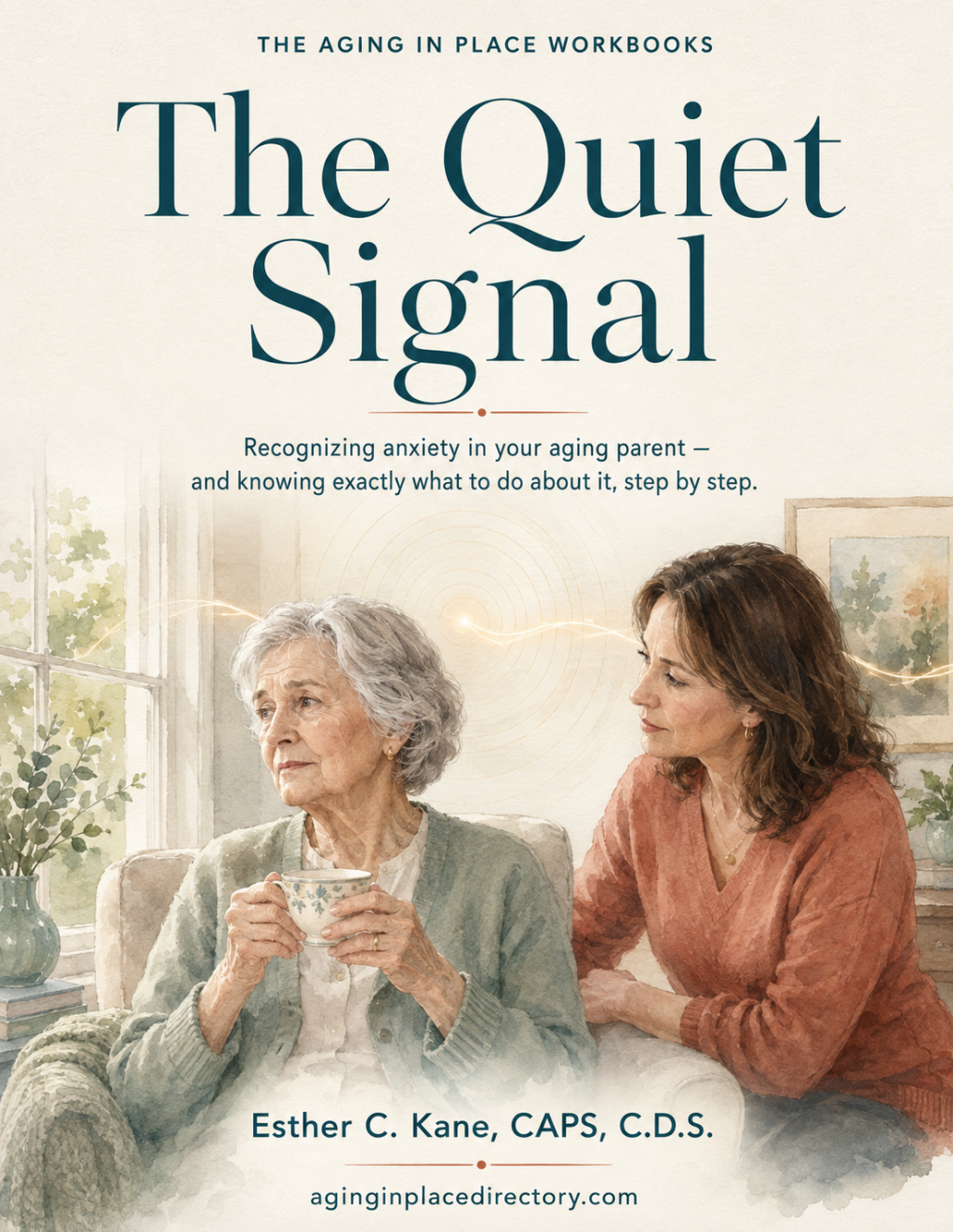
Anxiety in an older parent rarely sounds like worry; it shows up as a bad stomach, a night of no sleep, six phone calls in a day, and a world that keeps getting smaller.
Written by Esther C. Kane, CAPS, C.D.S., a retired occupational therapist and CARES® Dementia Specialist, this workbook helps adult children and family caregivers record what is really happening, raise it without shutting the conversation down, and walk into a short appointment with something a physician can use.
What’s inside:
- What anxiety looks like in an older adult, by channel
- The four conditions anxiety is most often mistaken for
- Warning signs that need a same-day call or 911
- A worksheet for writing down what you are seeing
- The common doorways that anxiety walks in through
- A worksheet for finding when it started
- A full list of what medications and supplements to gather
- A medication inventory sheet to fill in from photographs
- Five questions to ask a pharmacist
- A fourteen-day log with a daily 1 to 4 rating
- A worksheet for reading your own log
- An avoidance map of what she has stopped doing
- Openings that work, and what never to say
- What to do when she says no
- A worksheet to plan your opening sentence
- A one-page summary to hand a physician
- Questions to ask at the appointment
- How to build a daily routine that lowers anxiety
- Home and environment changes that help
- How to break the reassurance loop
- A one-week planning sheet
- A section on caregiver load and your own health
- Three cut-out cards: pharmacy, conversation, and call today
Secure checkout powered by Stripe.
You’ll see our parent company, Couch Cats, LLC on your statement!
Sample Preview
Important Disclaimer: The Quiet Signal is general educational material written by Esther C. Kane, a retired occupational therapist, and is offered as a planning and record-keeping tool only. It does not diagnose anxiety, depression, delirium, dementia, or any other condition, does not name, recommend, discourage, or adjust any medication, and is not a substitute for an in-person evaluation or for individualized advice from your parent’s physician, pharmacist, or a licensed mental health professional. Do not stop or change any medication without direction from a prescriber or pharmacist. Nothing here is legal, financial, or capacity advice, which belongs with an elder law attorney. If your parent has chest pain, severe shortness of breath, fainting, or you believe she is in immediate danger, call 911; if she talks about not wanting to be here or wanting it to end, call her physician today and reach the Suicide & Crisis Lifeline by calling or texting 988.