Browse All Workbooks & Checklists
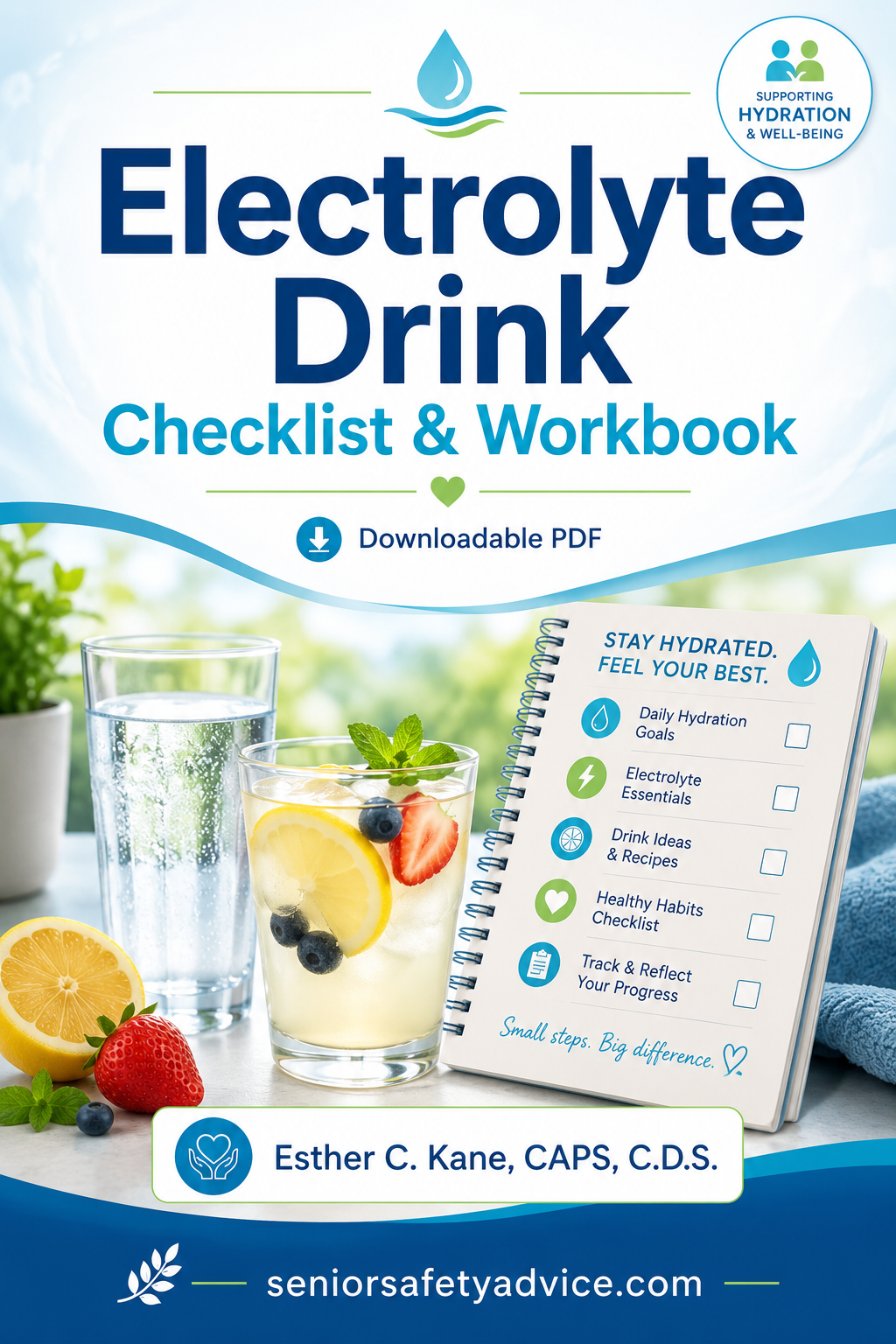
Families may assume an electrolyte drink is a simple solution when an older parent is not drinking enough, but the wrong product can create risks related to sodium, potassium, medications, kidney function, or heart health.
This checklist and workbook help families identify the real cause of reduced fluid intake, determine whether an electrolyte drink is appropriate, compare products safely, and create a physician-approved hydration plan.
Inside the checklist and workbook, readers will find:
- A quick electrolyte drink label-checking tool
- A review of health conditions that affect product safety
- A medication and supplement tracker
- A three-day fluid-intake log
- An explanation of why older adults become dehydrated more easily
- Warning signs that require urgent medical attention
- A worksheet for identifying why an older adult is drinking less
- Practical solutions for bathroom, access, taste, memory, and container barriers
- Guidance about swallowing difficulties and aspiration concerns
- Examples of when electrolyte drinks may be useful
- Guidance for when ordinary fluids are the better choice
- A side-by-side product comparison chart
- Label fields for sodium, potassium, sugar, and serving size
- Questions to ask a pharmacist or physician
- A two-week product trial and symptom log
- A warning-sign and escalation plan
- Guidance for responding when a parent refuses electrolyte drinks
- Alternative ways to improve fluid intake
- A one-page hydration plan to post on the refrigerator
- Space to record the approved product, amount, frequency, and review date
Secure checkout powered by Stripe.
You’ll see our parent company, Couch Cats, LLC on your statement!
SAMPLE Preview
Important Disclaimer: This checklist and workbook are provided for general educational and organizational purposes only. They are not medical advice and should not be used to diagnose dehydration, determine an appropriate fluid or electrolyte intake, select a product, or replace individualized guidance from a physician or pharmacist. Electrolyte needs and safe fluid intake vary based on age, health conditions, kidney and heart function, blood pressure, diabetes, medications, and prescribed fluid or sodium restrictions. Product ingredients and nutrition information may change, so always review the current label. Consult a qualified healthcare professional before giving an older adult an electrolyte drink or supplement. Do not delay urgent medical care for severe confusion, fainting, chest pain, breathing difficulty, inability to urinate, persistent vomiting or diarrhea, or other serious symptoms.