Browse All Workbooks & Checklists
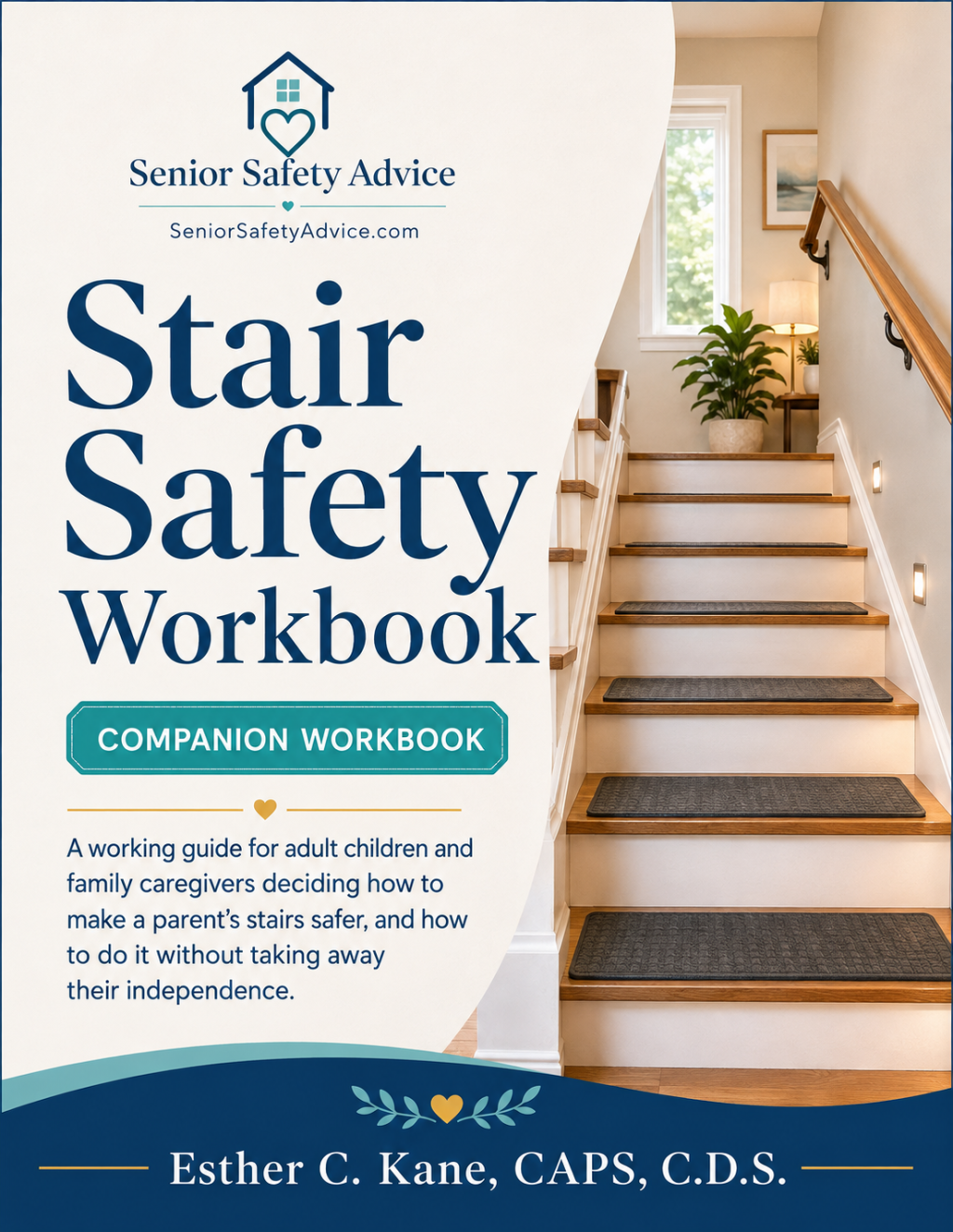
Families may recognize that an aging parent is becoming less safe or confident on the stairs but feel unsure which risks are most urgent, what modifications will help, or how to discuss changes without undermining independence.
This workbook helps them observe what is actually happening, evaluate the person and the staircase together, compare solutions, and create a realistic stair-safety plan with responsibilities, costs, and deadlines.
Inside the workbook, readers will find:
- A complete staircase inventory
- Guided observation of how an aging parent uses the stairs
- Space to document falls, near-misses, and changing abilities
- Guidance for addressing fear of falling
- A personal stair-risk assessment
- A staircase hazard audit
- Evaluations of handrails, traction, lighting, step edges, and landings
- Immediate, short-term, and long-term modification planning
- Comparisons of stairlifts, elevators, ramps, and one-level living
- An explanation of stairlifts versus portable stair climbers
- Guidance for rentals, apartments, short stairways, and vision limitations
- Eight realistic family caregiving scenarios
- Conversation guidance for discussing safety without taking away control
- A worksheet for recording agreements and refusals
- A modification budget and expense tracker
- Possible funding sources for stair-safety improvements
- Guidance for choosing OTs, CAPS professionals, and contractors
- Questions to ask before hiring a professional
- A contractor quote-comparison worksheet
- A stair-safety action plan with names and deadlines
- Triggers for deciding when greater changes are necessary
- Three-month, six-month, and post-event review schedules
- A professional and community-resource contact log
- Space to record immediate commitments and next steps
Secure checkout powered by Stripe.
You’ll see our parent company, Couch Cats, LLC on your statement!
Sample Preview
Important Disclaimer: This workbook is for educational purposes only and is not a substitute for medical advice, a professional home-safety assessment, or guidance from a qualified contractor. Stair modifications should be selected for the individual and installed according to current building codes and manufacturer instructions. Consult appropriate healthcare and home-modification professionals before making safety decisions. Senior Safety Advice and Esther C. Kane are not responsible for injuries, damages, or outcomes resulting from the use of this workbook.