Crafting for seniors is more than just a hobby, it’s a gentle, joyful way to boost dexterity, keep the mind active, and bring back a sense of purpose. Even if shaky hands, arthritis, or limited mobility make you doubt your abilities, the right tools and simple projects can open the door to creativity again.
Quick Rundown: Crafting Techniques for Seniors, Simple Adjustments That Keep Creativity Flowing
- Adapt the Tools: Ergonomic scissors, foam grips, and lightweight supplies make crafting easier on aging hands.
- Simplify the Steps: Breaking projects into smaller tasks reduces frustration and keeps focus on enjoyment.
- Choose Easy Materials: Large beads, bold markers, and pre-cut shapes are more manageable than tiny or complex pieces.
- Support Fine Motor Skills: Techniques like stamping, sponge painting, or collage work allow creativity without strain.
- Encourage Group Activities: Crafting with others adds social connection, motivation, and fun.
- Focus on Expression, Not Perfection: The goal is to spark joy and engagement, not flawless results.
If you’ve set aside your creative passions because you thought your hands couldn’t keep up, you’re not alone.
I’ve worked with many older adults in rehab units and home visits who felt the same way, until they rediscovered the confidence to create again.
In this article, I’ll share simple, safe, and inspiring ideas to help you embrace crafting again. Let’s begin with the basics: the simple skills that can spark joy.
I’ve spent years working with older adults in rehabilitation units and during home visits. I saw how simple art projects helped people smile again, even after a stroke or surgery.
I want to share those same techniques with you, ones that build hand strength, improve dexterity, support memory, and lift your mood.
Let’s explore the ways you can enjoy crafting again, safely and with confidence.
The Basics: Simple Crafting Skills That Spark Joy
To get started with crafting, you only need a few basic abilities. These include cutting, gluing, folding, threading, and painting. These sound simple, and they are, but they can do a lot for your hands and your brain.
One of my patients, Helen, had arthritis in both hands. She didn’t think she could do crafts anymore. We started by cutting paper with special loop scissors and gluing colorful scraps into a collage.
Her hands were shaky at first, but after a few weeks, she could cut clean edges. She was so proud she showed everyone her work.
Use tools that are easy to hold. Choose ergonomic scissors, wide-handled paintbrushes, and foam grips. Let yourself take small steps. Every snip, fold, or dab of glue is progress.
❓What’s the best way to store craft supplies safely at home?
💬 Keep supplies in clear bins with labels. Use lightweight containers with handles for easy lifting. Store sharp tools in closed boxes, and keep all materials in a cool, dry place that’s easy to reach.
Hand Coordination: Improving Dexterity Through Practice
Crafting can help you maintain fine motor skills, which support daily activities like buttoning a shirt or writing a note. It also improves hand-eye coordination and joint flexibility.
Try threading large beads onto string, weaving yarn through mesh, or doing finger painting with thick, bright colors. These kinds of crafts strengthen finger muscles while providing tactile stimulation and creative fun.
I remember Mr. James, a retired mechanic who had trouble with tremors. We worked on threading soft chenille stems through foam sheets. At first, it took all his focus. But he laughed when he saw how it slowly got easier.
He told me, “I feel like I’m tuning an engine again, only now I get to play with color!”
Use adaptive crafting tools and take breaks as needed. You’re improving with every session.
Brain Health: Boosting Memory and Focus With Art
Crafting supports mental agility and cognitive stimulation. Activities like coloring, cross-stitching, or using step-by-step patterns help keep your mind sharp.
These kinds of projects improve concentration, help with memory recall, and offer a calming sense of structure. For older adults with early memory loss, routine tasks like matching colors or repeating motions can bring comfort and confidence.
❓How often should I do crafting to see benefits for my hands and brain?
💬 Aim for 20–30 minutes a few times a week. Regular practice is more helpful than long sessions. Choose times when you feel most alert and rested.
Sewing Projects That Bring Peace and Purpose
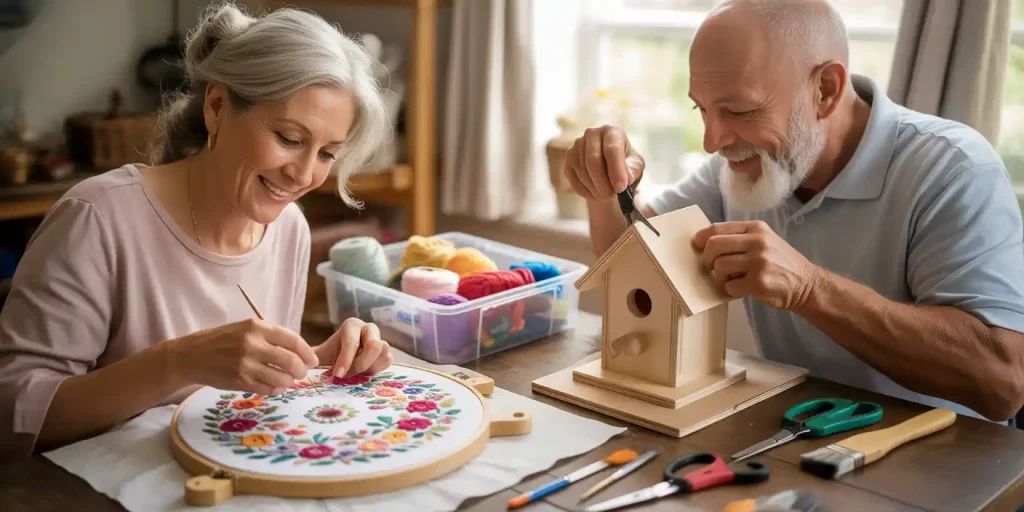
Hand stitching, cross-stitch, and even large-button sewing can be soothing. Start with felt kits or pre-punched fabric. Use high-contrast thread and a hoop frame to make each stitch easier to see and complete.
One afternoon in the rehab unit, I sat beside Maria, who was recovering from a hip fracture. We picked a simple sewing project with hearts and flowers.
She stitched slowly, pausing to smile. At the end of the week, she gave it to her granddaughter and said, “I made this with love, even if my hands don’t move like they used to.”
Learning Something New, Step by Step
Don’t worry about being perfect. Use large-print guides, follow video tutorials, or attend in-person workshops. Start small and repeat steps until you feel comfortable.
Crafting in a group builds connection and motivation. Sharing materials and stories, asking for help, and celebrating together creates social bonding and emotional support.
Crafts for Comfort, Not Perfection
You don’t need precision to enjoy crafting. Try open-ended projects like:
These creative options are great for seniors with arthritis or tremors. The freedom to experiment lets you relax, have fun, and express yourself without rules.
Creating with Limitations: Yes, You Can
If you have low vision or limited grip, try these tips:
- Use large beads or foam pieces
- Choose high-contrast materials
- Work with easy-to-hold tools
- Keep your workspace clutter-free
- Sit at a sturdy table with good lighting
Simple crafts with repeated movements can be especially helpful if you have cognitive changes. Let your hands lead the way.
❓Can crafting help with early stages of dementia?
💬 Yes, crafting that uses repetition and color matching can support memory and reduce anxiety. Choose projects that feel familiar and include simple steps.
Stay Social: Crafting Builds Community
Art can connect generations. Grandparents and grandchildren can create together. Local senior centers often host group crafting activities. These moments build self-esteem and prevent loneliness.
Give finished projects as gifts, decorate your home, or share them with friends. These small joys create big emotional rewards.
❓What kind of crafts work well with grandkids?
💬 Try simple projects like painting rocks, making friendship bracelets, or building photo frames. These are fun, easy, and perfect for all ages.
Seasonal Crafts Keep Things Fresh
Changing crafts with the seasons keeps it exciting:
- Fall: Leaf prints, pumpkin painting, thank-you cards
- Winter: Snowflakes, paper garlands, holiday ornaments
- Spring: Painted flower pots, egg decorating, garden signs
- Summer: Patriotic stars, seashell frames, watercolor sunsets
Memory Projects That Tell Your Story
Crafts can help you remember and share your life:
- Decorate a memory box with keepsakes
- Create a photo collage with captions
- Build a simple scrapbook with dates and names
These projects support memory recall and spark meaningful conversations.
Stay Safe While You Create
Before you start, make your space safe:
- Use non-toxic, washable supplies
- Choose adaptive tools when needed
- Work in good lighting
- Sit in a stable chair
- Keep sharp tools within easy reach
Crafting should be relaxing, not risky.
Final Thoughts: You Are Still Creative
You might have slowed down. Your hands may not move the way they once did. But your heart? Your ideas? They’re still full of color.
Crafting lets you express yourself, stay sharp, and feel proud. You’re not just making crafts, you’re making meaning.
You are capable. You are creative. And you deserve to feel that again.
Let’s keep crafting, one stitch, one swirl, one sparkle at a time.