Elderly-friendly slippers for fall prevention are more than comfort, they are part of your safety plan. Many seniors fall because of slippery soles, backless mules, or foam shoes that wobble.
Choosing non-slip slippers with the right support can lower fall risk and restore confidence at home.
Quick Rundown: Safe Bathroom Slippers for Seniors
- Slip-Resistant Grip: Outsoles tested on wet or soapy floors help prevent dangerous slips.
- Balance Support: Closed-back design with a deep heel cup keeps heels contained and posture steady.
- Custom Fit: Adjustable hook-and-loop straps ease pressure on swollen or sensitive feet.
- Stable Steps: Structured arch support offers better balance than overly soft memory foam.
- Dedicated Pair: Keeping a bathroom-only slipper with water-shedding tread improves hygiene and safety.
- Low Heel Advantage: A heel height of one inch or less with a firm outsole improves ground feel and stability.
Safe slippers are not just about comfort, they are a daily tool to protect your independence. Let’s look at the features that matter most.
Why Do Slippers Matter for Fall Prevention?
Slippers are the shoes most older adults wear indoors, where most falls occur. Loose or backless slippers slip off the foot, smooth soles slide on tile, and soft memory foam can cause wobble.
I remember visiting my neighbor Carol, who wore fluffy slippers with no heel cup. One evening she lost balance in her kitchen when her heel slipped sideways on wet tile. She wasn’t badly hurt, but it was a close call. A better outsole design could have prevented that moment.
❓Can I wear outdoor shoes inside instead of slippers?
💬 Outdoor shoes may have traction, but they also bring in dirt and bacteria. Elderly-friendly slippers designed for indoor flooring give non-slip grip without tracking germs through your living space.
What Features Make Elderly-Friendly Slippers Safer?
The safest slippers combine slip resistance, secure fixation, and support.
- Slip-resistant outsole: Look for slippers tested with ASTM F2913 or SATRA TM144, showing a coefficient of friction of 0.40 or higher. Patterns like siped or chevron tread improve traction on oily-wet tile or soapy bathroom floors.
- Closed-back design: Deep heel cup and structured heel counter keep your foot contained. Backless mules are more likely to cause falls.
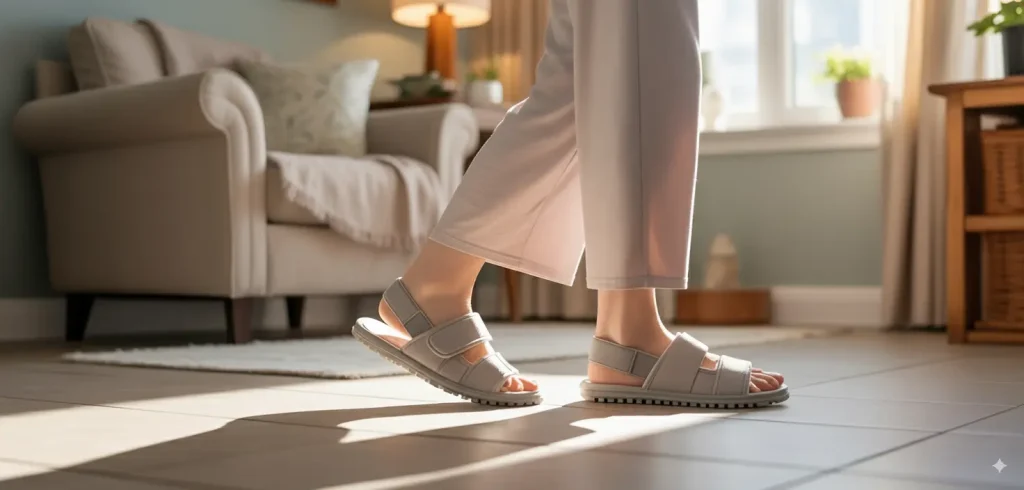
- Adjustable closures: Hook-and-loop straps let you customize fit for swelling or edema.
- Supportive footbed: Structured arch support and removable insole options for orthotics provide stability. Avoid overly plush memory foam that compresses unevenly.
- Heel height: Keep heels at one inch (2.5 cm) or less to prevent forward tilt and improve balance.
- Outsole firmness: Thin, firm soles improve ground feel and let you sense changes in flooring, unlike thick, unstable soles.
❓Should slippers have removable insoles?
💬 Yes, removable insoles allow you to add custom orthotics or replace worn footbeds. This helps seniors with plantar fasciitis, arthritis, or other foot conditions.
How Do I Choose Slippers for Medical Conditions?
Every foot is different, and slipper choice should fit your needs.
- Edema or swelling: Extra-depth design and adjustable hook-and-loop straps ease pressure.
- Neuropathy or diabetes: Seam-free linings reduce skin irritation, while firm soles improve feedback.
- Plantar fasciitis: Structured arch support insoles reduce heel pain.
- Bunions or hammertoes: Stretch uppers and wide toe boxes prevent rubbing.
- Arthritis: Lightweight slippers with easy closures reduce hand strain.
When I cared for my father-in-law, he lived with diabetes and swelling. The only slippers that worked were extra-depth designs with Velcro straps and seam-free linings. Without them, he slipped out of regular shoes or developed painful blisters.
❓Do heated slippers help or hurt fall prevention?
💬 Heated slippers can soothe cold feet, but many are bulky or lack slip-resistant soles. If you want warmth, choose a model with closed backs, firm outsoles, and secure closures.
Should I Use Different Slippers in Wet and Dry Areas?
Yes. Use one bathroom-safe pair with water-shedding tread for kitchens and bathrooms, and a clean, breathable pair for bedrooms and living areas. This prevents slipping on wet surfaces and keeps bacteria out of your bed.
❓Are washable slippers safe for seniors?
💬 Washable slippers are safe if they keep their grip after cleaning. Check tread after each wash, because frequent laundry can wear down traction.
Are Non-Slip Socks a Good Alternative?
Non-slip socks help for short transfers, like bed to bathroom, but they are not a full substitute for safe slippers. They lose grip quickly, collect germs, and have poor traction on soapy tile. If you use them, change them often and avoid wearing them inside shoes.
How Often Should Slippers Be Replaced?
Replace slippers when tread smooths or lugs wear down. Even the best slip-resistant outsole loses traction over time. A safe rule is to check every three months and replace at the first signs of wear.
❓How do I know if slippers are too heavy?
💬 If lifting your feet feels tiring or you shuffle more than usual, the slippers are too heavy. Choose lightweight, not clunky, construction to prevent fatigue and maintain a natural stride.
How Can I Test Slippers Before Buying?
Always test slippers on multiple floor types. Walk on tile, hardwood, and carpet to see if the outsole grips. Lift your heel slightly, if the slipper slips off, it lacks secure fixation.
Do Heel Collars and Ankle Support Matter?
Yes. Slippers with a padded heel collar or ankle wrap reduce ankle rollover and keep your heel in place. This adds stability compared to flat, open-back slippers.
How Do Safe Slippers Improve Confidence?
Safe slippers reduce fear of falling, which is as important as the physical grip. Fear changes how you walk, leading to shorter steps and poor balance. When you trust your shoes, you take normal strides, which lowers your risk even further.
What Else Should I Do Alongside Safe Slippers?
Slippers are one part of fall prevention. For the best protection:
- Balance and strength exercises: Tai Chi, chair stands, or simple leg lifts improve stability.
- Home modifications: Remove loose rugs, add grab bars, and improve lighting.
- Health checks: Ask your doctor to review medications, vision, and foot health.
Relevant Amazon Products
Here are some slippers/shoes available on Amazon that align with features like non-slip soles, closed back, adjustable fit, or extra width:
- Diabetic Slip Resistant Adjustable Wide Fit Slippers
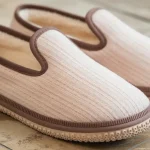
- Non-Skid House Slippers, Closed-Back Ballet Style
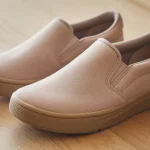
- Slip Resistant Rubber Sole Indoor/Outdoor Slippers
- Orthopedic Slippers with Arch Support
Quick Questions and Answers
❓Are backless slippers safe for seniors?
💬 No. Backless slippers are more likely to slip off and cause falls. Choose closed-back, secure designs with heel containment.
❓What sole material is best for fall prevention?
💬 Rubber with slip-resistant tread is best. Look for siped patterns or chevron grooves that channel water and grip tile.
❓What heel height should slippers have?
💬 A heel one inch or less is safest. Higher heels increase the chance of tripping.
❓Can slippers really prevent falls?
💬 Yes. Research shows that slip-resistant soles, secure fixation, and supportive insoles reduce falls and increase balance confidence.
Conclusion
Slippers should give you warmth and comfort, but they should also protect you. By choosing elderly-friendly slippers with tested slip-resistant outsoles, closed backs, adjustable straps, supportive insoles, and low heel height, you lower your fall risk every day.
Pair the right footwear with balance exercises and a safe home environment. Your steps at home matter. Start with slippers that keep you safe.