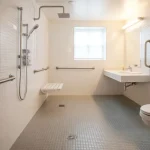
A zero threshold shower, also called a curbless or barrier-free shower, makes aging in place safer, easier, and more comfortable.
It removes the step into the shower, lowers the risk of falls, and creates a space that is both accessible and modern. This design is one of the most important bathroom upgrades for seniors and caregivers.
Quick Rundown: The Role of Zero Threshold Showers in Aging in Place
- Removes Barriers: No curb means fewer tripping hazards for seniors and caregivers.
- Supports Independence: Roll-in entry works with walkers and wheelchairs.
- Improves Caregiving: Built-in benches and handheld showers make assisting loved ones easier.
- Blends Safety with Style: Spa-style design avoids an “institutional” look.
- Prevents Costly Redos: Doing it right now avoids expensive remodels after a fall or surgery.
- Easier to Clean: Continuous waterproofing and fewer seams reduce mold and grime.
Let’s walk step by step through why zero threshold showers matter, how they’re designed, what mistakes to avoid, and what tradeoffs you should know before remodeling.
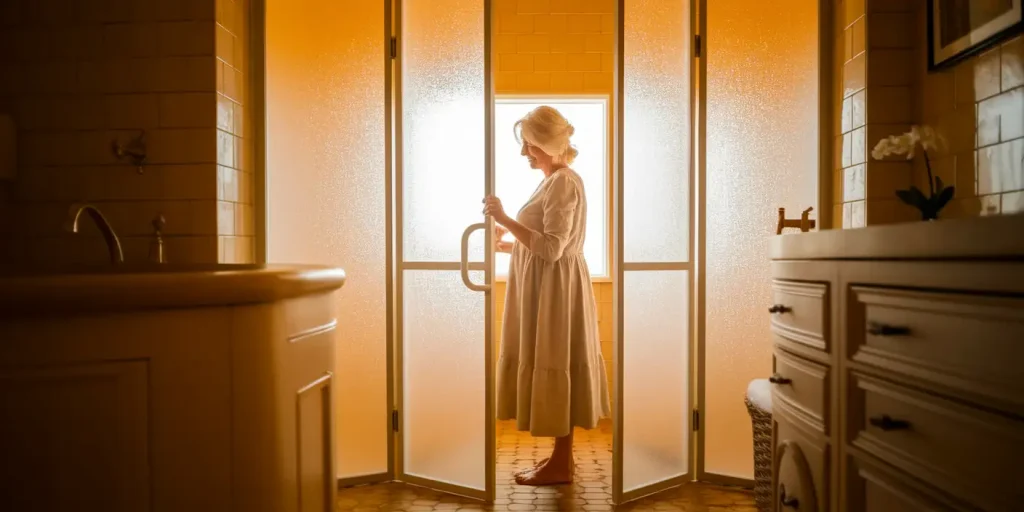
If you want to learn all about zero-threshold showers, you’ve come to the right place.
This guide will explore the benefits of a zero-threshold shower area, explain how these showers work, and discuss the pricing.
What Is A Threshold In A Shower?
Many shower designs, perhaps even most, have at least one threshold.
What exactly does that mean, though? What is a threshold in a shower?
A shower threshold, which is also known as a shower-pan threshold, simply refers to the front edge that runs along the floor of the shower.
You know, the front edge that you need to walk over to get into the typical walk-in shower so you can wash off the day’s stresses? That edge.
A shower space can have a single threshold or double threshold shower.
A single-threshold shower has three enclosed sides such as an alcove or another set of permanent walls.
The fourth side of the shower is where the plastic, fiberglass, or glass shower door is installed.
Double-threshold showers, although a lot less common, are another bathroom design choice.
This type of shower enclosure would have two permanent walls and then two plastic, fiberglass, or glass walls that are installed perpendicularly to the other walls.
Why Do Zero Threshold Showers Matter for Aging in Place?
They matter because they keep seniors safer and more independent while reducing fall risk. Bathrooms are where most serious injuries happen, and removing the barrier at the shower entrance is one of the simplest ways to prevent them.
When my father-in-law came home after hip surgery, he couldn’t lift his foot over the tub wall. We had to sponge bathe him in the meantime. A roll-in shower would have given him immediate safe access.
- Falls in the bathroom are the #1 cause of injuries in older adults
- A barrier-free entry makes it easier for both seniors and caregivers
- It’s a future-proof remodel that supports independence
Does A Shower Need A Threshold?
Thresholds in showers might be a frequent addition, but are they truly needed?
Not at all!
Curbless showers, when they’re installed correctly, feature a slope along the floor that measures approximately 1 ½ to two inches.
This slope is designed to direct the water flow from the location of the high point of the floor down to the center drain.
Another benefit of having a proper slope is that it prevents water from leaking all over your floor whenever you bathe in a zero-threshold shower.
That’s usually the duty of a typical threshold as well, but omitting it doesn’t leave your bathroom a sopping mess!
❓ Do zero threshold showers leak water into the bathroom?
💬 A properly designed wet-room style shower should not leak. The key is having the floor sloped at least ¼ inch per foot toward the drain and extending the waterproof membrane beyond the shower area. Adding frameless glass panels or half walls also helps contain splash.
Why Have A Curbless Shower?
Are curbless showers truly all that advantageous? We think so for the following reasons.
No More Tripping Hazards
Let’s be real, a shower threshold is indeed a tripping hazard, both on your way into and out of the shower.
If you’re in a rush because you’re late for work, you’re groggy and half-awake in the morning because you haven’t yet had your coffee, or you simply aren’t paying attention, it’s easy to take a tumble on a shower threshold.
Also, once the threshold is wet, your rate of slips and falls can increase.
Even if you’re a healthy, able-bodied adult, you don’t want to take a hard fall from a shower threshold.
You’ll come tumbling down on the tiled floor, which is unforgiving. You could end up with bruises or perhaps even a fracture or a broken bone if you hit the floor just right.
Seniors (who should be considering using a shower chair for safety) can end up even more hurt, as they have less mobility and more fragile bones at their age. The rate of a broken bone from a shower threshold trip is a lot higher.
A curbless shower stall would eliminate (or greatly reduce) those risks.
Modernizes Any Bathroom
Shower thresholds just look kind of dated, don’t you think? Nowadays, an open concept bathroom is more popular.
A zero-entry shower has more visual appeal, so your bathroom looks fresher, newer, brighter, and a lot more modern. Your home’s curb appeal could shoot right up.
Creates The Illusion Of More Space
Even if you have a moderately large bathroom already, anyone would want their bathroom to look larger still.
That’s exactly what a zero-threshold shower does. Without the shower curb, the shower size naturally looks larger.
Some homeowners even opt for no definable shower enclosure, eschewing a glass wall.
This will create the greatest illusion of a bigger bathroom with more open spaces but isn’t necessary to enjoy the feeling of roominess that a zero-threshold shower delivers.
Greater Accessibility
We already talked about the tripping risks that a threshold poses in a shower.
Once that threshold is eliminated, it’s a lot easier for family members of all ages to get into a curbless shower.
There is a far reduced tripping hazard risk, as mentioned.
The slight slope of an accessible shower is so natural that it too won’t leave anyone stumbling or falling down, even when there is a wet area on the slope.
Now the whole family – from children to grandparents – can use the shower without worry. Your peace of mind will be a lot better too.
Easy To Clean
You’ll also find that it’s a lot easier to clean a curb-less shower than it is an enclosed shower.
You can enjoy a full range of motion as you clean so you don’t feel penned in.
How Do You Design a Safe Zero Threshold Shower?
A safe design includes the right drain, slope, waterproofing, tile, and support features. Each part works together to keep the shower safe and dry.
Shower controls: Install ASSE 1016 thermostatic mixing valves for anti-scald safety and place handheld showers on slide bars within reach.
Drain placement: Linear drains placed opposite the entry work best.
Drain capacity: A back-wall drain can handle multiple showerheads or sprays. An entry drain often has a lower flow rate and may not keep up with high water volume.
Slope: Standard is ¼ inch per foot (2%) toward the drain.
Waterproofing: Use a bonded waterproof membrane and extend it into the dry zone.
Tile choice: Small mosaic tiles, textured porcelain, or slip-resistant finishes with DCOF ≥ 0.42.
Grab bars & seating: Blocking at 33–36″ for bars, and fold-down seats at proper transfer height.
Shower controls: Install ASSE 1016 thermostatic mixing valves for anti-scald safety and place handheld showers on slide bars within reach.
❓ How do I keep a zero threshold shower from being slippery?
💬 Choose textured tiles or small mosaics with grout lines for traction. Look for a slip resistance rating of DCOF ≥ 0.42. The texture plus grout grid makes it safer to walk even when wet.
Walk-in Shower Costs – How Much More Expensive Is A Curbless Shower?
You may be interested in a curbless shower for your home for a variety of reasons, such as the look of a larger bathroom, the accessibility for older members of your family, or simply because your bathroom desperately needs a remodel.
Just like how walk in tubs are pricier than traditional tubs, curbless showers are more expensive than traditional showers, but by how much? Let’s compare some prices.
According to Angi, the average cost of a shower is between $2,400 and $8,800.
If yours is a walk-in tiled shower, the price is $4,200 to $8,500. If you add a tub to your shower, that’s usually costly too, with the standard price for the combo being $4,200.
Angi, in a separate article, notes that going curbless increases the price of a shower by $500 to $700 more.
For some homeowners, however, that might not be that much larger of a sum to pay than what you’d spend on a traditional curbed shower.
❓ Can a zero threshold shower be added to any home?
💬 Yes, but the method depends on your floor. Wood joist systems are recessed or lowered. Concrete slabs are cut and re-poured for slope. Both work, but slab installs usually cost more.
❓ Are zero threshold showers covered by insurance or Medicare?
💬 In most cases, Medicare and private insurance don’t pay for bathroom remodels. Some local grants, VA benefits, or long-term care policies may help. Always ask your provider about possible coverage.
Drawbacks Of A Zero-Threshold Shower
Others might have a harder time justifying the cost of a zero-threshold shower.
After all, as much as we’ve touted the benefits of a curbless shower, these showers are not perfect.
If you cut corners on the installation to save a couple of bucks and the installers don’t do a good job, you might not get the correct slope. And then, the water in your zero-threshold shower might not drain properly.
It will leak all over the rest of the bathroom. You’ll be distressed if you have to keep sopping up a watery mess from half of the bathroom floor each time someone takes a shower.
Curbless showers do not get as warm as an enclosed shower, so during the winter, you will be wide awake if you prefer to start your mornings with a shower. Your bathroom will be cold!
This also applies if you live in a consistently chilly climate. You might not be the best candidate for a zero-threshold shower unless you like a good military shower.
The lack of privacy might also deter some!