For many people with dementia, a pet isn’t just an animal, it’s comfort, routine, and unconditional love. That’s why the thought of taking a pet away can feel heartbreaking. Yet sometimes safety, health, or caregiving realities make it necessary.
The emotional weight of this decision can leave you feeling torn between protecting your loved one and not wanting to cause them distress.
You’re not alone in this struggle. While there’s no perfect solution, there are compassionate ways to handle the transition that honor both your loved one’s needs and the well-being of the pet.
Quick Rundown: When Dementia Makes Pet Care Unsafe
- Pets Bring Comfort: Animals offer love and routine, but dementia may make care unsafe or overwhelming.
- Warning Signs: Neglect, safety hazards, or pet stress can indicate it’s time to step in.
- Gentle Transitions: Involve your loved one when possible, frame rehoming as temporary, and provide reassurance.
- Stage-Specific Approaches: Tailor conversations to early, middle, or late dementia with empathy and clarity.
- Plan Ahead: Identify future caregivers, use adoption resources, and explore pet-friendly memory care.
- Support Both Sides: Memory books, supervised visits, and therapy animals help ease emotional loss.
With that understanding, let’s walk through how to compassionately take a pet away from a dementia patient while preserving dignity and peace of mind.
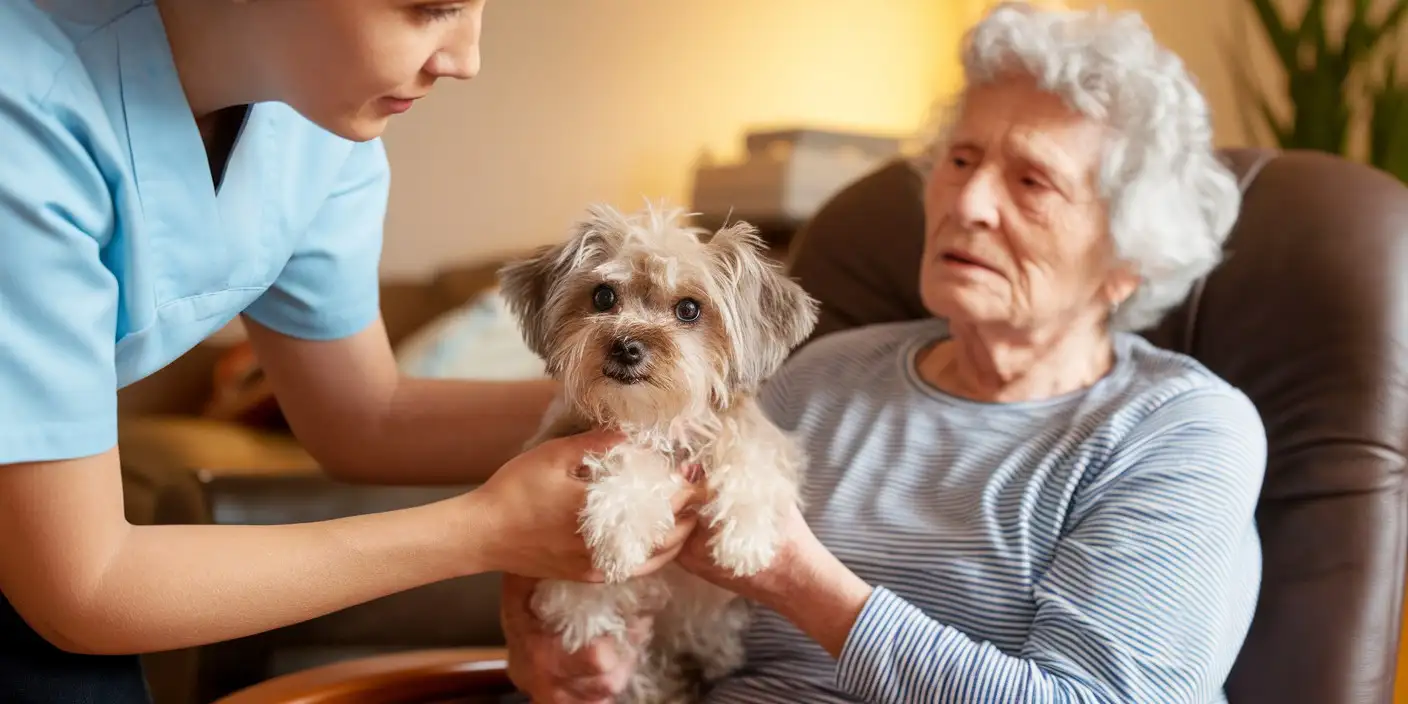
Recognizing When Pet Care is Unsafe
Pets bring comfort, companionship, and joy, but dementia can make it hard for someone to meet their pet’s needs.
You might notice signs like forgetting to feed or water the pet, neglecting grooming or veterinary visits, or leaving doors open, which could lead to the pet wandering off. Other safety concerns include tripping over the pet or becoming frustrated with them due to memory loss or confusion.
Changes in the pet’s behavior can also signal a problem. For example, a dog might bark more often or show signs of stress if their routine is disrupted.
These changes don’t mean your loved one doesn’t care – they’re simply part of how dementia affects daily life.
I remember working with a family whose mother adored her small dog but began forgetting to feed him regularly. The dog became anxious and lost weight. It was a tough decision, but we found a loving home for the dog where he could thrive while ensuring the mother’s safety.
How Pets Benefit Individuals With Early Dementia
Before discussing rehoming, it’s important to recognize the positive role pets can play in the early stages of dementia. Pets provide emotional support, reduce anxiety, and encourage routines that help maintain cognitive function.
For example, walking a dog can promote physical activity and offer a sense of purpose. If your loved one is still able to care for their pet safely, this bond can be incredibly beneficial.
However, as dementia progresses, these benefits may shift into challenges that require careful planning.
Approaching the Conversation With Sensitivity
Talking about rehoming a pet is emotional and requires sensitivity. The way you approach this conversation can vary depending on the stage of dementia your loved one is in.
Understanding their cognitive abilities at each stage can help you tailor your approach to ensure the discussion is as compassionate and effective as possible.
Early Stage Dementia
In the early stages of dementia, your loved one may still have good insight into their situation and the ability to participate in decision-making. During this time:
- Acknowledge Their Feelings: Start by affirming their love for their pet. For example, “You’ve always taken such great care of Max. He’s lucky to have you.”
- Involve Them in Planning: Discuss the challenges they’re facing and brainstorm solutions together. For instance, you might explore options like having a family member help with pet care or finding a nearby friend to adopt the pet so visits are possible.
- Focus on Collaboration: Use phrases like, “Let’s figure out what’s best for both you and Max,” to emphasize teamwork.
Middle Stage Dementia
As dementia progresses, memory loss and confusion may make it harder for your loved one to fully understand the situation. At this stage:
- Simplify the Conversation: Use clear, straightforward language without overwhelming them with too many details. For example, “Max needs someone who can take him for walks every day. We can find him a home where he’ll get lots of love and care.”
- Provide Reassurance: Remind them that this decision is about ensuring their pet’s happiness and safety. Regularly reassure them that their pet will be well cared for.
- Redirect When Necessary: If they become upset or resistant, gently redirect the conversation to a positive memory about the pet or take a break and revisit the topic later.
Late Stage Dementia
In the late stages of dementia, communication may be limited, and your loved one might not fully comprehend the situation.
- Focus on Comfort: Avoid lengthy explanations that could cause distress. Instead, provide simple reassurances like, “Max is happy and safe.”
- Use Visual Aids or Mementos: Photos of their pet in their new home or a stuffed animal resembling their pet can help provide comfort and maintain a sense of connection.
- Limit Emotional Overload: If discussing rehoming directly seems too upsetting, focus on creating a calm environment and ensuring their emotional well-being.
General Tips for All Stages
Regardless of the stage of dementia:
- Choose a quiet moment when your loved one is calm.
- Use compassionate language that focuses on safety and love for the pet.
- Listen carefully and validate their feelings without placing blame.
- Take breaks if emotions run high – this conversation doesn’t need to happen all at once.
By tailoring your approach to your loved one’s cognitive abilities, you can ensure that this difficult conversation is handled with empathy and respect.
Remember, your goal is to prioritize both their well-being and their pet’s happiness while maintaining a sense of dignity throughout the process.
Planning Ahead for Pet Care
If your loved one has recently been diagnosed with dementia, now is the best time to start planning for their pet’s future care.
Discuss what will happen if they can no longer care for their furry friend. Identify family members or friends who might step in as caregivers or research local rescue organizations specializing in rehoming pets from older adults.
Having a plan in place can ease anxiety down the road – for both you and your loved one. Tools like written agreements about who will take over pet care can provide clarity and peace of mind.
Practical Resources for Rehoming Pets
When it’s time to find a new home for a beloved pet, there are several resources available:
- Adopt-a-Pet.com Rehome Tool: This platform connects pet owners with potential adopters.
- Local Rescue Organizations: Many rescues specialize in rehoming pets from older adults; check websites like Petfinder.com for options near you.
- Social Media: Posting about the pet on platforms like Facebook can help find trusted family members or friends who are willing to adopt.
- Veterinary Clinics: Some clinics have bulletin boards or networks that connect people looking to adopt pets.
Exploring Pet-Friendly Memory Care Options
If your loved one is transitioning into assisted living or memory care, consider facilities that allow pets or offer therapy animal programs.
These environments enable residents to maintain their bond with animals while ensuring proper care. If keeping the pet isn’t an option, ask about therapy programs that use animal-assisted interactions to provide comfort.
Easing Transitions With Practical Tips
Making this change easier requires thoughtful steps:
- Create a Memory Book: Fill it with photos and stories about your loved one’s time with their pet.
- Maintain Familiar Routines: Keep other aspects of their daily life consistent during the transition.
- Arrange Supervised Visits: If possible, let your loved one see their pet occasionally under supervision.
- Offer Comfort Objects: A stuffed animal or photo of their pet might help ease feelings of loss.
Ensuring Pet Welfare During Rehoming
Before rehoming a pet:
- Schedule a veterinary check-up to ensure they’re healthy and up-to-date on vaccinations.
- Conduct a behavioral assessment to find an environment that suits their temperament.
- Share detailed information about the pet’s likes, dislikes, and daily habits with their new caregiver.
These steps ensure that the transition is smooth and that the pet thrives in its new home.
Addressing Emotional Impact
This decision isn’t easy – for you or your loved one – but it’s made out of love and concern for everyone involved. It’s normal to feel guilt or sadness during this process.
Remind yourself that prioritizing safety doesn’t diminish your loved one’s bond with their pet – it honors it by ensuring their furry friend gets the care they deserve.
If possible, arrange supervised visits so your loved one can still see their pet occasionally – this can provide comfort without compromising safety.
And don’t hesitate to lean on support networks like caregiver groups or trusted friends who understand what you’re going through.
Conclusion
Making the decision to rehome a beloved pet is never easy – but it’s an act of love when done thoughtfully and compassionately.
Remember, you’re prioritizing safety while honoring the bond between your loved one and their furry companion. Take it one step at a time, reach out for help when needed, and know that you’re doing your best in a difficult situation.