If you’ve ever worried about how to help a loved one get safely up and down the stairs when they can’t walk well, or at all, you’re not alone. Stairs can quickly turn from a simple daily task into one of the biggest safety risks in the home.
I’ve seen many families face this challenge after a fall, surgery, or sudden change in mobility, unsure how to move forward without major home renovations.
Here’s the good news: you don’t always need to install a permanent stairlift. A mobile stairlift can provide a safe, flexible solution that moves your loved one between floors, without any construction, rails, or electrical work.
In this guide, you’ll learn what a mobile stairlift is, how it works, who it’s best suited for, and what to consider before buying or renting one. My goal is to help you feel confident choosing the right option to keep your loved one safe, comfortable, and independent at home.
Quick Rundown: Understanding Mobile Stairlifts, Safe, Flexible Help on the Stairs
- Know what it is. A mobile stairlift is a portable, battery-powered chair that safely moves someone up or down stairs without permanent installation.
- Check where it fits. It works on most indoor and outdoor stairways, including straight or curved ones.
- Use it when mobility changes. Ideal for temporary needs like post-surgery recovery or short-term caregiving situations.
- Understand who operates it. Most models require a caregiver to guide and control the lift, making safety training important.
- Compare before buying. Look at weight limits, battery life, comfort features, and ease of use.
- Plan for safety. Always practice with a professional before regular use and follow manufacturer guidelines.
- Think ahead. A mobile stairlift can be a bridge solution while you explore long-term home modifications or accessibility plans.
With the right equipment and a bit of guidance, even tricky stairs don’t have to stand in the way of safety and independence. Now let’s take a closer look at how mobile stairlifts work and what to know before bringing one into your home.
This article will help you understand both options, so you can confidently choose the one that best meets your loved one’s mobility needs.
What Is a Mobile Stair Lift?
A mobile stair lift is a portable device that helps individuals with limited mobility move up and down stairs. Unlike traditional stair lifts, mobile versions do not require installation.
They typically consist of a chair mounted on a set of tracks that can be moved between different staircases. This can be a huge advantage for caregivers who may need to assist their loved one in different homes or parts of the house.
What Is a Traditional Stair Lift?
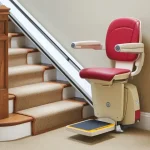
A traditional stair lift is permanently installed on a staircase. It involves a motorized chair attached to a rail that runs along the stairs.
While this type of lift is more robust and may offer more comfort, it requires professional installation and modifications to the home.
Key Differences Between Mobile and Traditional Stair Lifts
| Feature | Mobile Stair Lift | Traditional Stair Lift |
| Installation | No installation required; portable | Requires permanent installation on stairs |
| Flexibility | Can be moved between different locations | Fixed to one staircase |
| Cost | Generally lower due to no installation | Higher due to customization and installation |
| Usage | Ideal for temporary or multi-location use | Best for long-term use in one home |
| Portability | Lightweight, foldable, and easy to store | Fixed in place; cannot be moved |
Installation Requirements
Mobile stair lifts don’t require any changes to the home. This makes them perfect for rental properties, temporary use, or for individuals who don’t want to make permanent changes to their house.
They are especially useful if you’re caring for someone who may need mobility assistance in multiple locations.
On the other hand, traditional stair lifts are permanently installed on the staircase.
If your loved one is planning to stay in their home for a long time and will need a long-term solution, this might be the better option.
Keep in mind, however, that installation requires both time and money.
Flexibility and Portability
If your loved one only needs help on the stairs for a short time (for example, after surgery), a mobile stair lift is likely the best choice.
These lifts are lightweight, easy to move, and can be used on different staircases. Some models can be folded up, making them simple to store when not in use.
In contrast, traditional stair lifts are fixed in place. They are better suited for seniors who will need permanent assistance navigating their stairs.
Because they are not portable, they provide a more stable and permanent solution, but at the cost of flexibility.
Cost Considerations
Cost is often a major concern for caregivers. Mobile stair lifts generally cost less upfront since they do not require professional installation.
You simply buy the unit and start using it right away.
Traditional stair lifts, however, are more expensive because they need professional installation and possible home changes.
The total cost can be much higher, but if you’re looking for a long-term solution, this investment may be worth it.
Safety and Usability
Both types of stair lifts offer safety features like seatbelts, non-slip footrests, and emergency stop buttons.
Some additional safety features include:
- Battery backup systems to ensure the lift works during power outages
- Anti-slip surfaces on the chair and footrest
- Sensors that detect obstacles on the stairs
Mobile stair lifts are designed for temporary or emergency use, and while safe, they may require more manual operation, often involving a caregiver to assist.
Traditional stair lifts, on the other hand, come with more advanced safety features and are generally easier for the user to operate independently.
They are ideal for seniors who need long-term assistance and want to feel more in control of their mobility.
Quality of Life Benefits
Stair lifts can greatly improve the emotional and mental health of seniors. Some benefits include:
- Greater independence: Seniors can move freely around their homes without fear of falling.
- Increased social participation: They can more easily join family gatherings or social events on different floors of the home.
- Reduced caregiver stress: Family members worry less about their loved one’s safety on the stairs.
- Improved confidence: Seniors feel more secure and confident in their ability to navigate their homes.
Temporary vs. Permanent Use Scenarios
Mobile stair lifts are ideal for:
- Short-term recovery after surgery
- Use in rental properties where permanent changes aren’t allowed
- Visiting different homes of family members
Traditional stair lifts are best for:
- Long-term home use for seniors aging in place
- Homes with unique staircase designs that require custom installation
- Individuals who need daily, consistent stair assistance
Which Is Right for You?
If you’re a family caregiver, the decision between a mobile and traditional stair lift comes down to your loved one’s specific needs:
- Choose a mobile stair lift if you need a flexible, temporary solution that can be used in different locations or if your loved one is recovering from surgery or injury.
- Choose a traditional stair lift if your loved one needs long-term assistance and you want a permanent, stable solution that requires less caregiver involvement.
Questions To Ask Yourself
When deciding between a mobile stairlift and a permanent one, family caregivers should consider several important factors.
Here’s a comprehensive list of questions caregivers can ask themselves to help make an informed decision:
Mobility Needs
Current and Future Requirements
- How severe are the mobility issues of the person needing the stairlift?
- Is the condition likely to improve, remain stable, or deteriorate over time?
Frequency of Use
- How often will the stairlift be used daily?
- Is it needed for multiple floors or just a single staircase?
Home Environment
Staircase Configuration
- Is the staircase straight or curved?
- Are there any landings or turns that might affect installation?
Space Considerations
- Is there enough room on the staircase for a permanent installation?
- Is there adequate space at the top and bottom of the stairs for safe entry and exit?
Financial Aspects
Budget
- What is the budget for this mobility solution?
- Are there any financial assistance programs or insurance coverage available?
Long-term Costs
- What are the maintenance requirements and associated costs for each type?
- What is the expected lifespan of each option?
Flexibility and Portability
Temporary vs. Permanent Need
- Is the need for a stairlift likely to be temporary or long-term?
- Might the user’s living situation change in the near future?
Multi-home Use
- Does the user split time between different residences?
- Would a portable option be beneficial for travel or visiting family?
Installation and Maintenance
Installation Process
- How disruptive would the installation of a permanent stairlift be?
- Are there any structural modifications required for either option?
Maintenance and Repairs
- Who will be responsible for maintaining the stairlift?
- How quickly can repairs be made if issues arise?
Safety Features
User-specific Safety Needs
- What safety features are most important for the user’s specific condition?
- Does either option offer better safety features for the user’s needs?
Aesthetics and Home Value
Visual Impact
- How important is the visual appearance of the stairlift in the home?
- Will a permanent installation affect the home’s resale value?
User Comfort and Preferences
Ease of Use
- Which option would be easier for the user to operate independently?
- Are there any specific features that would enhance the user’s comfort?
By carefully considering these questions, family caregivers can make a more informed decision about whether a mobile or permanent stairlift is the best choice for their loved one’s needs and circumstances.
It’s also advisable to consult with healthcare professionals and reputable stairlift providers to get expert opinions tailored to the specific situation.
Whatever option you choose, both types of stair lifts can provide safety, independence, and peace of mind for both you and your loved one.