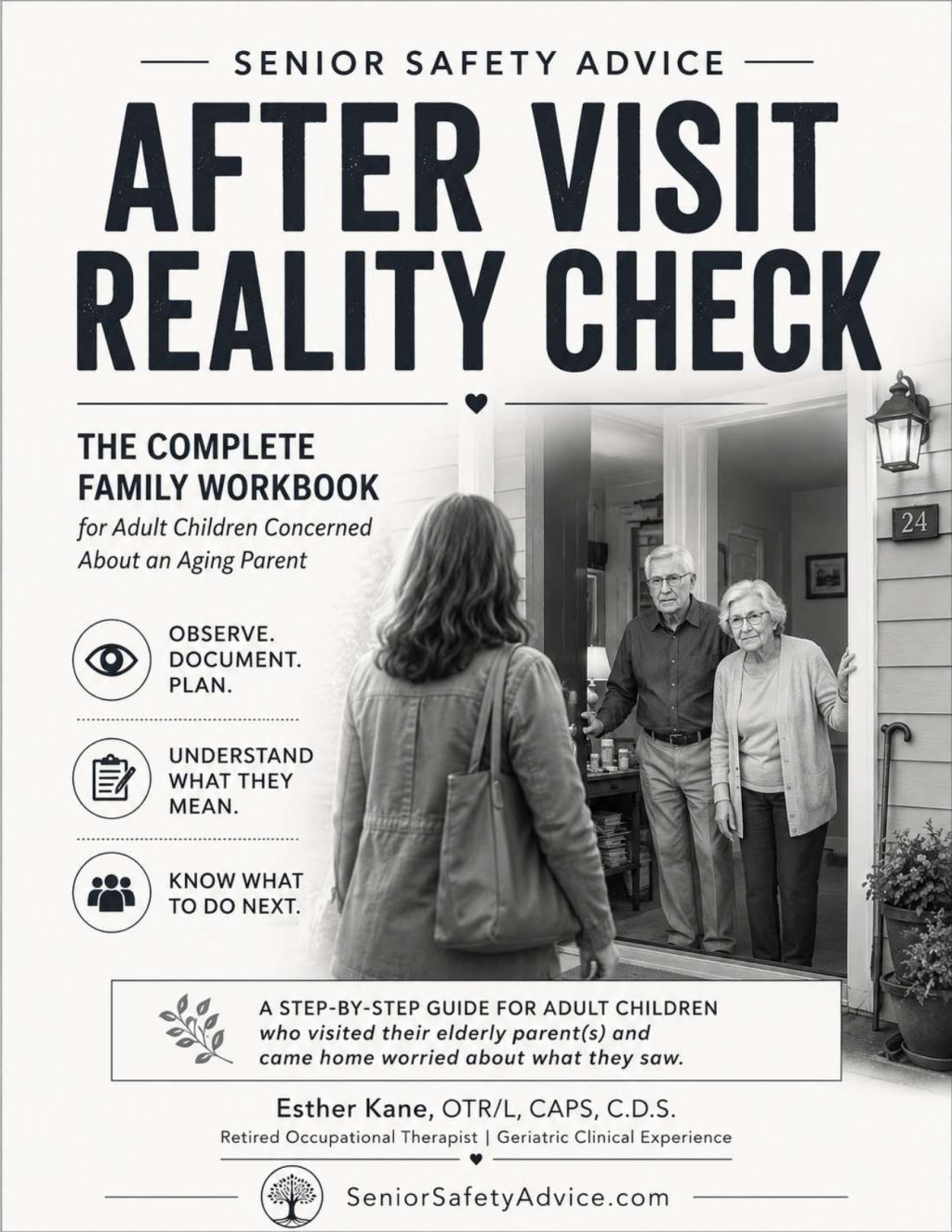
Adult children often return home after visiting an aging parent feeling worried but unsure whether the changes they noticed are serious or what to do next.
This workbook helps families document specific concerns, understand why they may matter, and turn those observations into a prioritized action plan.
Inside the workbook, readers will find:
- A visit summary for recording initial concerns
- Observation checklists covering movement and balance
- Home environment and daily-functioning assessments
- Weight, nutrition, and eating concerns
- Memory and cognitive-change observations
- Medication-management warning signs
- Social, emotional, and personal-care concerns
- Clinical explanations of why these changes may matter
- Immediate and longer-term action-planning worksheets
- Medical follow-up and professional referral checklists
- Home safety priorities and support services to explore
- A doctor conversation guide
- Suggested questions to ask healthcare providers
- A family communication and responsibility planner
- A room-by-room home safety walkthrough
- Information about OTs, PTs, geriatricians, care managers, and other professionals
- Guidance for finding local, Medicare, Medicaid, home health, and PACE resources
Secure checkout powered by Stripe.
You’ll see our parent company, Couch Cats, LLC on your statement!
Sample Preview
Important Disclaimer: This workbook is provided for educational and organizational purposes only. It is designed to help family members record observations, identify possible concerns, and prepare for conversations with an aging adult and their healthcare providers. It is not a diagnostic tool and does not provide medical, mental health, legal, financial, or professional caregiving advice. The signs described in this workbook may have many possible causes and should be evaluated by qualified professionals. Do not use this workbook to delay medical care or make changes to medications or treatment plans. If an older adult appears to be in immediate danger, is experiencing sudden confusion or other urgent symptoms, or may be experiencing abuse, neglect, or self-neglect, contact the appropriate medical or emergency services promptly.